

Most winter clothing advice is written for a size large. If you wear a 3XL, you already know how that story ends: a coat that zips but stops above your belt.
Then there’s the rest of it. Base layers that stop at XXL. Thick sweaters that make you look twice as wide. And that short walk to the car that leaves your shirt damp under your jacket.
Here’s the good news. Learning how to dress for cold weather as a plus size man isn’t about piling on more clothes. It’s about the right layers, in the right fabrics, with the right fit.
In this guide, you’ll learn how to layer for your body and which fabrics to buy. You’ll see how a winter coat should fit a big frame. You’ll also get a simple temperature chart, so you know exactly what to wear each morning.
Millions of plus size men face these same problems every winter. You’re far from alone, and every fix here is easy to start today. This is what good big and tall winter layering looks like.
Quick answer: Wear three loose layers: a merino or synthetic base, a zip fleece or vest, and a coat long enough to cover your belt. Keep cotton away from your skin. Open your zips before you start to sweat. Add a hat, mittens, wool socks and wide boots when it drops below freezing.
Why Do You Feel Warm Standing Still but Sweaty When You Move?
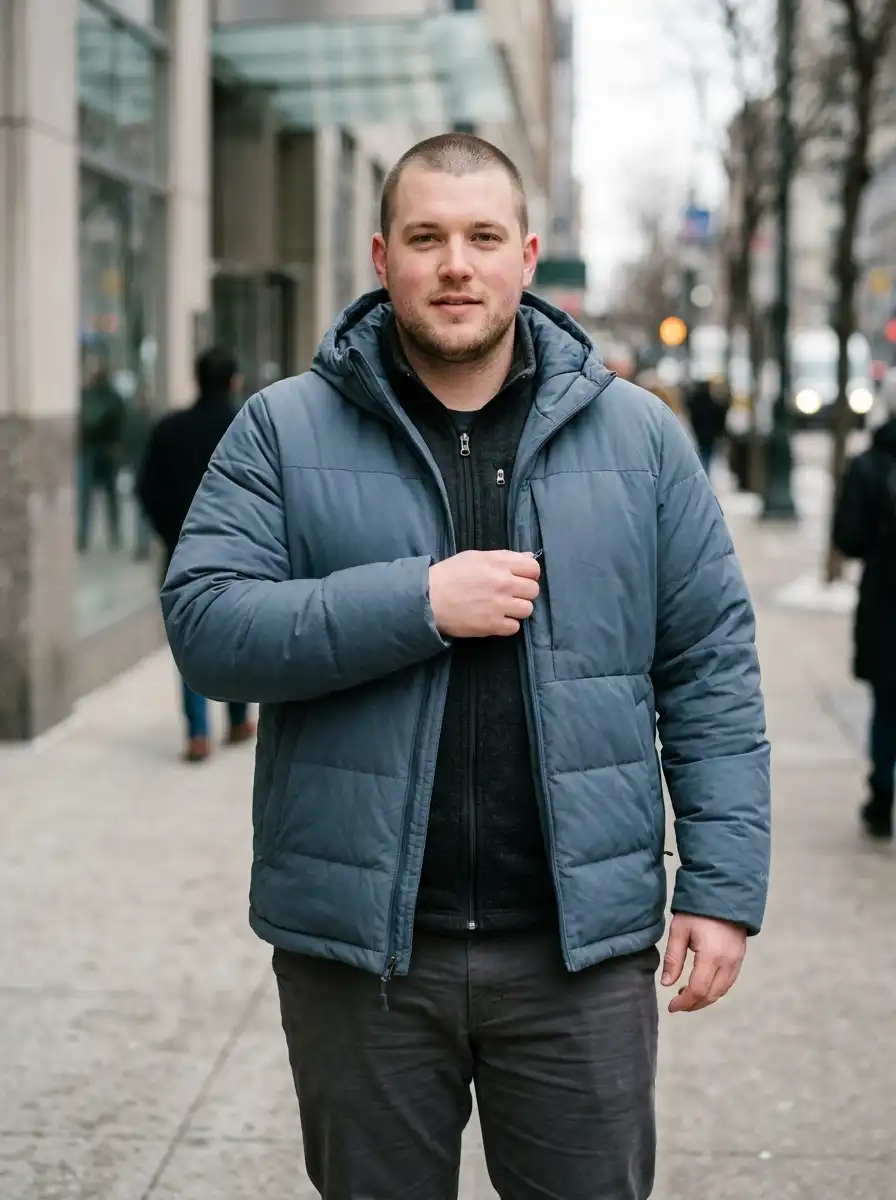
You feel fine standing at the bus stop. Then you walk ten minutes, and your shirt is soaked by the time you reach the office.
That’s not in your head. Extra body weight works like built in insulation around your core. So many big guys feel the cold less when they stand still.
But that same insulation makes it harder for your body to let heat out. Once you start moving, heat builds up fast. You start to sweat sooner than a smaller guy would.
And here’s why that matters. Sweat soaks into your clothes. Wet clothes pull heat away from your body much faster than dry ones. So the sweat from your walk turns into a chill the moment you stop.
Fit adds another problem. Standard sizes are cut for slimmer bodies. That leaves cold gaps at your waist when your coat rides up, and at your wrists when sleeves come up short.
So your goal isn’t more warmth. It’s control. You want clothes that hold heat when you’re still and let it out when you move.
Quick fix: Pick layers you can open or remove in seconds, like full zip fleeces and coats with two way zippers.
The 3 Layer System That Keeps Big Guys Warm Without Bulk
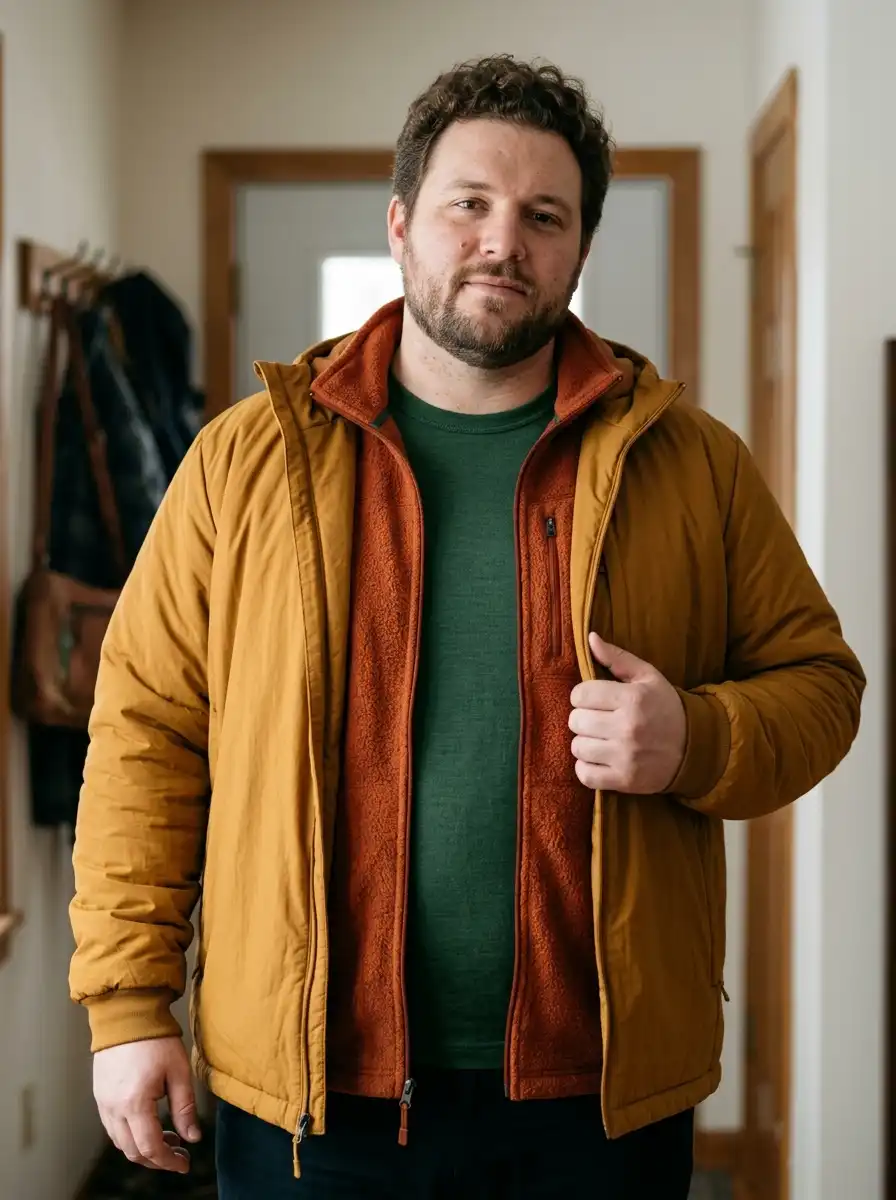
Three layers, three jobs. That’s the whole system, and it works far better than one giant coat.
Base layer: keeps sweat off your skin. This layer sits right against your body. Its only job is to move sweat away so your skin stays dry.
Mid layer: traps your heat. This is your warmth layer. It holds a thin pocket of warm air close to your body.
Outer layer: blocks wind, rain and snow. Your coat keeps the weather out, so the layers under it can do their job.
A few simple rules make this system work for a bigger frame:
- Go loose, not tight. Loose layers trap warm air between them. Tight layers squeeze that air out and make you colder.
- Choose thin layers over one thick one. When you warm up, you can take one off. You can’t take off half of a heavy sweater.
- Go from thin to thick. Your lightest fabric goes against your skin. Each layer gets a little heavier as you move outward.
- Seal the edges. Look for snug cuffs at your wrists and a hem that covers your waist. That’s where cold air sneaks in.
Here’s how that plays out on a normal winter morning:
| Setup | What you wear | What happens |
|---|---|---|
| Common outfit | Cotton tee, heavy hoodie, short puffer | You sweat, the cotton stays wet, and your waist is exposed |
| Smarter outfit | Merino base, zip fleece, longline insulated coat | Sweat moves away, you can vent, and your waist stays covered |
Quick fix: Swap your heavy hoodie for a thin zip fleece, and add a base layer under it this week.
How to Pick Base and Mid Layers That Fit Your Frame

The layer nobody sees matters most. Get your base layer right, and everything on top gets easier.
Base layers: fabric beats thickness
Keep cotton away from your skin. Cotton soaks up sweat and holds it, and wet cotton loses almost all of its warmth.
Pick one of these instead:
- Merino wool: Soft, stays warm even when damp, and fights odor. Great for long days.
- Polyester or polypropylene: Dries fast and costs less. Great for active days and outdoor work.
Next, choose the right weight for your day:
| Weight | Best for |
|---|---|
| Lightweight | Cool days and active work |
| Midweight | Most winter days; the best all round choice |
| Heavyweight | Very cold days when you won’t move much |
Then check the fit. Look for a longer body so the shirt stays tucked when you bend. Flat seams help stop rubbing under your arms and along your sides.
Many popular brands stop at XXL for base layers. So look for brands that sell 4XL, 5XL and 6XL, plus tall sizes if you have a long torso.
Mid layers: warmth without bulk
Your mid layer should add heat, not width. One thick hoodie adds bulk and gives you no way to cool down. A thin fleece plus a vest gives you more warmth and more control.
Good mid layer picks:
- Full zip fleece: Easy to open when you warm up. A full zip beats a pullover every time.
- Quarter zip sweater: Neat enough for the office. Wool blends work well here.
- Light vest (down or synthetic): Warms your core without adding bulk to your arms.
Want a longer, cleaner look? Choose darker solid colors and open front pieces like zip fleeces or cardigans. That line down the middle draws the eye up and down, not side to side.
Quick fix: Swap your cotton undershirt for a midweight merino or synthetic base layer before the next cold morning.
How to Choose a Winter Coat That Actually Covers Your Belt
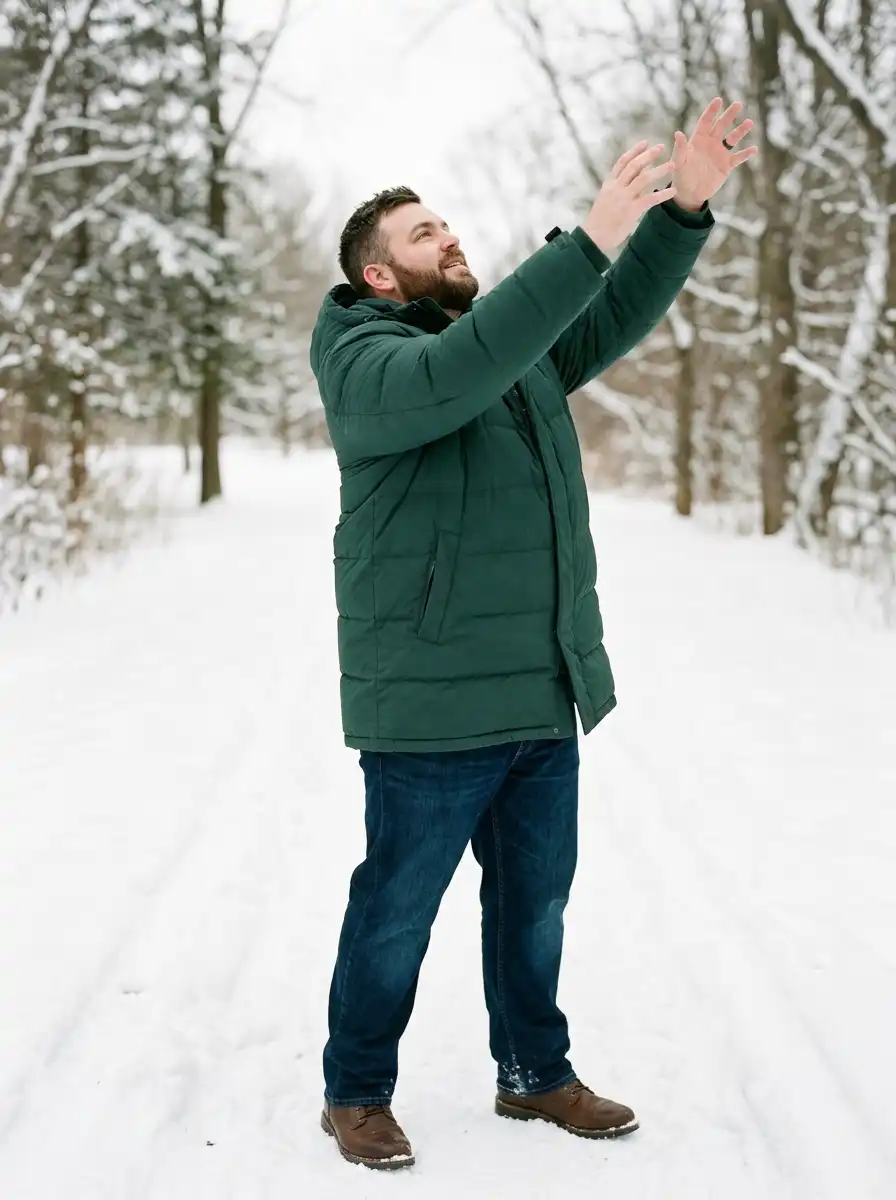
You zip up, reach for something on a high shelf, and your coat jumps above your waist. Cold air hits your lower back right away.
That happens because many brands make big sizes wider, but not longer. The chest fits, yet the coat stops a few inches short. A real big and tall coat adds length to both the body and the sleeves.
The 5 step fitting room test
Wear or bring your mid layer when you shop. Then run through this list:
- Check the shoulders first. The seam should sit at the edge of your shoulder. Too wide looks sloppy, and too narrow pulls tight when you move.
- Zip it over your mid layer. If it only zips over a tee, it’s too small for real winter.
- Reach both arms overhead. The hem should still cover your belt, and the cuffs should still cover your wrists.
- Sit down. If the coat bunches hard at your belly, look for a two way zipper. You can open the bottom while you sit or drive.
- Bend like you’re tying a boot. Your lower back should stay covered the whole time.
Features worth paying for
- Two way zipper for sitting, driving and quick cooling.
- Pit zips or side vents to let heat out when you move.
- A hood that fits over your hat.
- Snug or adjustable cuffs to seal your wrists.
- Hip length or longer for real coverage. A longer coat also creates a taller, cleaner line.
Down or synthetic fill?
Down gives the most warmth for its weight. But it loses much of that warmth when it gets wet.
Synthetic fill keeps working when damp and dries faster. If you live somewhere wet, or you sweat a lot, synthetic is the safer pick.
Check inches, not letter sizes
A 4X from one brand can fit like a 2X from another. Some cheap online coats run very small.
So always check the size chart for the chest measurement in inches. Compare it to your own chest, measured over a sweater, so you leave room for layers.
Quick fix: Measure your chest over a sweater tonight, and only buy coats whose chart fits that number.
How to Keep Your Legs, Hands and Feet Warm (and Stop Chafing)
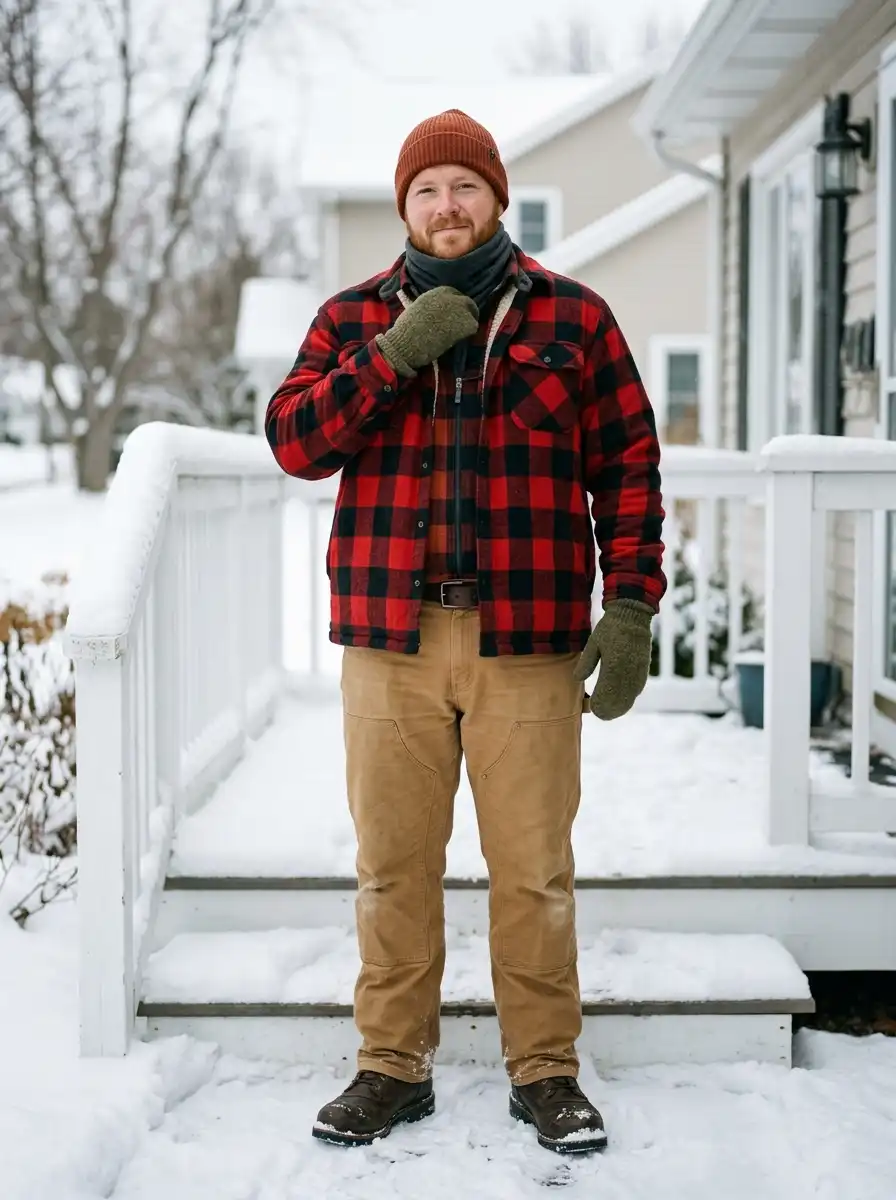
Your legs get colder than you think. And friction gets worse once you start to sweat.
Pants and thermals
- Wear thermal bottoms under your regular pants on cold days. Midweight works for most guys.
- Try fleece lined or flannel lined pants if you spend a lot of time outside.
- Use a belt or suspenders. Pants that slide down under a coat leave your back open to the cold.
Stop winter chafing
Chafing isn’t just a summer problem. Heavy pants, sweat and dry winter air can rub your inner thighs raw.
- Put petroleum jelly or an anti chafe balm on your inner thighs before you leave the house.
- Wear moisture wicking boxer briefs with longer legs. They act as a soft barrier between your thighs.
- Change out of damp clothes as soon as you can. Wet skin rubs raw much faster.
Hands
Mittens are warmer than gloves because your fingers share heat. Keep thin gloves for tasks like scraping a windshield.
Measure around your palm to find your glove size. Many big guys need XL or 2XL. Tight gloves cut off blood flow and make your hands colder.
Head and neck
A warm hat and a neck gaiter cover the skin that’s most exposed to wind. Pick a gaiter you can pull up over your nose on very windy days.
Feet
Cold feet often come from boots that are too tight. Tight boots squeeze your socks flat, and flat socks don’t hold heat.
- Look for wide width insulated boots in 2E, 4E or 6E.
- Wear wool socks, never cotton.
- Make sure you can wiggle your toes with your winter socks on.
Your 5 piece accessory checklist
- Warm hat
- Neck gaiter or scarf
- Mittens, plus thin gloves for tasks
- Wool socks
- Wide, insulated, waterproof boots
Quick fix: Keep anti chafe balm by your front door so you never forget it.
How to Dress for Cold Weather as a Plus Size Man at Every Temperature
Here’s your cheat sheet. Screenshot it and check it before you head out the door.
| Feels like | Base layer | Mid layer | Outer layer | Extras |
|---|---|---|---|---|
| 40 to 50°F | Moisture wicking tee | Light fleece or sweater | Wind resistant jacket | Light hat if windy |
| 25 to 39°F | Lightweight merino or synthetic top | Zip fleece or vest | Insulated jacket that covers your belt | Hat and gloves |
| 10 to 24°F | Midweight top and thermal bottoms | Fleece plus vest | Insulated, water resistant coat with a hood | Hat, gaiter, mittens, wool socks |
| Below 10°F | Heavyweight top and bottoms | Thick fleece or light puffer | Long parka that blocks wind and water | Face cover, mittens, wide insulated boots |
Use the chart as a starting point. Then adjust with these three simple rules.
Check the “feels like” number. Wind pulls heat off your body fast. On very cold, windy days, bare skin can get frostbite in as little as 5 to 30 minutes. Cover your face, ears and hands.
Adjust for how active you’ll be. If you’ll be walking fast, shoveling or working, drop one layer. Start out feeling a little cool, because you’ll warm up within about 10 minutes.
Stay dry. If sweat, rain or snow soaks through, change as soon as you can. Wet clothes chill you fast.
Get the size right before you shop
Letter sizes lie. Inches don’t. Take these 3 measurements with a soft tape before you buy anything:
- Chest: Around the fullest part, over a light shirt.
- Waist: Where you actually wear your pants.
- Sleeve: From the center of your back, over your shoulder, down to your wrist bone.
Then use these shopping tips:
- Know the cuts. “Big” adds width. “Tall” adds length. “Big and tall” adds both. If coats always ride up, you likely need a tall or big and tall cut.
- Shop brands with real extended sizes. Look for work wear and outdoor brands that go up to 4XL, 5XL or 6XL.
- Read reviews for fit. Search reviews for words like “runs small” before you buy.
- Buy where returns are easy. Order two sizes, then keep the one that passes the fitting room test.
Quick fix: Save your three measurements in your phone so they’re ready every time you shop.
Built for the Cold: The Big Man's Winter FAQ
Four straight answers for plus size men who are done being cold
Why do I feel fine standing still but sweaty when I walk?
Your body holds heat well when you stand still. Once you move, that heat builds fast, so open your zips early and wear thin layers you can take off.
Question 02What should I wear right next to my skin?
What should I wear right next to my skin?
Skip cotton. It holds sweat and turns cold. Choose merino wool or a synthetic base layer that moves sweat away and keeps your skin dry.
How do I know a winter coat really fits?
Zip it over your fleece, then reach both arms up. The hem should still cover your belt. Always check the chest size in inches, not just the letter size.
Three loose layers. No cotton on your skin. A coat that covers your belt. Done.
Your Simple Plan for a Warmer Winter
Staying warm as a big guy comes down to a few simple moves. Wear three loose layers. Keep cotton away from your skin. Pick a coat that covers your belt and zips over your fleece.
Then take care of the edges. Mittens, a warm hat, wool socks and wide boots make a big difference. And open your zips before you sweat, not after.
Now you know how to dress for cold weather as a plus size man. Start small tonight: measure your chest and sleeve, then check one coat and one base layer before the first cold snap.
Good big and tall winter layering isn’t about more clothes. It’s about the right ones.