
You’ve probably done this. The shirt in your usual size feels tight around the middle, so you grab the next size up.
Now it fits your stomach, but the shoulders droop, the sleeves swallow your hands, and the hem still rides up when you sit down. That’s not you being hard to fit. That’s regular sizing doing exactly what it was built to do, for a different body.
This big and tall vs regular size guide breaks down what actually changes between the four main fits: Regular, Big, Tall, and Big & Tall. Here’s the short version:
- Big is about width.
- Tall is about length.
- Big & Tall gives you both.
- Regular sizes mostly grow wider and only a little longer as you go up.
Below, you’ll see how each fit changes the chest, belly, shoulders, sleeves, shirt length, and pants.
You’ll also learn why 2XL and 2XB aren’t the same tag, why the “tall” cutoff moves between brands, and how to read the clues your current clothes are already giving you.
The Four Fits at a Glance
Changes: gets wider as sizes go up, barely longer
Tags: S, M, L, XL, XXL
Changes: more room in chest, shoulders, and waist
Tags: 1XB, 2XB, 2X, 3XL and up
Changes: longer body and sleeves, same width
Tags: LT, XLT, 2XLT
Side-by-Side Comparison
Regular Sizes Get Wider but Barely Longer
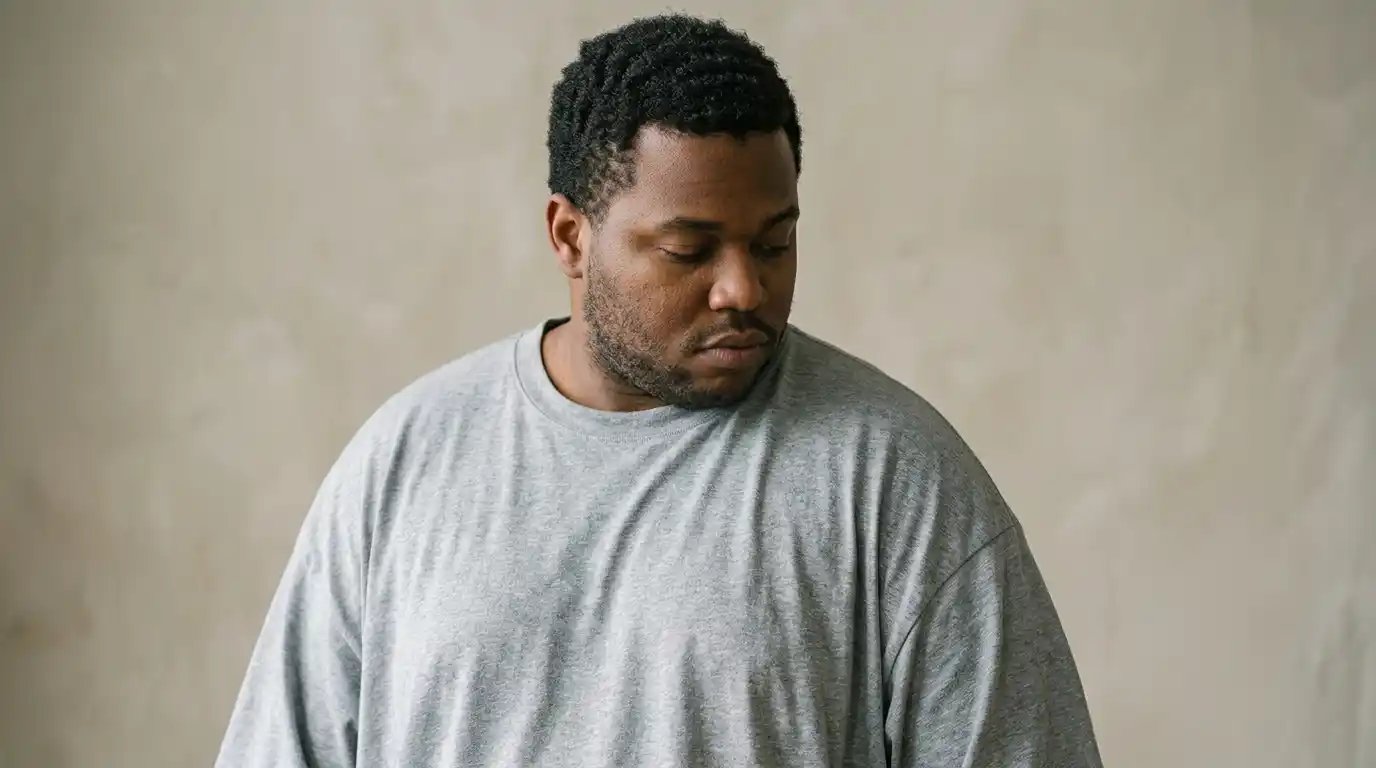
Think of a regular size chart as one body shape stretched sideways. Going from XL to XXL to 3XL mostly adds width. The length grows much more slowly.
That’s why sizing up feels like a trade. You fix the tight belly, but you get droopy shoulder seams, sleeves past your knuckles, and a hem that still won’t stay tucked.
The shirt isn’t failing. It was drafted for an average frame, then scaled up.
Big Sizes Add Room Where Your Body Needs It

Big cuts start from a different body. Instead of stretching a regular pattern, the brand drafts more room into the chest, shoulders, armholes, and midsection, while keeping the length close to normal.
On a guy who’s broad but around average height, the difference shows right away. Buttons stop pulling. The shirt doesn’t cling to your stomach. Shoulder seams land on your shoulders instead of halfway down your arm.
Tall Sizes Add Length, Not Width
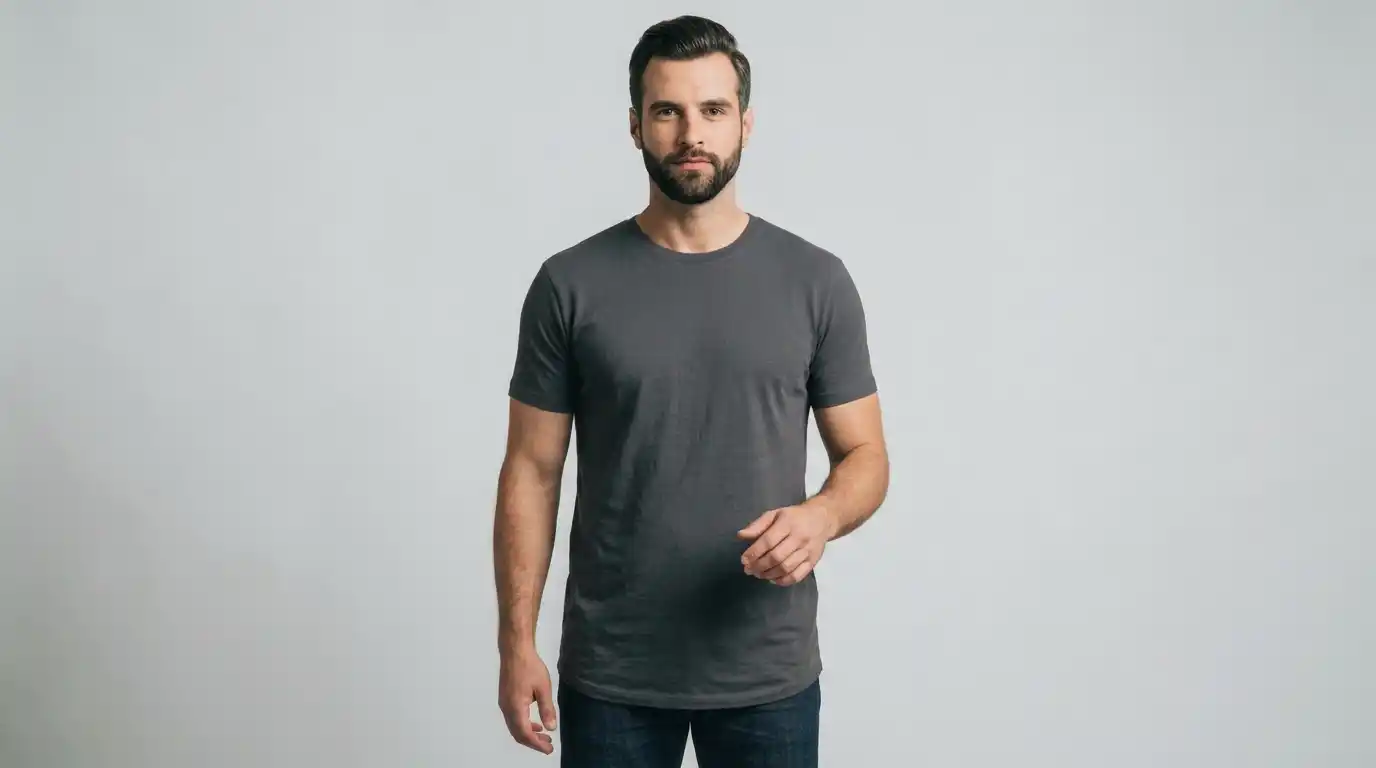
Same chest, longer shirt. That’s the whole idea. On one brand’s tees, an XL and an XLT share an identical chest width, but the tall version runs 3 inches longer in the body, 34 inches vs. 31 inches.
Sleeves grow too. On DXL’s chart, a 2XL and a 2XLT both fit a 50 to 52 inch chest, but the tall sleeve runs about 2 inches longer.
Big & Tall Gives You Both at Once

If you’re 6’3″ with a broad chest and a full belly, neither fix alone will work. Big sizes leave your shirt too short. Tall sizes leave it too tight.
Big & Tall pieces are cut with the extra width of a Big size and the extra body and sleeve length of a Tall size, together in one garment. Many specialty stores run Tall sizes right up into the 5XLT and 6XLT range for this reason.
2XL, 2X, and 2XB Are Not the Same Tag

Two shirts can both fit a 50 to 52 inch chest and still fit completely differently. At Westport Big & Tall:
- 2XB (2X Big): waist 46 to 48 inches, sleeve 33 to 34 inches
- 2XT (2X Tall): waist 44 to 46 inches, sleeve 37 to 38 inches
Same chest. The Big version gives you about 2 extra inches of belly room. The Tall version gives you about 4 extra inches of sleeve.
A plain XXL or 2XL from a regular store is usually a regular cut scaled up, not a true Big cut. The letters after the number tell you which pattern it came from.
Pants Change Differently Than Shirts
Some tall guys have long legs. Others have a long torso. Pants treat those two bodies differently.
Tall pants add inseam, the length from crotch to hem. Most standard jeans stop at a 32 or 34 inch inseam, and 36 inches and up is where Tall starts. Big pants add room through the seat and thighs, so the waistband fits without the legs straining.
Then there’s rise, the distance from the crotch seam to the waistband. A short rise slides down in back every time you sit or bend.
The “Tall” Cutoff Moves From Brand to Brand

Ask three stores what “tall” means and you’ll get three answers:
- DXL builds its tall sizes for men 6′ ½” and up.
- Lands’ End fits its Big/Tall pants to men about 6’1″ to 6’3″.
- American Tall designs for men 6’3″ to 7’1″.
If you’re right around 6’1″ or 6’2″, you’re in the gray zone. Regular sleeves might work at one brand and fall short at the next. Your height alone won’t settle it. Your sleeve and torso length will.
Your Current Clothes Already Tell You Which Fit You Need
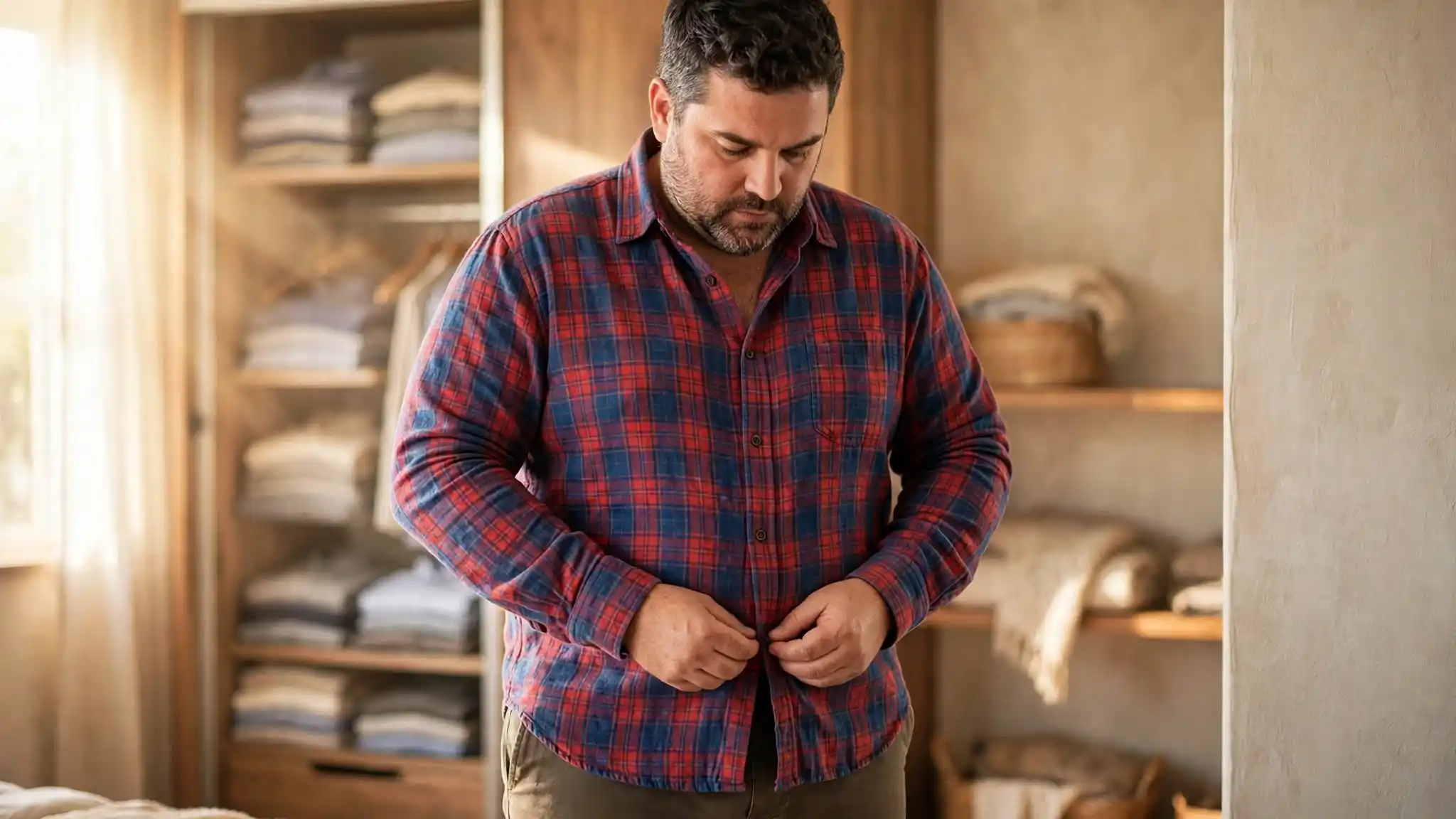
Pull your most-worn shirt out of the closet and put it on. Then ask two questions.
Is it tight, or is it short? Tight across the belly or pulling at the buttons, with the length fine, points to Big. Fine around the middle but untucking when you sit or showing wrist when you reach points to Tall.
Did sizing up fix it? If going up a size cured the tightness but gave you droopy shoulder seams and long sleeves, Big will fit cleaner. If going up still left it short, you need Tall or Big & Tall.
Most guys can answer both questions in under a minute.
Regular XXL vs. 2XB on the Same Body
Troubleshooting Table
Fit Problems and What They Mean
| If This Happens | Try This |
|---|---|
| Buttons pull across your belly, but the length is fine | Switch from regular to a Big size (e.g. 2XB) |
| Shirt untucks every time you sit or reach | Try a Tall size for 2 to 3 in. more body length |
| Sleeves show your wrist when you reach forward | Go Tall; sleeves run about 2 in. longer |
| Sizing up fixed the belly but shoulders droop and sleeves cover your knuckles | Drop back down and switch to Big; it adds width without the extra sleeve |
| A Tall shirt is long enough but tight around the middle | Move to Big & Tall; Tall alone adds no belly room |
| A Tall shirt fits long but hangs loose like a tent | Drop one size in Tall, or try a trimmer cut from another brand |
| Pants slide down in back when you sit or bend | Look for a longer rise in Big or Big & Tall pants |
| Waist fits, but thighs and seat feel tight | Choose Big pants or a relaxed fit for more seat and thigh room |
| Pants stop above your shoes | Look for a 36 in. inseam or longer in Tall pants |
- Regular: wider as sizes go up, barely longer
- Big: more chest, shoulder & belly room
- Tall: +2–3 in. body, about +2 in. sleeve
- Big & Tall: extra width + extra length
- Pants: Tall = longer inseam, Big = more seat & thigh room
- Tight but long enough? → Big
- Fits around but too short? → Tall
- Tight and short? → Big & Tall
- Sized up, shoulders droop? → Big
- Check the brand’s chart every time
Conclusion
Now you know what the tag doesn’t tell you: Big is width, Tall is length, and regular sizes were never drafted for your frame.
Keep this big and tall vs regular size guide handy the next time a shirt pulls or untucks. The fix is a different cut, not another size up.
Your next step: put on your best-fitting shirt, run the two-question check, and order one piece in the fit it points to.