The weather drops ten degrees and suddenly nothing in your closet feels right. Your summer tees feel too thin. Your shorts are done for the year.
And the fall stuff from last October either shrank or never fit great to begin with. So you throw on the same dark hoodie every day and call it a season.
You don’t have to. Learning how to transition your outfits from summer to fall as a big guy is mostly about layering what you already own the right way — not buying a pile of new clothes that may or may not fit.
Bigger guys run warm, so the trick is staying comfortable without looking bulky or sweating through a heavy coat you pulled on too early.
This guide walks you through it one piece at a time. You’ll sort what you have, keep your best breathable basics, add smart layers you can take off when a room gets warm, and shift your colors toward fall without turning your whole wardrobe black.
By the end you’ll have three or four outfits ready to grab on a busy morning.
The hands-on work takes about an hour. No sewing, no shopping trip required. Clear some space on your bed, grab a mirror, and let’s build outfits that actually work for your body and the cooler air.
What You Need
- 2–3 breathable cotton or blend tees
- 1–2 pairs of dark straight-leg pants (or chinos)
- A lightweight overshirt or flannel
- One structured jacket (denim, twill, or bomber)
- A light knit sweater or crewneck
- Sneakers or Chelsea boots
- One accessory (watch, cap, or scarf)
- A full-length mirror
- A well-lit room
- Three empty spots on your bed for sorting
At a Glance
- Empty your summer drawer and sort it into three piles
- Keep your best breathable tees as base layers
- Swap shorts for dark, straight-leg pants
- Add a lightweight overshirt you can wear open
- Shift your colors toward deeper fall tones
- Choose one structured jacket that fits your shoulders
- Trade sandals for sneakers or Chelsea boots
- Use vertical lines to lengthen your frame
- Finish with one seasonal accessory
- Run a sit-stand-reach test before you head out
Empty your summer drawer and sort it into three piles

Pull everything warm-weather out and lay it flat where you can see it. Working blind in a stuffed drawer is why half your clothes never get worn.
Make three piles: keep (fits well, still in season-friendly fabric), layer (thin tees and shirts that work under something), and store (tank tops, linen shorts, anything loud).
Be honest in the fit pile. If a shirt pulled tight across your stomach in July, it won’t magically drape better in October.
Keep your best breathable tees as base layers
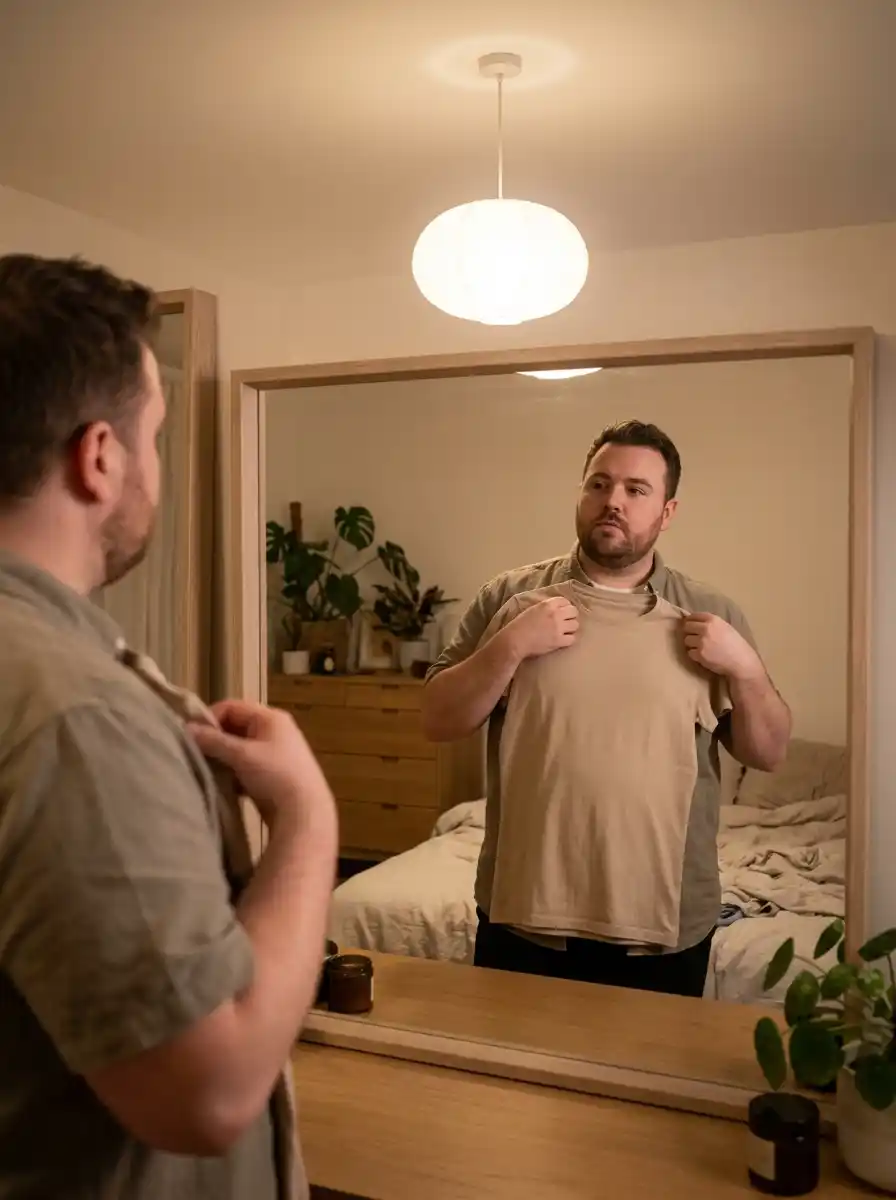
Your summer tees don’t retire in fall — they become the foundation. Pick the 2 to 3 that fit cleanest through the chest and shoulders without clinging at the waist. A tee that skims your body layers smoothly under a shirt or jacket.
A tight one creates lumps every layer above it will magnify. Set these aside as your go-to base. Solid mid-tones and darker shades work best here, since a bright graphic tee fights with everything you put over it.
Check the sleeve length. A tee sleeve that ends mid-bicep gives your arm a longer, leaner line than one that stops at the elbow. That small detail matters more on a bigger frame than most guys realize.
Swap shorts for dark, straight-leg pants
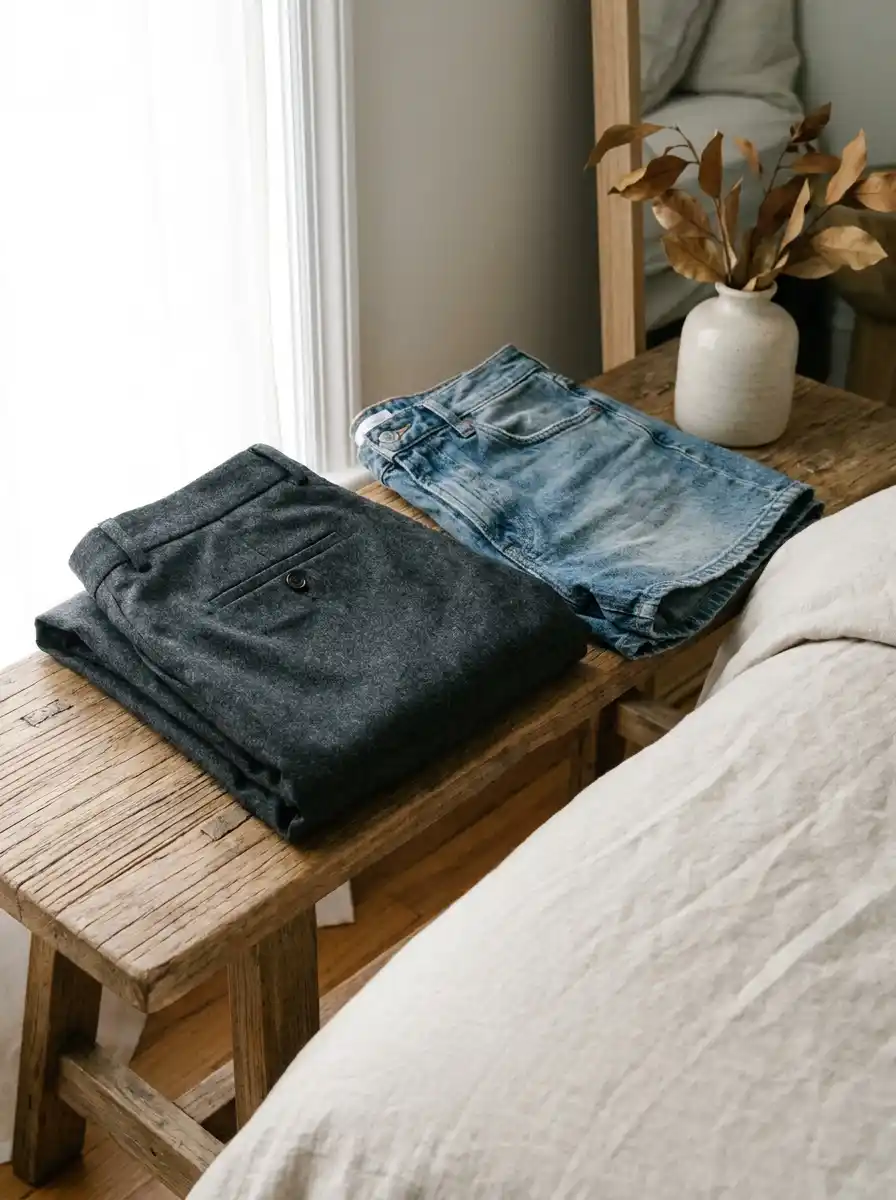
Shorts are the fastest way an outfit reads as summer, so they go first. Reach for dark, straight-leg pants — charcoal, navy, deep olive, or a solid mid-wash denim.
A straight leg falls clean from your hip to your shoe without tapering tight at the ankle, and that unbroken line makes your whole lower half look longer.
Skip anything skinny or heavily distressed. If your only fall pants feel snug, chinos in a stretch cotton give you room to move and still look put together.
Add a lightweight overshirt you can wear open
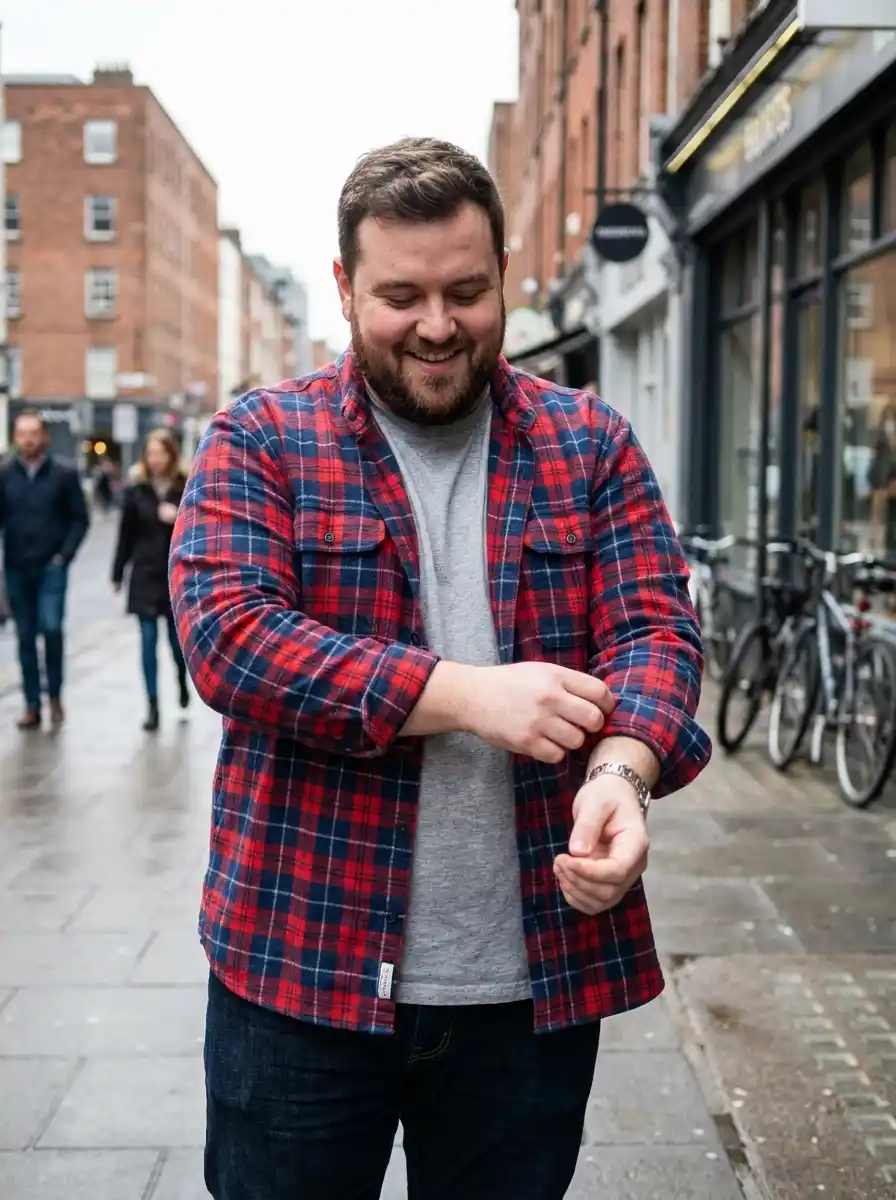
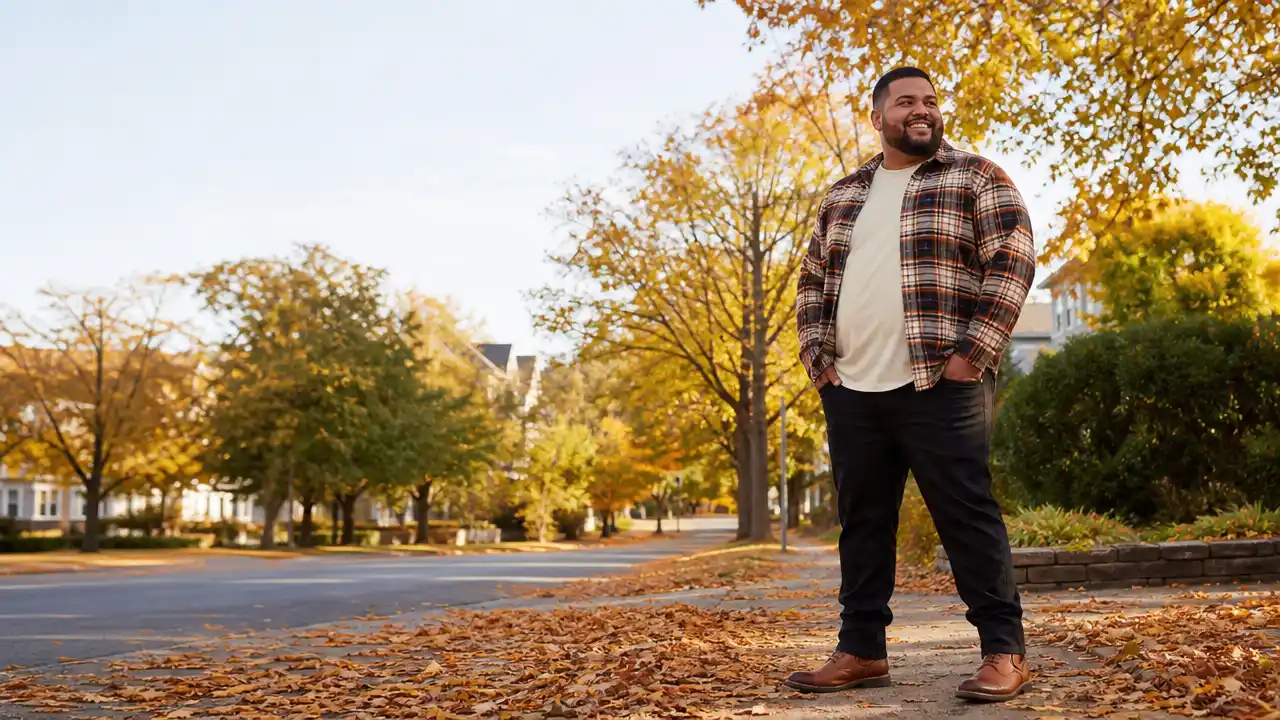
Here’s the layer that does the most work in fall: the overshirt. A flannel, a chore coat, or a thin unlined shirt-jacket worn open over your tee adds warmth up top and a clean vertical stripe down your middle.
Worn open, those two front panels draw the eye up and down instead of side to side — which slims.
Roll the cuffs twice. Leave it unbuttoned even when it’s cool; you can close one middle button if the wind picks up.
Shift your colors toward deeper fall tones
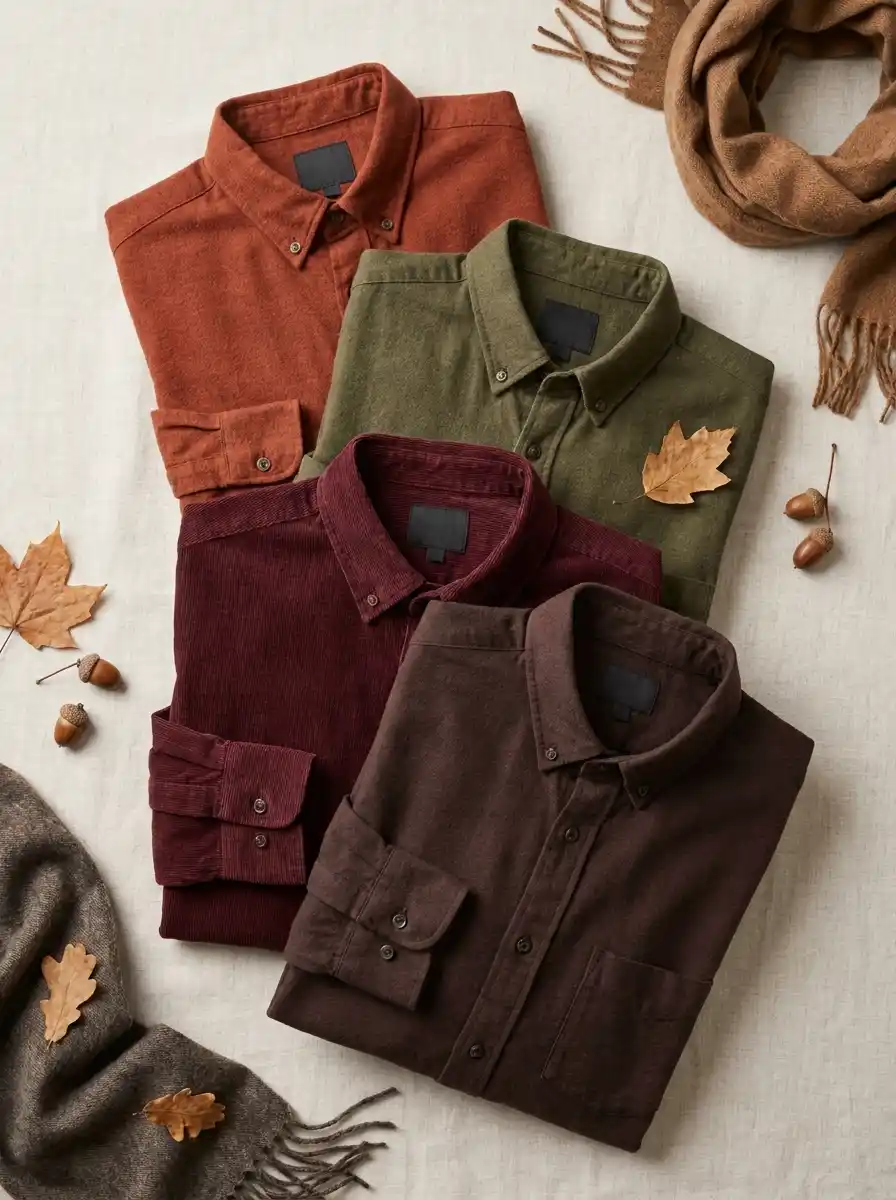
Trade your brights for earth. Rust, olive, deep brown, burgundy, forest, and charcoal all read as fall and photograph well on camera.
Do not turn everything black to look slimmer. An all-black outfit flattens into one dark blob and hides your shape entirely. Keep one darker anchor, then let a second color breathe next to it.
Choose one structured jacket that fits your shoulders
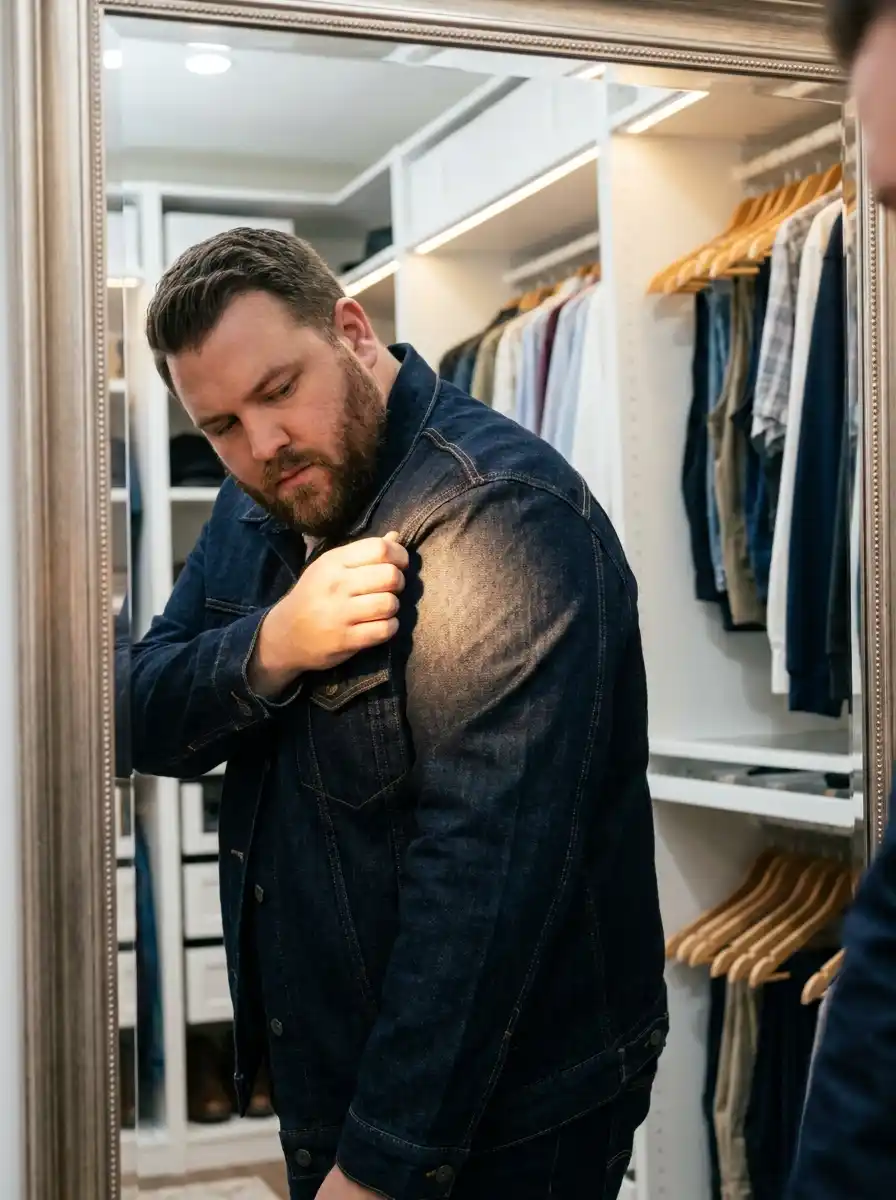
The shoulder seam is everything on a jacket, and it’s the one spot you cannot fix later.
Stand in front of the mirror and check where the seam lands: it should sit right at the edge of your shoulder, not droop halfway down your arm and not dig in.
When that seam is right, the whole jacket hangs clean off your frame. One denim, twill, or bomber jacket that passes this test beats three that almost fit.
Buttoned or open, a jacket built on the right shoulder line does more for your silhouette than any other single piece.
A jacket that ends right at your belt line — not below your hip — keeps your legs looking longer. If your current jacket runs long, that’s the first thing to size down on next time you shop.
Trade sandals for sneakers or Chelsea boots
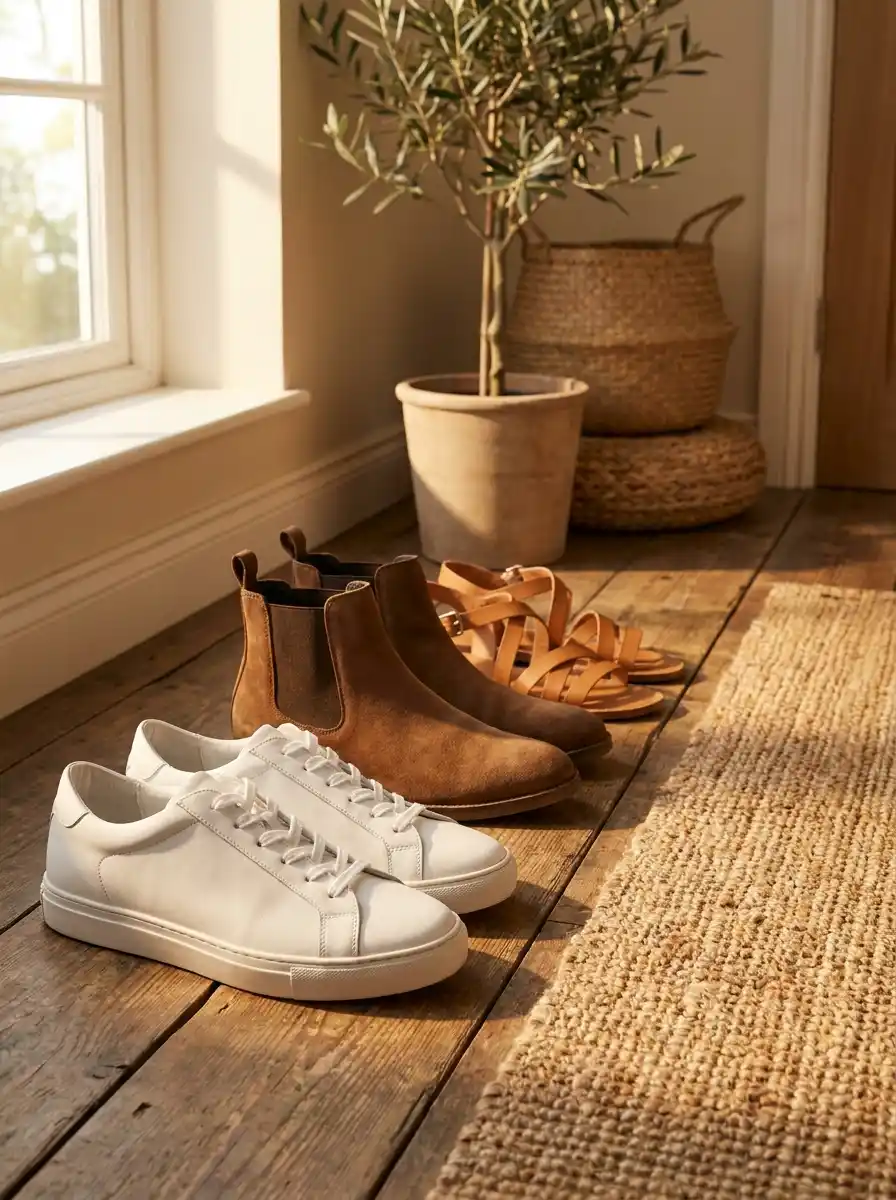
Two shoe options carry almost any fall outfit: clean low-profile sneakers and Chelsea boots. Sandals and flip-flops read summer instantly, so they’re out.
Go for leather or suede sneakers in a solid color — white, tan, brown, or black — with a slim sole that doesn’t look chunky.
Chelsea boots dress the same outfit up in seconds and add a little height. Match the boot to your belt when you can. Both choices keep your feet covered against cooler mornings without weighing the look down.
Use vertical lines to lengthen your frame as a big guy
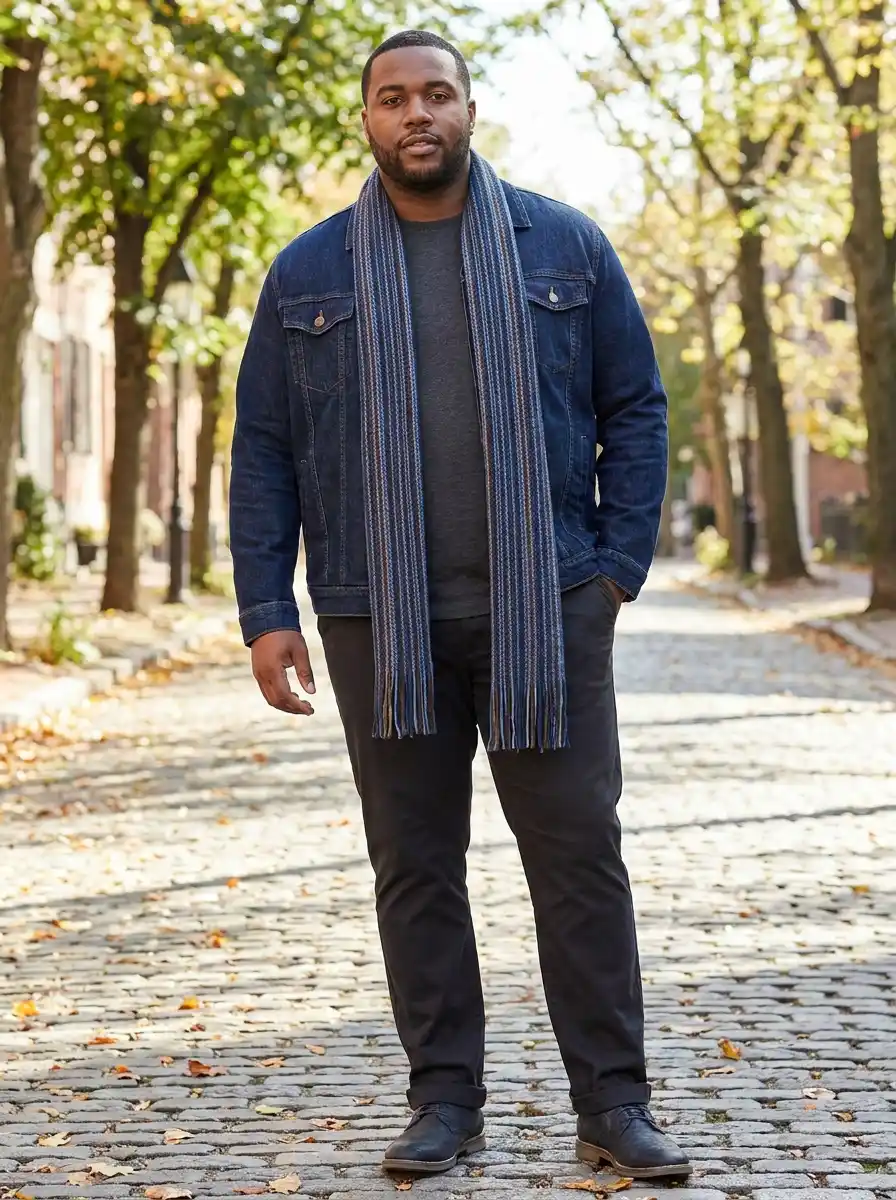
If a layer runs top to bottom, it works in your favor. Vertical lines pull the eye up and down, which stretches your silhouette and trims your middle — the exact opposite of what horizontal stripes do.
An open jacket, a long scarf hanging straight, a front placket of buttons, even a thin vertical zip all create that line. Keep patterns subtle: a fine pinstripe reads as texture, while a bold stripe adds width.
One or two vertical elements per outfit is plenty. Stack too many and the effect cancels out.
Finish with one seasonal accessory

One accessory, chosen well, tells everyone the outfit was on purpose. A leather-strap watch, a wool cap, or a lightweight scarf all signal fall without adding real bulk.
Pick a single piece and stop there — three accessories at once turns intentional into busy, and on a bigger frame the extra clutter reads as heavier.
Match its color to something already in the outfit so it ties in instead of shouting on its own.
Run a sit-stand-reach test before you head out
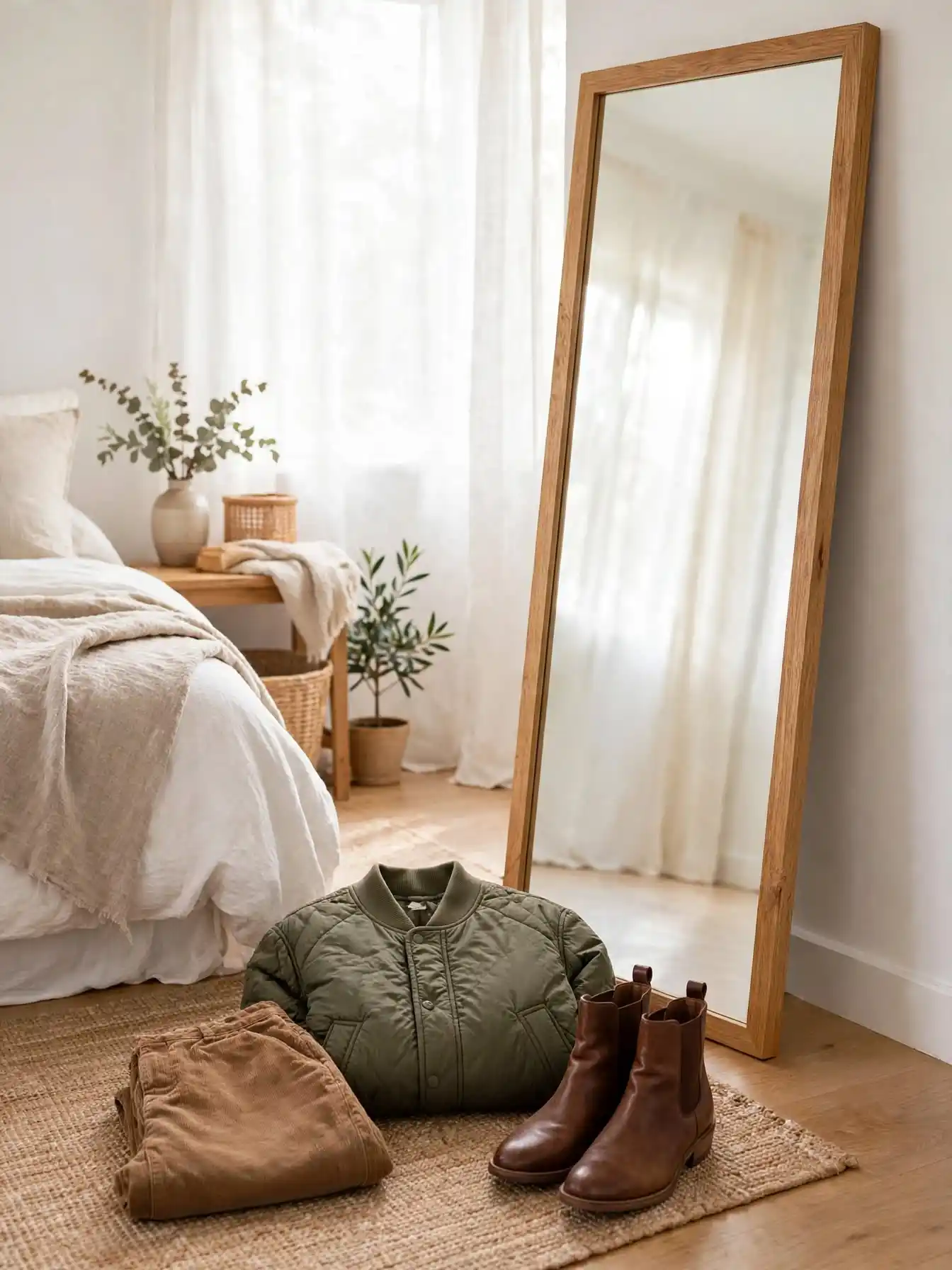
Do this last check before the outfit earns a spot in your rotation. Put the full look on, stand in front of the mirror, then sit down in a chair for 10 seconds. Stand back up and reach both arms forward like you’re grabbing a steering wheel.
You’re watching for three things: pants that dig in when you sit, a jacket that pulls tight across the back when you reach, and any layer that rides up and needs constant tugging.
If it passes all three, it’s a real outfit you’ll actually wear. If it fails one, adjust the fit now — not at 8 a.m. when you’re already late.
Common Mistakes to Avoid
Oversized fabric doesn’t hide weight — it adds width and makes you look bigger. Clothes that skim your frame with a little room read far sharper than a tent.
Early fall is warm at midday. Pull on a thick coat now and you’ll sweat by noon, then have nowhere to go with it. Layer thin pieces you can peel off instead.
Three or four layers stacked on a bigger frame turns into bulk fast. Two well-chosen layers — a tee and an open overshirt — beat four thin ones fighting for space.
Black alone doesn’t slim — it erases your shape into one flat block. Use a dark anchor, then add a fall color like olive or rust so the outfit has depth.
A jacket seam drooping down your arm makes the whole thing look borrowed. The shoulder is the one fit point you can’t fix later, so check it first.
Frequently Asked Questions
No. Most of this uses what you already own, layered differently. If you buy one thing, make it a well-fitting overshirt or a jacket with the right shoulder seam.
Stick to two thin layers you can open or remove — a breathable tee under an unbuttoned overshirt. Skip heavy knits and lined coats until it’s genuinely cold out.
They add visual width, so bold ones aren’t your friend. A thin stripe or a subtle pattern is fine — it’s the wide, high-contrast stripes that widen your frame.
Reach for stretch-cotton chinos in a straight leg. They give you room through the seat and thigh while keeping a clean line, and they dress up or down easily.
Absolutely. Clean leather or suede sneakers in a solid color work all season. Just retire the bright summer running shoes and mesh styles until spring.
Conclusion
You just built a fall wardrobe without buying a fall wardrobe. Your summer basics are working overtime as base layers, your colors have depth, and every piece fits your frame the way it should.
Pick your two favorite combinations and hang them front and center so busy mornings stay easy. Next weekend, try one new jacket with the right shoulder seam — it’s the single upgrade that pays off most.
The cold is coming either way. Now you’re ready for it, and you look sharp getting there.
Pin this guide so it’s ready when the temperature drops — and come back to the sit-stand-reach test every time you build a new outfit.