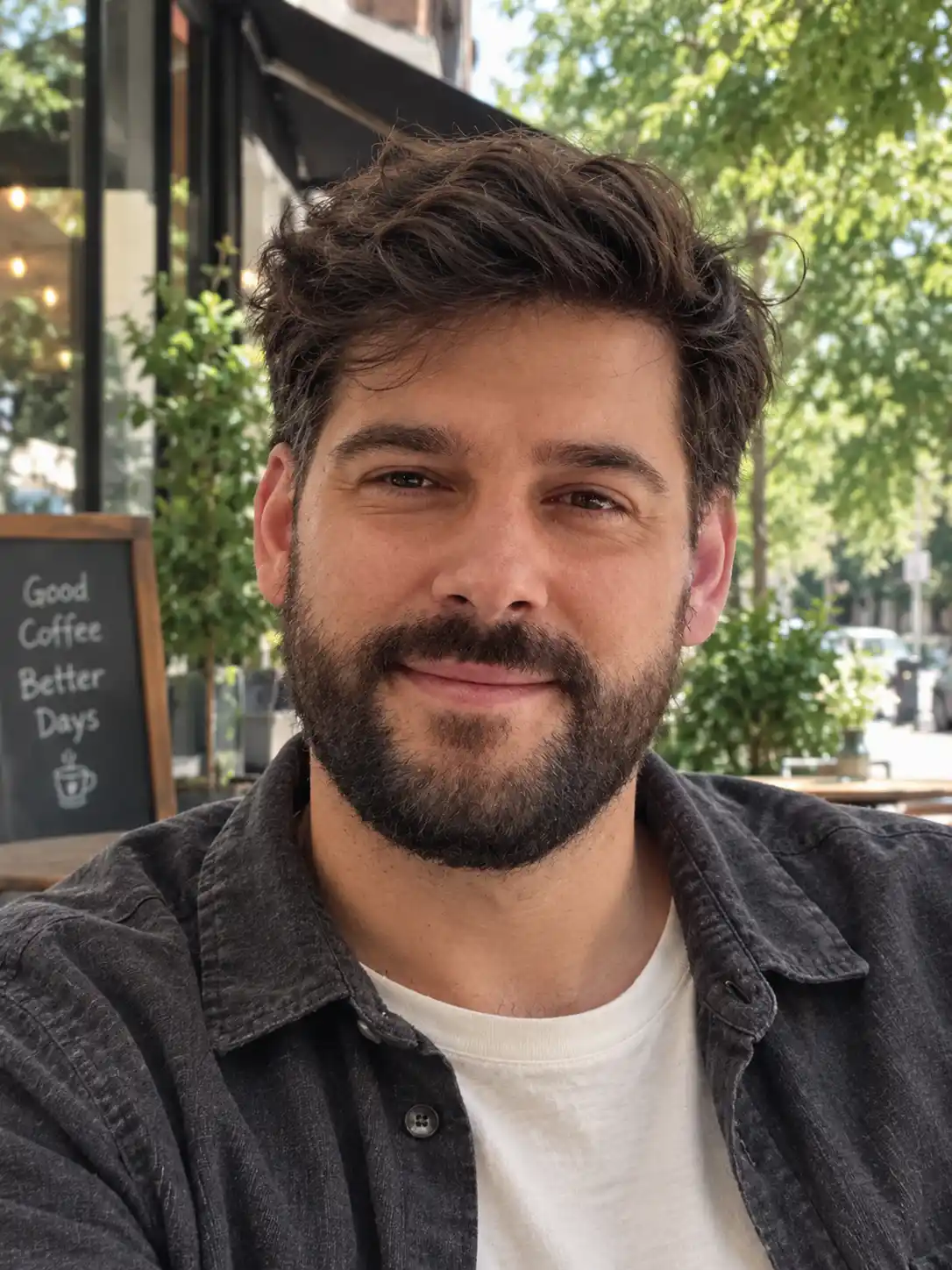

You put on a tee, a flannel and a jacket to stay warm. Then the mirror shows a man two sizes bigger than you really are.
That’s frustrating, and it’s not your fault. Most style advice is written for slim guys, and it falls apart on a bigger frame.
Here’s the good news. Layering for plus size men works great once you know a few simple rules. Done right, layers can make you look sharper than one thick sweatshirt ever could.
Most bulk comes from three things:
- Thick fabric stacked on top of more thick fabric
- Loose clothes that trap extra cloth around your middle
- Jackets that stop right at the widest part of your body
Fix those three, and most of the problem goes away.
In this guide, you’ll learn how to layer clothes without looking bulky. You’ll get a simple three layer system, the best fabrics to wear, fit and length rules, color tricks, and six outfits you can copy today.
Your body doesn’t need fixing. Your layers just need a better plan.
Quick answer: Go from thin to thick. Keep only one bulky piece. Wear your darkest color on the outside.
Layering for Plus Size Men: The Thin to Thick Rule
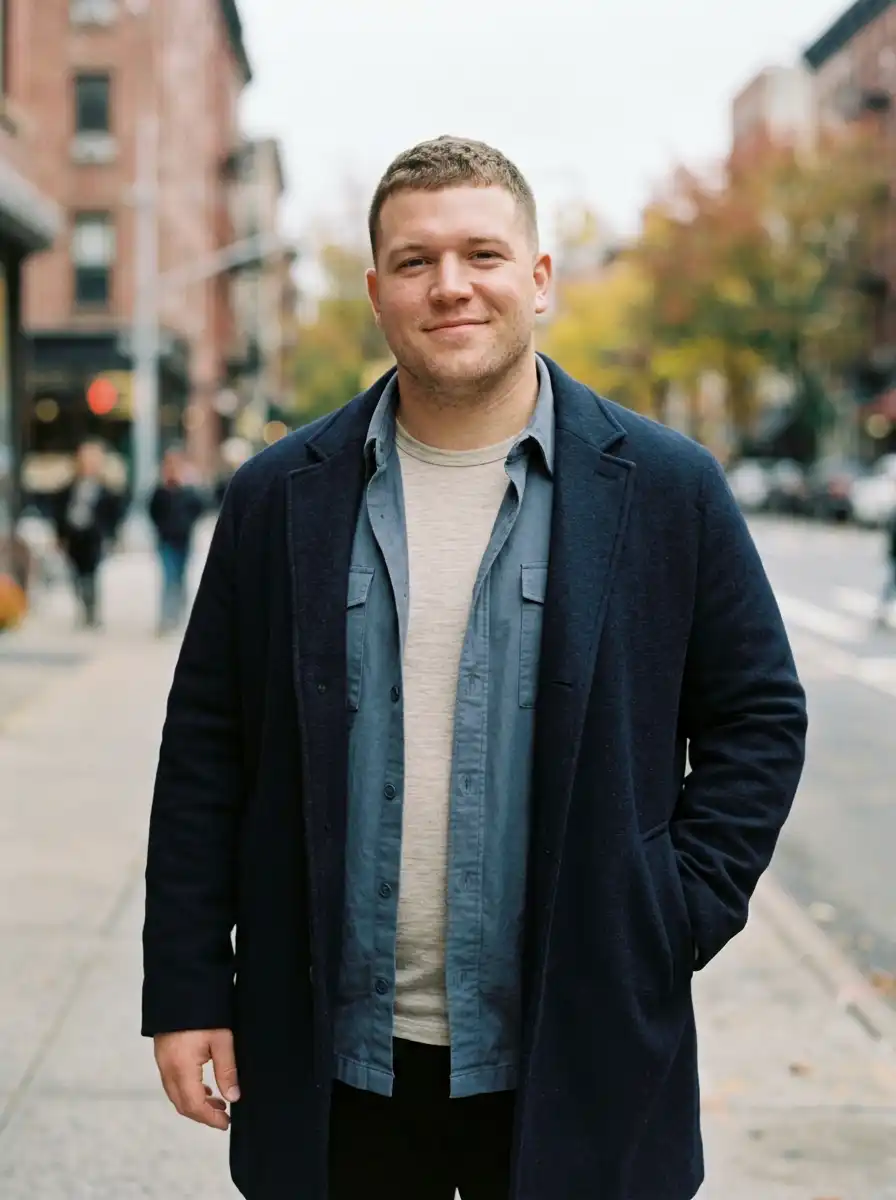
Here’s the core idea. Every layer should be thinner than the one on top of it.
When thick clothes sit under thin ones, they push outward and make you look wider. When thin clothes sit under thick ones, everything lies flat.
Each layer has one job:
- Base layer: stays close to your skin and out of sight.
- Mid layer: adds warmth and a little style.
- Outer layer: blocks wind and cold, and shapes the whole look.
The Base Layer: Thin, Smooth and Close
Your base layer is the foundation. It should sit close to your body without squeezing it.
Pick a smooth tee or long sleeve top in merino wool or a midweight cotton blend. If it clings to your belly or rides up when you move, it’s the wrong size or the wrong fabric.
Tall guys should look for longline tees. The extra length keeps the shirt in place, so it won’t creep up under your sweater.
The Mid Layer: One Piece Only
This is where most bulk sneaks in. So keep it simple: one mid layer, never two.
Good choices include:
- A fine gauge sweater in a crew neck or V neck
- An open flannel shirt
- A shirt jacket, often called a shacket
- A smooth quarter zip fleece
Never wear a hoodie under a sweater. Pick one. Not both.
The Outer Layer: Your One Bulky Piece
Your jacket or coat is the only piece allowed to be heavy. It should have a little more room than the layers under it, so nothing pulls or bunches.
Remember this rule: one bulky piece per outfit. If your coat is thick, everything under it stays thin.
Pro tip: Stop at three visible layers. A hidden undershirt doesn’t count. Four layers almost always looks crowded on a bigger frame.
Which Fabrics Keep You Warm Without Extra Bulk?
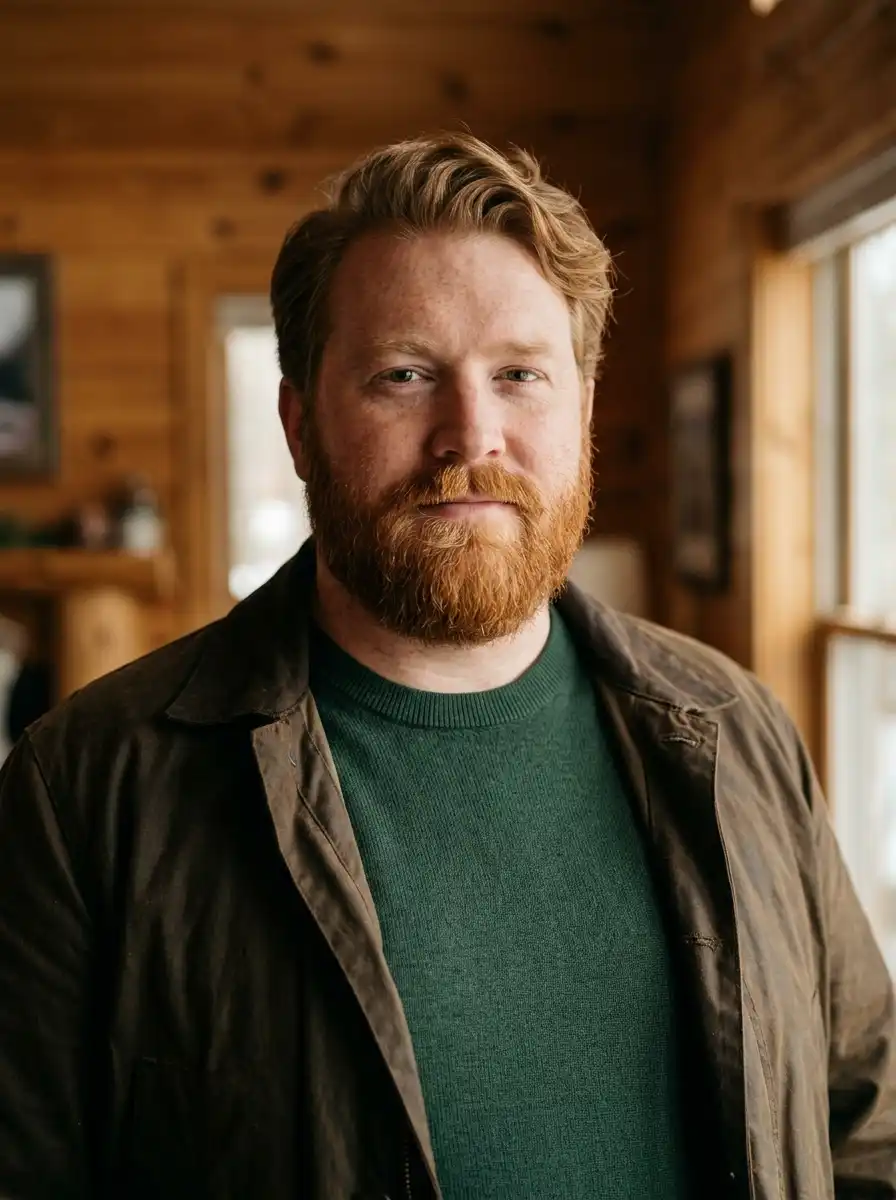
Fabric is where you win or lose the bulk battle. Two shirts can be the same size, but the thicker one will always make you look wider.
Why Merino Wool Is Your Best Friend
Merino wool is soft, thin and warm. Its fine fibers trap heat in tiny air pockets, so you stay warm without wearing something thick.
It also pulls sweat away from your skin and fights odor. That matters if you run warm, which many bigger guys do.
Heavy cotton does the opposite. It soaks up sweat, holds it against your body, and adds weight without much warmth.
What Fabric Weight Numbers Mean
Many brands list fabric weight in grams per square meter, shown as g/m² or GSM. A lower number means a thinner fabric.
Here’s a simple guide for merino:
- About 150 to 190 g/m²: lightweight, perfect as a base layer
- About 230 to 250 g/m²: midweight, warm enough for a cold morning
- About 400 g/m²: heavyweight, usually too thick to wear under other layers
For sweaters, look for the words “fine gauge” on the label. A fine gauge knit is thinner and smoother, so it slides under a jacket without lumps.
A Little Stretch Helps
A small amount of stretch, around 3 to 5% spandex or elastane, lets a shirt move with you. It also stops seams from straining across your back and chest.
Fabric Cheat Sheet
| Layer | Best fabric | Avoid |
|---|---|---|
| Base | Lightweight merino, or a cotton blend with a bit of stretch | Thick heavy cotton, tight compression tops |
| Mid | Fine gauge sweater, flannel, smooth fleece | Chunky cable knits, fluffy pile fleece |
| Outer | Wool blend coat, denim, waxed cotton, slim insulated shell | Puffy jackets that stop at your waist |
The right fabric still fails if the fit is wrong. So let’s fix fit next.
How to Fix Fit and Length So Your Layers Lie Flat
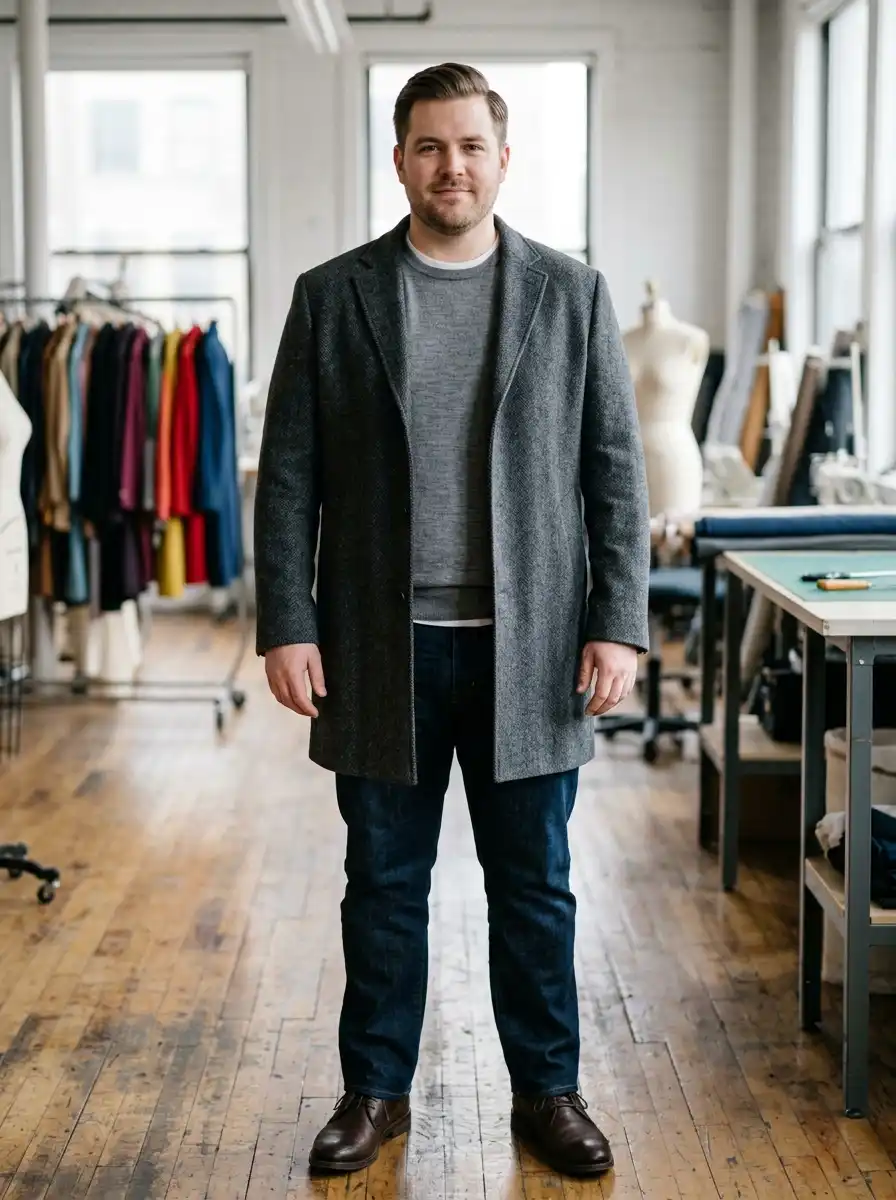
Each layer has to fit on its own. Layers can’t hide a shirt that’s too big or too small. They just stack the problem.
Start With Your Shoulders
Check the shoulders first. If the seam hangs past your shoulder, the whole piece will look sloppy.
If the shoulders are too narrow, you won’t fit anything underneath. Get this part right, and the rest gets much easier.
Use the Length Ladder
Your layers should get longer as you move outward:
- Base layer: the shortest, sitting at your hips
- Mid layer: a touch longer than your base
- Outer layer: the longest, ideally covering your seat
This matters more than most guys think. A jacket that stops at your waist draws a line across your widest point.
A longer coat does the opposite. It creates one clean shape from your shoulders down past your hips.
Pick Belly Friendly Outer Layers
If you carry weight in your stomach, a buttoned cardigan as your top layer will pull and gap. It hugs your shape instead of skimming it.
A denim jacket, chore coat or quilted vest works much better. These pieces hold their own shape, so they sit cleanly over your middle.
Buy Your True Size
Sizing up “for room” backfires. Extra fabric bunches under your jacket and makes you look bigger.
Buy your real size for base and mid layers. Only your outer layer needs a little extra room.
Sizes also change a lot between brands. Measure your chest, waist and your best fitting shirt, then compare those numbers with each size chart.
Quick test: Put on your full outfit. Raise both arms over your head, then sit down. If any layer shows your belly, pulls at the buttons or bunches at your waist, swap it out.
A Small Tailor Fix Goes a Long Way
A local tailor can shorten sleeves, fix a hem or take in the waist of a coat. These small changes usually cost little.
The payoff is big, though. A cheap coat with the right sleeve length can look like it cost twice as much.
How to Use Color to Look Leaner in Layers
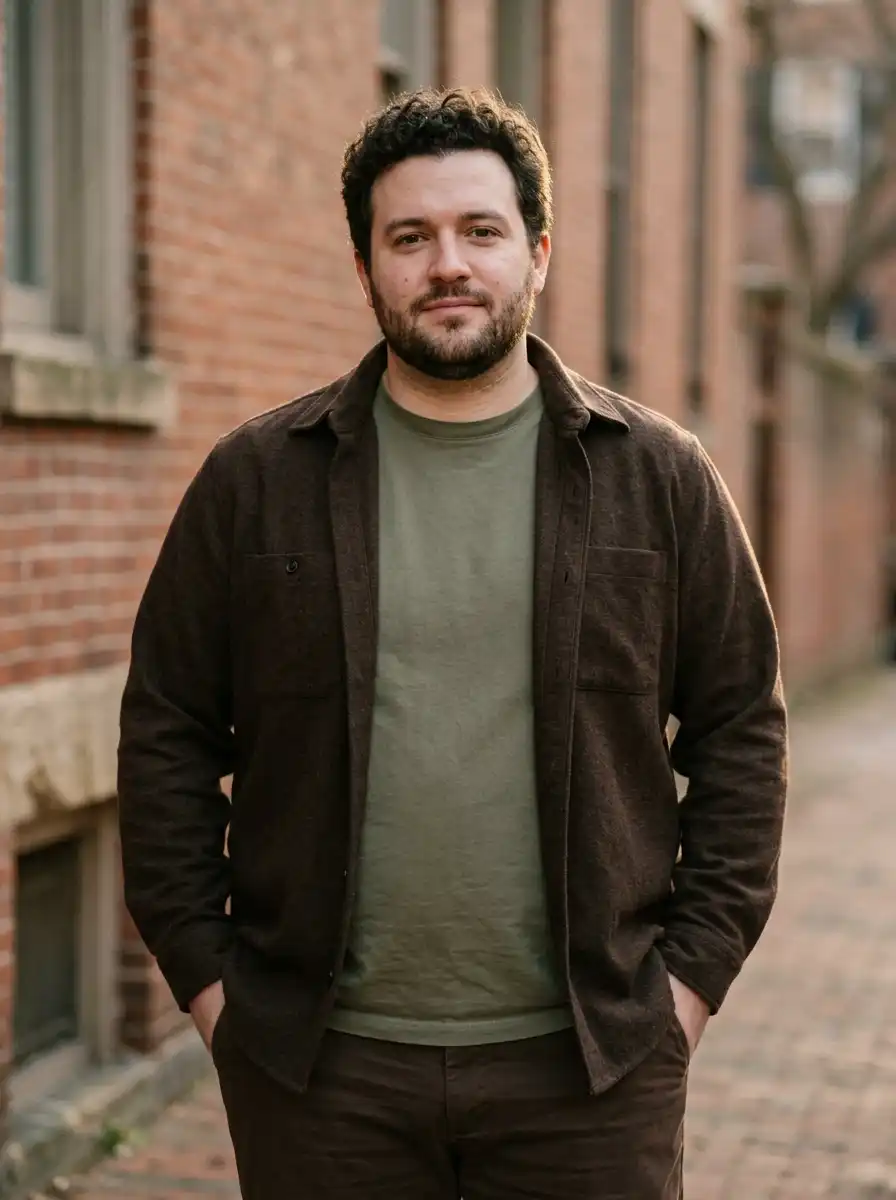
Once the shape is right, color does the rest. It’s also the easiest trick in this whole guide.
Go Dark on the Outside
Studies on how people judge body size show that darker clothes make the same body look slimmer. Light, bright colors tend to make a shape look bigger.
So put your darkest color on your outer layer. Navy, charcoal, black, deep olive and dark brown all work well.
Stay in One Color Family
Wear your base and mid layers in colors that sit close together. Think gray under navy, or olive under brown.
High contrast layers chop your body into blocks. A bright white tee under a black jacket is a good example. Close colors read as one long, smooth shape instead.
Be Careful With Stripes
You’ve probably heard that vertical stripes make you look slimmer. The truth is messier than that.
Research on stripes shows mixed results, and the slimming effect seems weaker on bigger bodies. Some tests even found horizontal stripes made a larger figure look wider.
Solid colors are the safer bet. If you love stripes, keep them thin and wear them on an inner layer.
Wear Your Outer Layer Open
An open jacket or flannel shows a strip of the layer underneath. That strip forms a vertical line down the middle of your body.
The line pulls the eye up and down instead of side to side. It’s a free trick that works with almost any jacket.
Use Texture Instead of Loud Color
Want more style without drawing attention to your size? Use texture.
A flannel, a ribbed knit or a waxed jacket adds depth while the colors stay quiet. Keep one textured piece per outfit and let the rest stay plain.
6 Outfits for Big Guys You Can Copy Today

Copy these six outfits and swap in colors from your own closet. Each one follows the thin to thick rule.
1. The Coffee Run
- Base: dark crew neck tee in charcoal or olive
- Mid: open flannel in warm brown or rust
- Outer: none, or a denim jacket when it’s cold
- Bottoms: dark straight jeans and clean sneakers
Why it works: The open flannel creates a vertical line, and the earthy colors stay in one family.
2. The Smart Casual
- Base: Oxford button down shirt
- Mid: fine gauge V neck sweater
- Outer: unstructured blazer
- Bottoms: chinos and brown leather shoes
Why it works: The collar and V neck draw the eye up toward your face.
3. The Friday Blazer
- Base: navy crew neck tee
- Outer: navy blazer
- Bottoms: gray trousers and brown leather shoes
Why it works: Navy on navy reads long and clean. A crew neck tee also looks dressed up under a jacket.
4. The Cold City Day
- Base: merino long sleeve tee
- Mid: fine gauge sweater
- Outer: wool topcoat that covers your seat
- Extras: a wide scarf and leather gloves
Why it works: Three thin layers keep you warm, and the long coat makes one smooth shape.
5. The Weekend Outdoors
- Base: moisture wicking long sleeve top
- Mid: smooth fleece quarter zip
- Outer: waterproof shell with a drawcord waist
Why it works: Sweat moves away from your skin, and the drawcord stops the shell from ballooning out.
6. The Warm Weather Layer
- Base: lightweight tech fabric tee
- Outer: open short sleeve shirt in linen or cotton
- Bottoms: chinos or neat chino shorts in a dark shade
Why it works: You get the layered look without the heat. On very hot, humid days above 90°F, skip layers and wear one breathable shirt.
Save this list for the next time you stand in front of your closet with no idea what to wear.
7 Layering Mistakes That Add Bulk (and Quick Fixes)
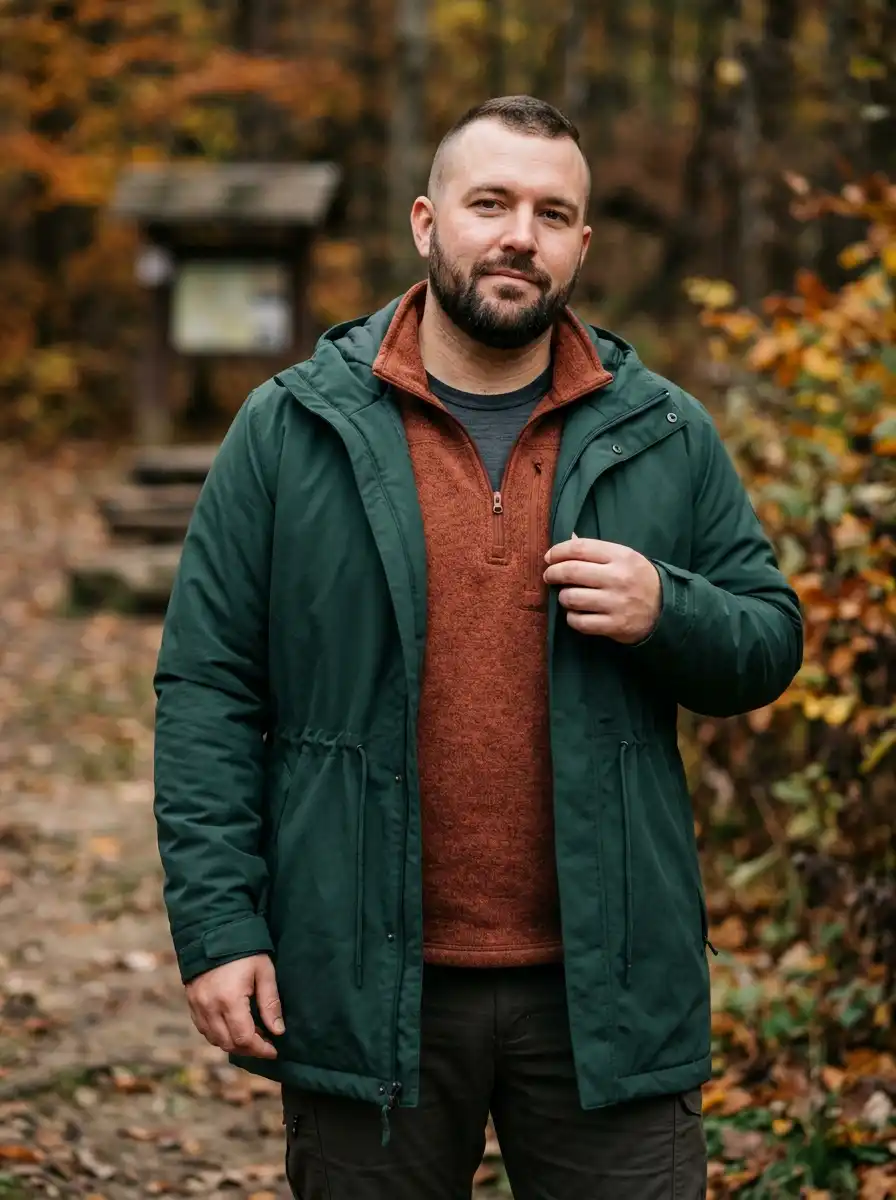
Most bulk comes from a handful of repeat mistakes. The good news is that each one has a fast fix.
Here’s a common example. Before: a hoodie under a puffer jacket. After: a merino tee, a fleece quarter zip and a parka with a drawcord waist. Same warmth, far less bulk.
| Mistake | Quick fix |
|---|---|
| Wearing a hoodie under a sweater | Pick one. Wear the hoodie alone or under a light shell. |
| A thick layer under a thin layer | Swap the order so the thickest piece goes on the outside. |
| A cropped puffer or waist length jacket | Choose a jacket that reaches your hips or covers your seat. |
| Sizing up for extra room | Buy your true size. Only your outer layer gets extra room. |
| A heavy cotton base layer | Switch to merino or a moisture wicking blend. |
| More than three visible layers | Take off the layer that adds the least warmth. |
| Busy patterns fighting each other | Keep one pattern and make everything else solid. |
If you remember only three fixes, make it these: go thin to thick, keep one bulky piece, and get your jacket length right.
- Question 01
Do horizontal stripes make big guys look bigger?
They can. Results on bigger frames are mixed, so solid dark colors are the safer pick. If you love stripes, keep them thin and on an inner layer.
- Question 02
Is a hoodie a good mid layer?
Only if it’s your one bulky piece. Wear it under a light shell, never under a sweater. For a slimmer look, try a smooth quarter zip instead.
- Question 03
What fabric works best under a coat?
Merino wool wins. It traps heat without thickness and handles sweat. Add a fine gauge sweater over a merino tee and you’re set for most coats.
-
True sizeQuestion 04
Should I size up for layering?
No. Buy your true size for base and mid layers. Only your outer layer needs a little extra room to fit over the rest.
Thin to thick. One bulky piece. Dark on the outside.
Your Next Step: Build One Better Outfit Tonight
Layering for plus size men comes down to a few simple habits. Go from thin to thick, and keep just one bulky piece.
Wear your darkest color on the outside. Keep your outer layer long, and leave it open in front.
You don’t need a whole new wardrobe to start. Most guys already own the pieces.
Tonight, pull three items from your closet and build the Coffee Run outfit. Then do the arm raise test in the mirror. You’ll see the difference right away.
The same rules work for layering for big and tall men, too. Just look for longline cuts so every layer stays the right length.
FAQs About Layering for Big Guys
Can plus size men wear layers in summer?
Yes. Use thin, breathable fabrics like linen or a light tech tee, and wear your top layer open. On very hot, humid days, one breathable shirt is the better choice.
How many layers should a bigger guy wear?
Three visible layers at most. A hidden undershirt doesn’t count. For mild fall days, two layers are often enough.
Are vests a good choice for big guys?
Yes, especially quilted vests. They keep your core warm without adding bulk to your arms, and they hold their own shape over your middle.
Should I tuck in my base layer?
If your base layer peeks out under your sweater, tuck it in or pick a shorter one. Your base should always be the shortest layer you wear.