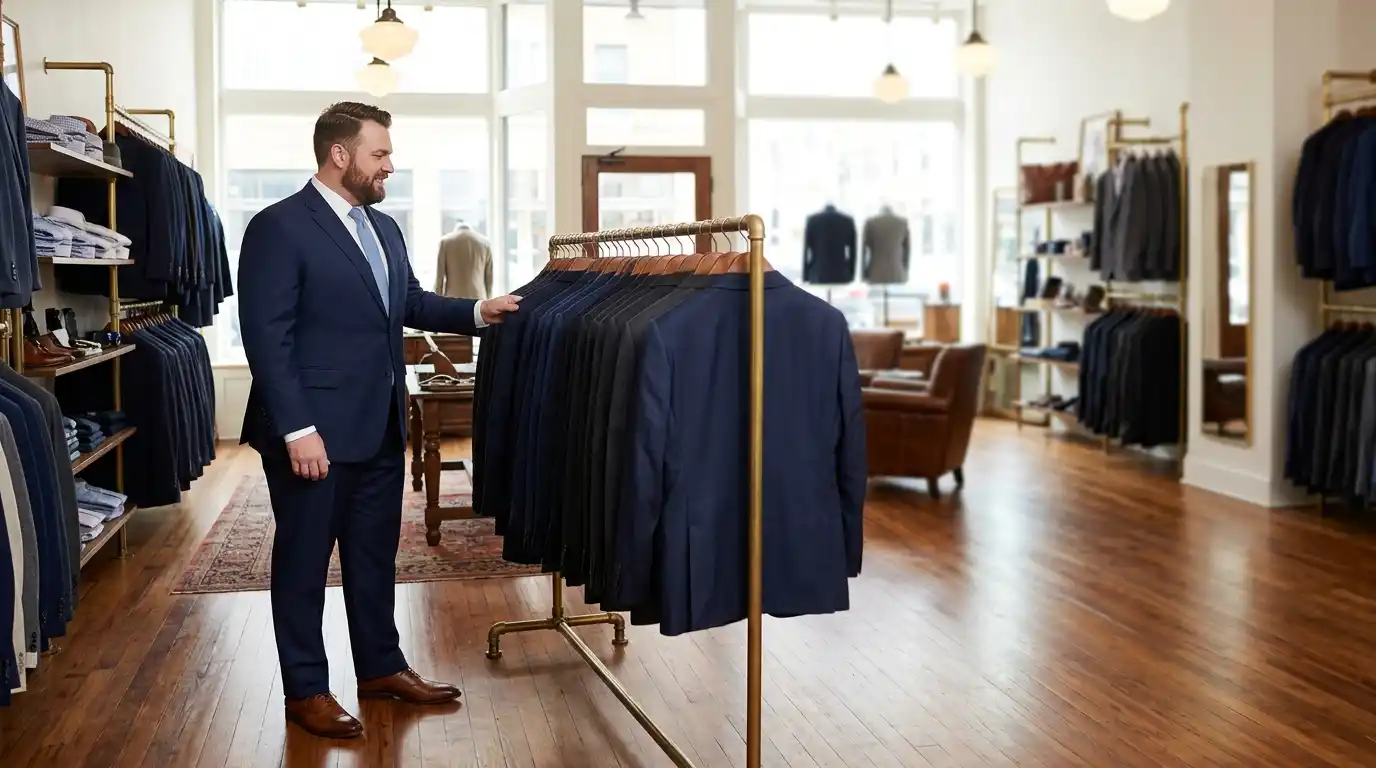
You walk into a department store, find the suits, and the biggest jacket on the rack still won’t button. The salesperson looks at you like a puzzle he’d rather not solve.
I’ve had that exact afternoon more times than I can count. It’s the reason so many big guys give up and stand at the altar in a rented suit that fits like a tent.
Learning how to shop for a wedding suit when you’re plus size is less about luck and more about order. If you do things in the right sequence, the right suit stops feeling impossible.
This guide walks you through 12 steps, from setting a budget to your final fitting. You’ll learn what to measure, where to shop, what to check in the fitting room, and how to use a tailor so the suit looks made for you.
The method works because it puts fit first and style second. On a bigger frame, three things decide whether a suit looks sharp: the shoulders, the jacket length, and the trouser rise. Color and fabric come after that.
Be ready for a slow timeline. The whole process takes three to four months, and most of that is waiting on tailoring. The hands-on part adds up to about six to eight hours. Grab a tape measure and let’s get started.
What You Need
Gather these before your first store visit.
- 📏 Soft measuring tape (60-inch cloth or vinyl)
- 🙋 A helper (friend, partner, or family member)
- 📱 Phone for notes and fitting-room photos
- 📅 Wedding date and dress code
- 💵 Your total budget, written down
- 👔 The dress shirt you plan to wear
- 👞 The shoes you plan to wear
- 🪢 A belt or suspenders
- 🏬 A list of 3–5 stores that carry your size
- ✂️ A local tailor’s name and number
Set your budget and hold back money for tailoring
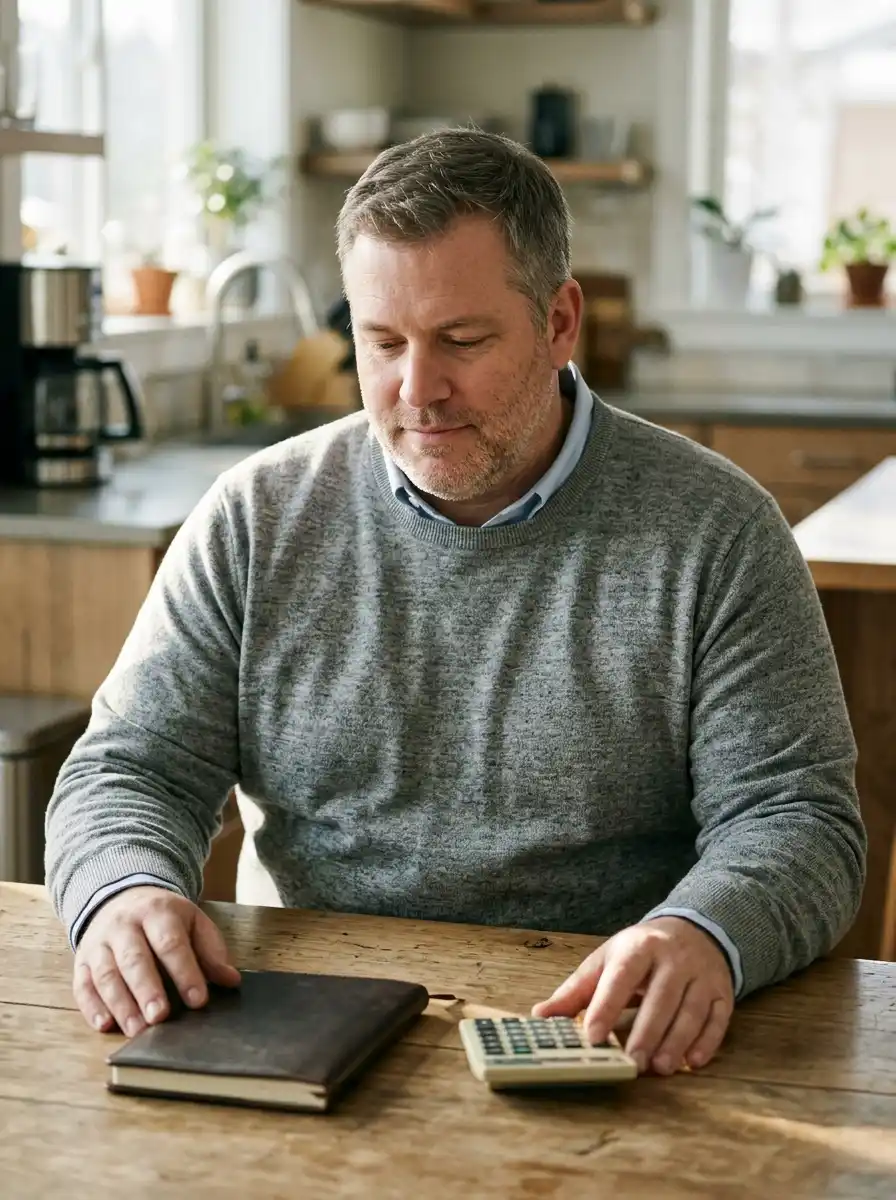
Almost every plus-size suit needs some tailoring, even the good ones. Plan to spend about 20 to 25 percent of your total on alterations.
On a $600 budget, that means about $460 for the suit and $140 for the tailor. Common jobs include hemming trousers for $15–25, shortening sleeves for $25–45, and taking in the jacket waist for $30–60.
Prices vary by city, so call one tailor near you and ask. A mid-priced suit tailored well will beat an expensive one worn straight off the rack.
Save two numbers in your phone: the suit budget and the tailor budget. When a salesperson pushes a pricier jacket, check the first number and walk away if it goes over.
Start shopping three to four months before the wedding

Twelve to sixteen weeks gives you room to fix one mistake. Big-and-tall sizes sell out, and online orders can take 2 to 4 weeks to arrive. If the first suit is wrong, you need time to return it and try again.
After that, a tailor needs 2 to 3 weeks, and longer in spring and fall wedding season. Starting late is the main reason guys settle for a suit they don’t like.
Measure yourself at home with a helper
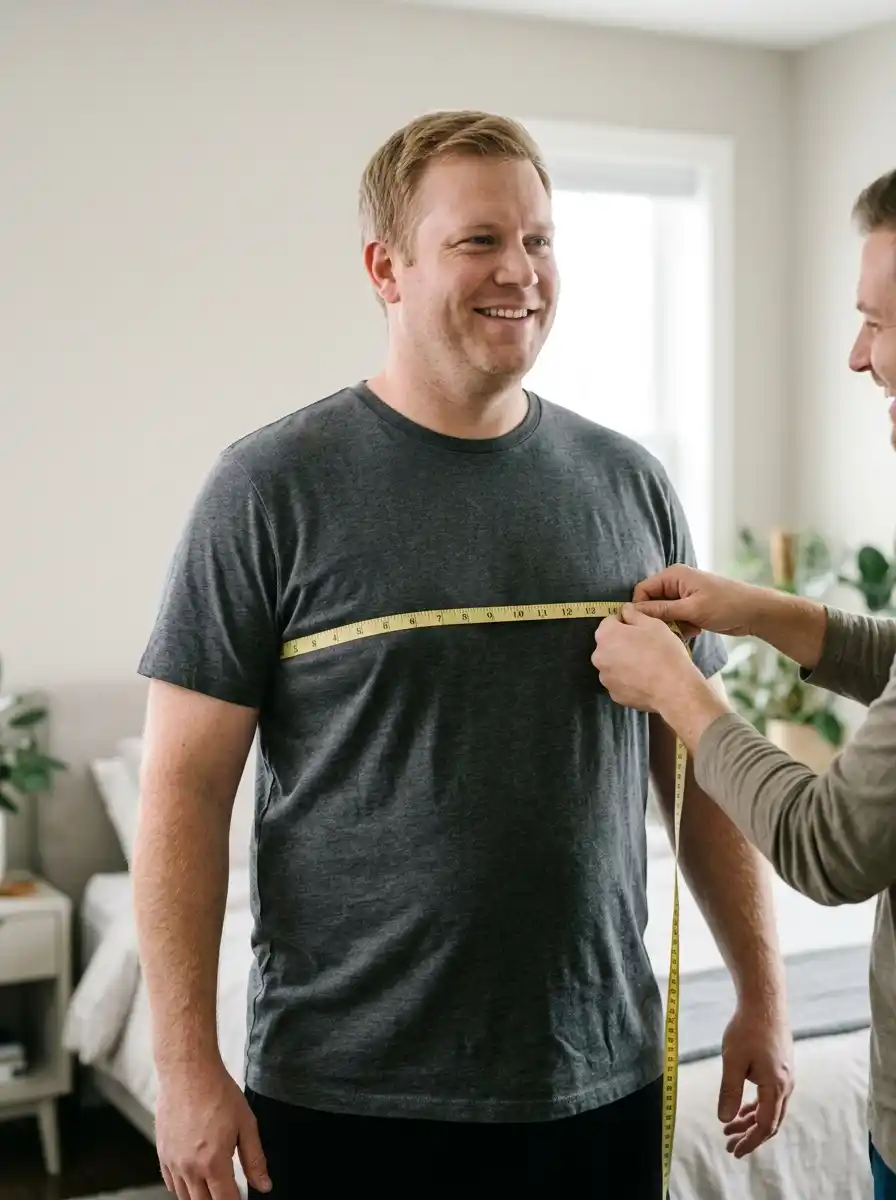
Taking your own chest measurement gives a wrong number, because raising your arms changes it. Hand the tape to a helper and stand relaxed in a thin T-shirt. Have them measure:
- Chest: around the widest part, under your armpits, with the tape level
- Stomach: around the fullest part, usually at your belly button
- Shoulders: across your back, from one shoulder bone to the other
- Sleeve: from the shoulder seam down to your wrist bone
- Inseam: from your crotch to the top of your shoe
The tape should lie snug but not tight. Type each number into your phone right away. If your stomach measures bigger than your chest, write that down too, because it changes which suit cuts will fit you.
Don’t suck in your stomach. A suit cut to your held-in size will pull at the button by the time the speeches start.
Match the fabric to the season and dress code
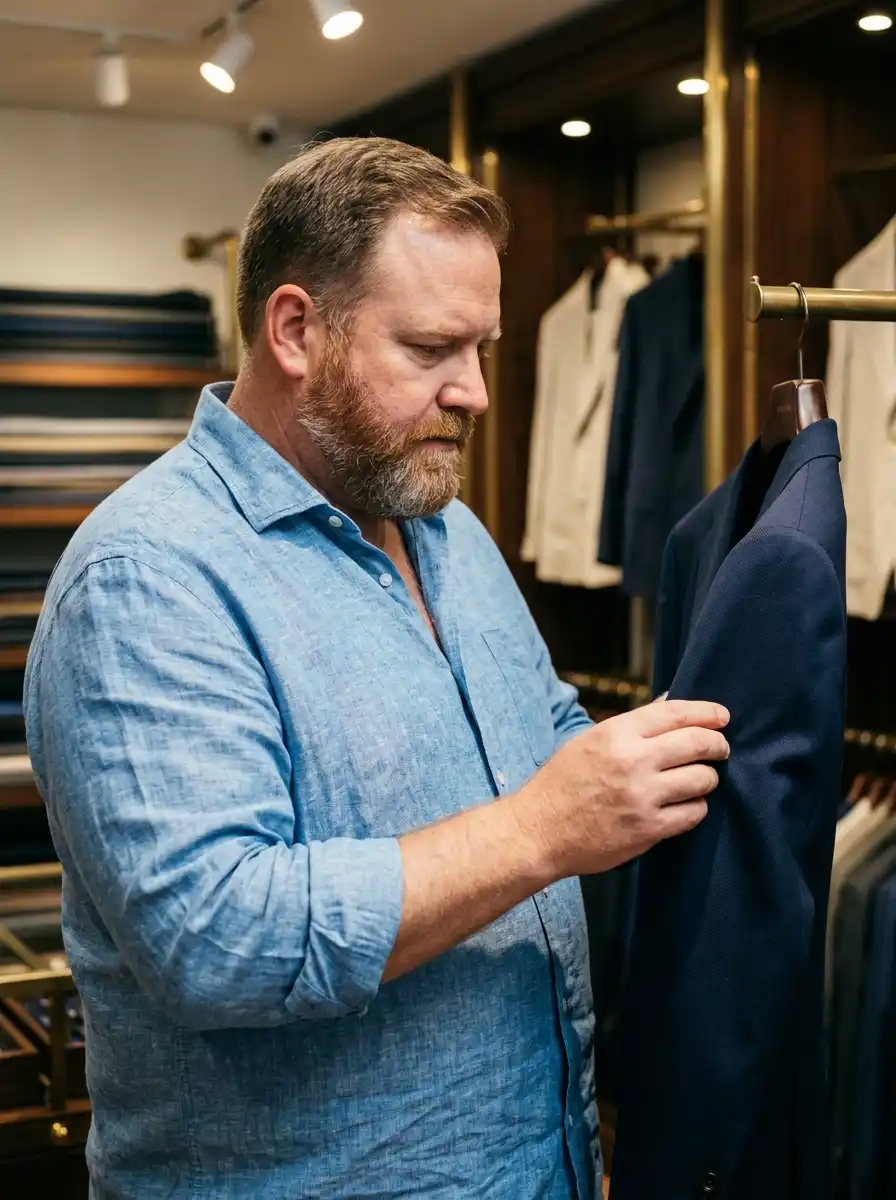
If the wedding is outside in July, a heavy wool suit will have you sweating through your shirt before the vows.
Bigger guys tend to run warm, so check the fabric weight on the tag or product page. For warm months, look for lightweight wool around 7 to 9 oz.
For fall and winter, 10 to 12 oz wool or flannel holds its shape and keeps you warm.
Skip 100 percent polyester, because it traps heat and turns shiny under camera flash. Read the invitation, too. “Black tie” means a tuxedo, not a suit.
Pick a dark, solid color that looks good in photos
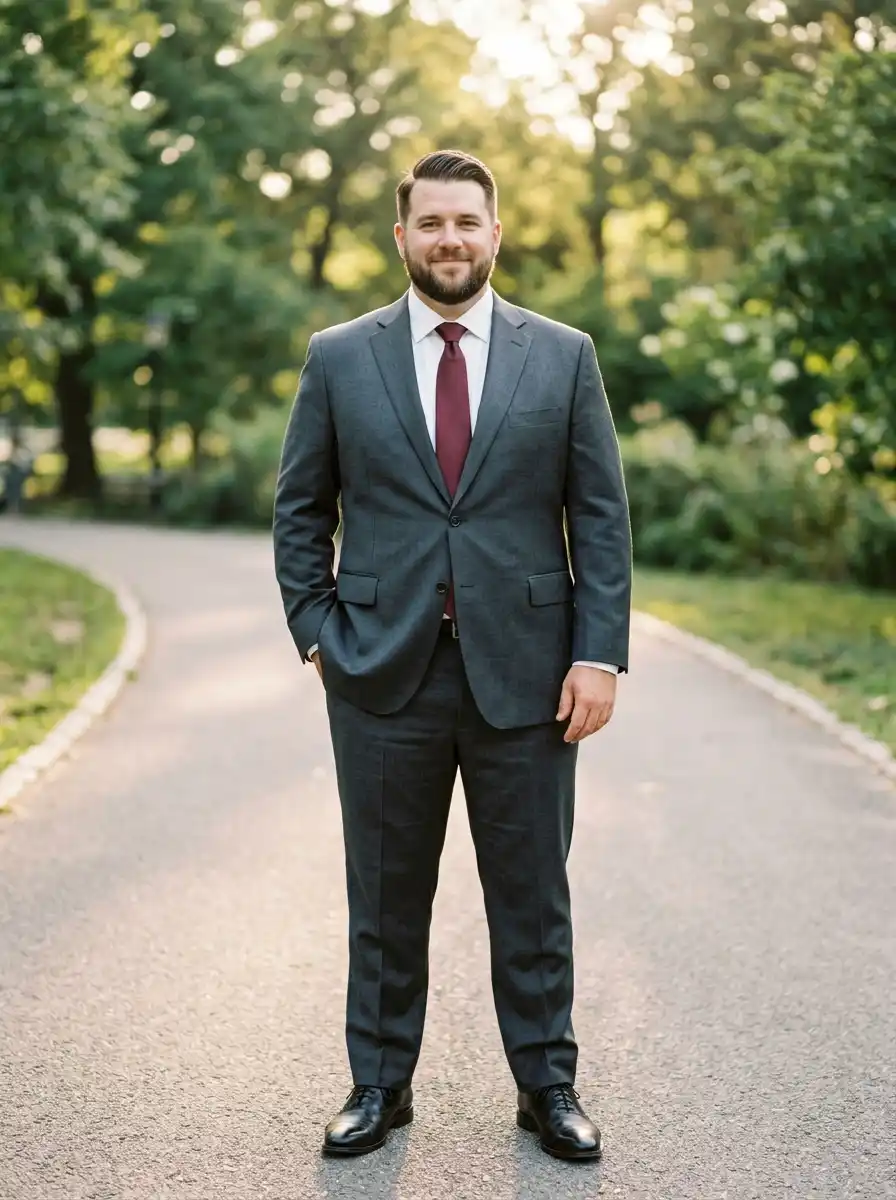
Navy and charcoal do two jobs at once. They make your frame look longer and leaner, and they hide wrinkles after hours of sitting and hugging.
Black often looks flat in photos and loses the suit’s shape. Skip bold checks and wide stripes, since they add width. A subtle texture is fine.
Shortlist stores that stock your size in person
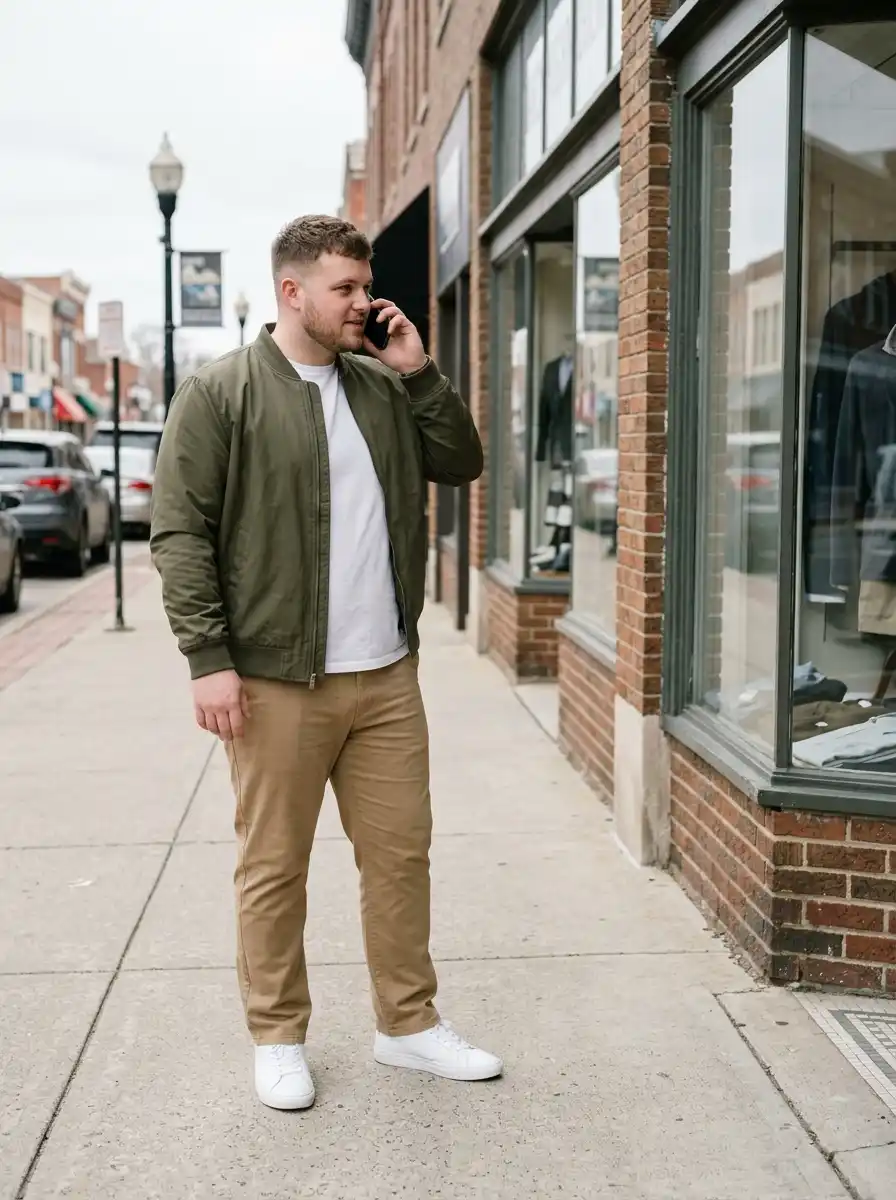
Three to five stores is enough. Visit more than that and you’ll burn out before you find anything. Build your list from these:
- Big-and-tall specialists (like DXL), which carry larger jackets and often a “portly” cut made for a bigger stomach
- Department stores with an extended-size section
- Made-to-measure brands online, which build the suit from your step 3 numbers
- Local tailors who make custom suits, usually the priciest option
Keep at least one store you can visit in person on the list. Trying a jacket on tells you more than any size chart.
Call before you drive over. Many stores keep their largest sizes online only, so ask exactly which jacket sizes are on the floor today.
Fit the jacket to your shoulders first
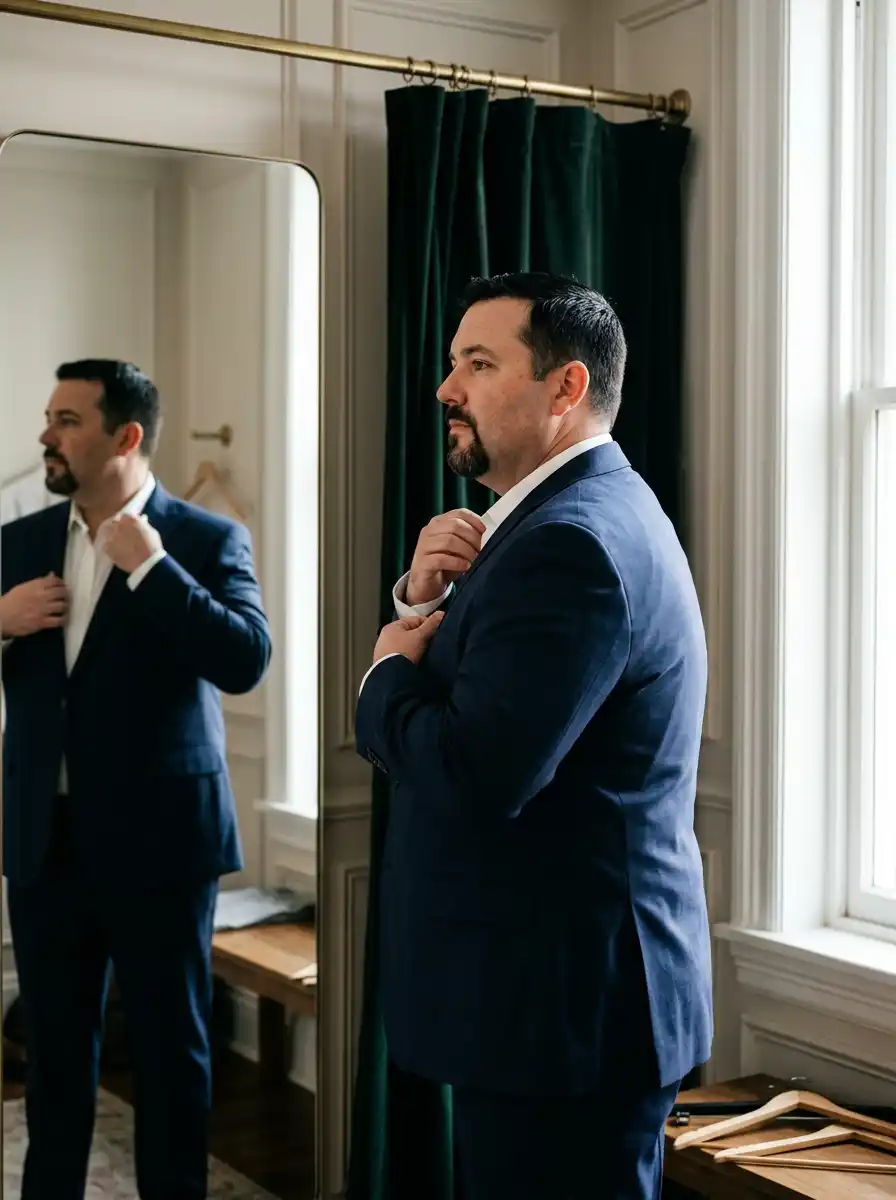
A tailor can adjust sleeves, waist, and length. Shoulders are the one part they can’t really fix. Put the jacket on and look in the mirror from the side.
The shoulder seam should end right at the edge of your shoulder bone. If the pad sticks out past your arm and the sleeve dents in below it, the jacket is too big.
If the fabric pulls tight across your upper back when you cross your arms, it’s too small.
Don’t size up to fit your stomach if the shoulders already fit. You’ll end up with shoulders that look like a coat hanger. Ask for a “portly” or “executive” cut in your shoulder size instead, which adds room at the waist only.
Check that the jacket length covers your seat
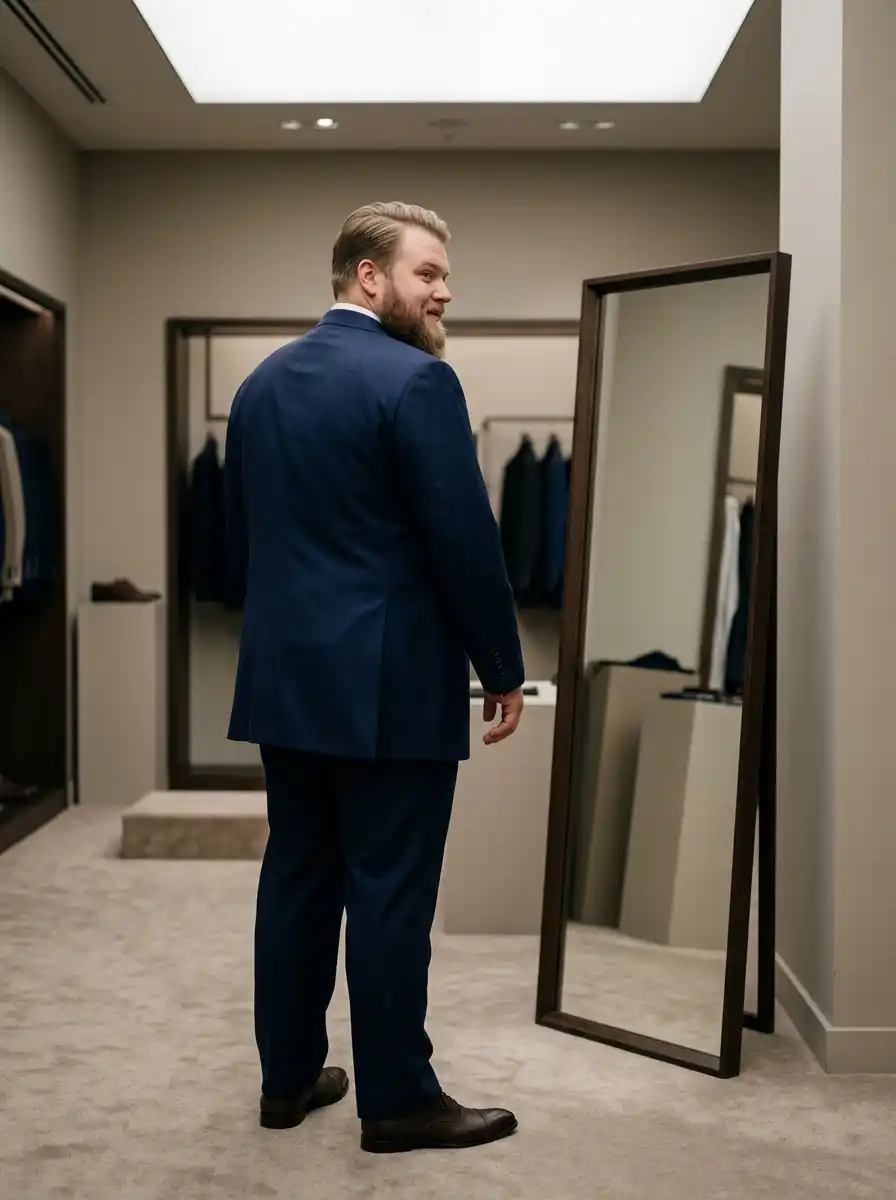
With your arms hanging relaxed, curl your fingers up toward your palm. The jacket hem should rest in your cupped fingers and fully cover your backside.
On a bigger frame, a jacket that’s even 1 inch too short makes you look wider. If regular sizes run short on you, ask for a “long” size, like 54L instead of 54R.
Choose trousers with a mid or high rise
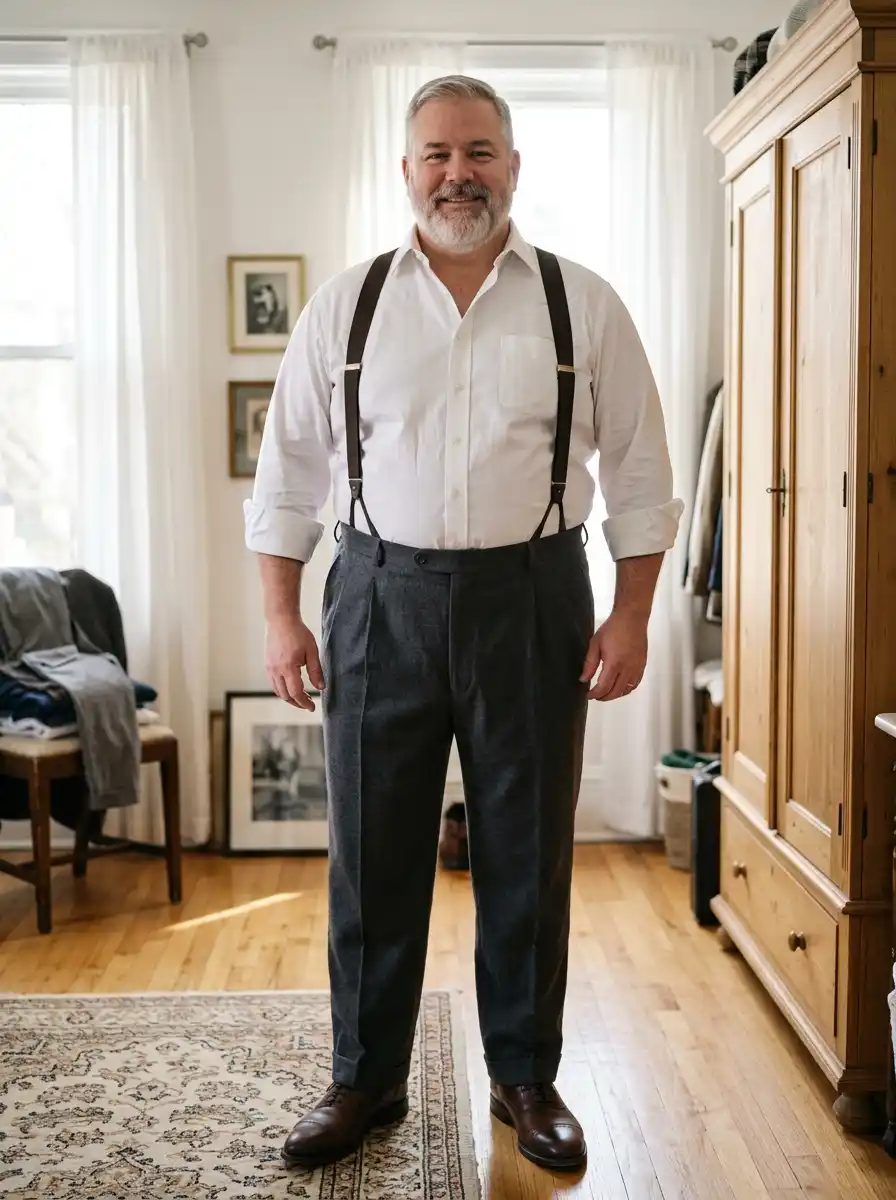
Low-rise trousers slide under your belly. Then the crotch sags, the hems drag, and you spend the reception hiking them up. Before you buy, check three things:
- Waistband: sits at your belly button or slightly above, not under your stomach
- Front rise: at least 11 inches from the crotch seam to the top of the waistband
- Seat and thighs: you can pinch about 1 inch of spare fabric on each side
Side adjusters or suspenders hold trousers up better than a belt, because nothing digs into your middle when you sit. If you don’t have suspenders, a belt one notch looser than usual works.
Sit, reach, and walk in the suit before you pay
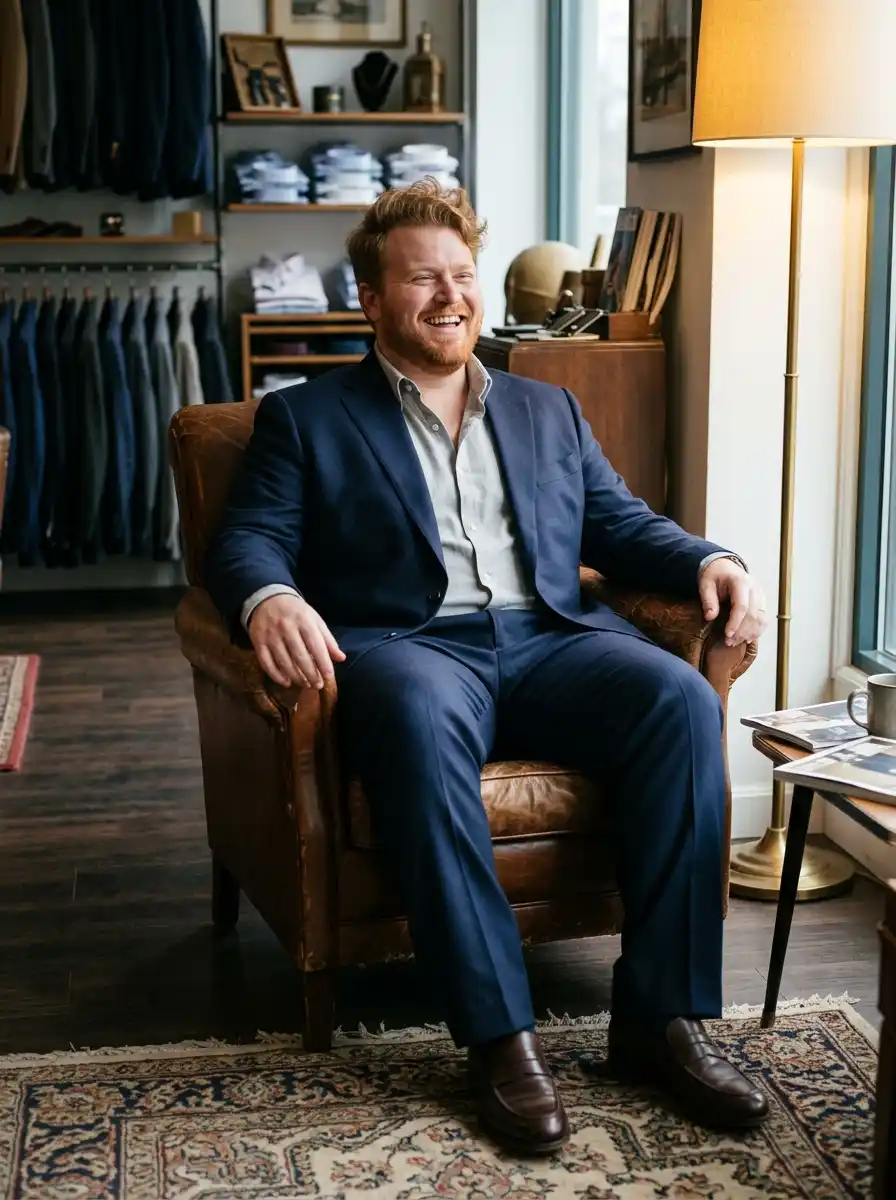
On a wedding day you’ll spend most of your time sitting, hugging, and dancing, not standing still in front of a mirror. Test those moves in the store.
Unbutton the jacket and sit in a chair for 1 minute. The waistband shouldn’t dig in, and the thighs shouldn’t feel tight.
Stand up, button the jacket, and reach forward like you’re going in for a hug. Your sleeves shouldn’t ride more than 1 inch up your arm.
Walk 20 steps and have your helper take a photo of your back. If the vents flare open, the jacket is too tight through the seat.
Book your tailor at least six weeks out
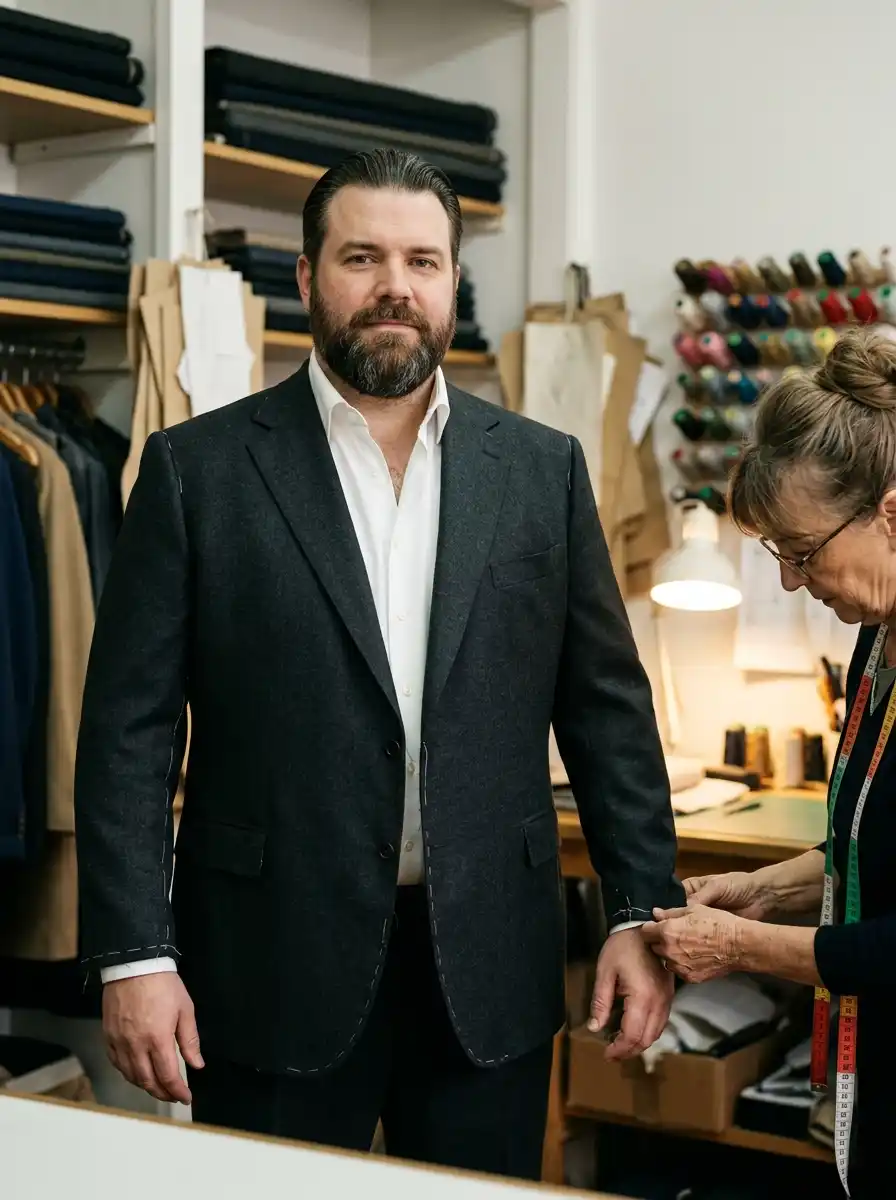
Bring the suit, the shirt, and the shoes to the first appointment. Your shoe height changes where the trouser hem should land. Ask the tailor for these changes:
- Sleeves: show ¼ to ½ inch of shirt cuff
- Trouser hem: a slight break, where the fabric barely rests on your shoe
- Jacket waist: adjusted so the button closes without pulling into an X shape
Expect 2 to 3 weeks before the suit is ready.
Ask how much extra fabric is left in the waist seams. If your weight changes before the wedding, you’ll know whether the tailor can let the trousers out or take them in.
Wear the full outfit to your final fitting
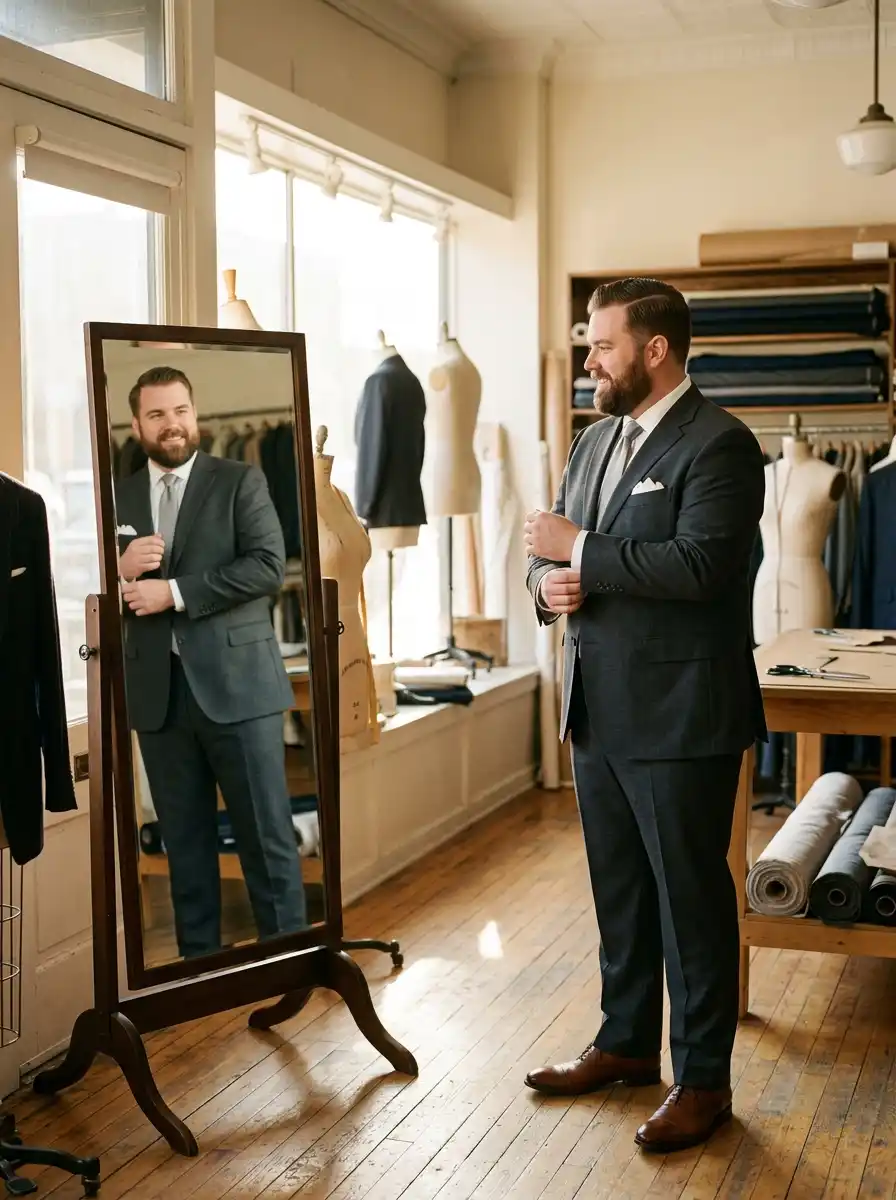
Schedule the final fitting 1 to 2 weeks before the wedding. Wear everything: the shirt, undershirt, belt or suspenders, and shoes.
Walk around and sit down once more. If something still pulls, say so now, while there’s still time to fix it.
At home, hang the suit on a wide wooden hanger inside a breathable garment bag, not plastic.
Conclusion
Now you know how to shop for a wedding suit when you’re plus size, from the first measurement to the final fitting.
Fit the shoulders, cover your seat, choose a higher rise, and let a good tailor handle the rest.
Once the suit is hanging in its bag, pick out your shirt and tie so the whole outfit comes together.
Save this pin to your wedding board so the checklist is on your phone when you walk into the store.
FAQs
Plus-Size Wedding Suit FAQ
Should I wear a double-breasted suit?
Usually not. It layers extra fabric across your middle, which adds width. A single-breasted, two-button jacket is the safer choice.
Does a vest help or hurt?
A well-fitted vest can smooth your middle, but it has to fully cover the trouser waistband. Skip it for outdoor summer weddings, since it adds a lot of heat.
Can I rent a suit instead?
Yes, but rental shops stock fewer large sizes and can’t do real alterations. If you rent, order at least 6 weeks early and try two sizes.
Is made-to-measure worth the money?
It often is if your stomach is much bigger than your chest, or you fall between sizes. Allow 3 to 6 weeks for it to arrive.
What if my weight changes before the wedding?
Buy for the size you are now, and save the final tailoring for 4 to 6 weeks before the date. Most trousers can be let out or taken in by about 1 to 2 inches at the waist.