
Your interview is in two days. You open the closet, pull out the one dress shirt that fits, and hold it up. Then you remember the last video call, where you looked boxy, shiny, and somehow wider than you really are. I’ve been there.
Big guys have a few extra problems to solve when figuring out what to wear for a virtual interview. Plus size bodies and webcams don’t always get along.
The camera only sees you from the chest up, and it flattens everything. It makes white shirts glow and thin stripes buzz. A low laptop angle adds a second chin you don’t have in real life.
Most of this is fixable. You need the right shirt, a layer that fits at the shoulders, and five minutes of camera setup. This guide walks you through each piece in order, from checking the dress code to running a test call in your full outfit.
By the end, you’ll have an outfit that looks sharp on screen and stays comfortable through an hour of sitting. Plan on about 45 minutes of hands-on work, spread over two days so nothing gets rushed the morning of.
You don’t need a new wardrobe. Most guys already own most of what’s on the list below.
What You Need
- 1 solid button-up shirt (mid-tone color)
- 1 blazer or structured jacket (optional for casual roles)
- 1 moisture-wicking V-neck undershirt
- Dress pants or chinos
- Shoes you’d wear in person
- Collar extender (optional, about $5)
- Steamer or iron and ironing board
- Beard trimmer or razor
- Laptop stand or 3–4 thick books
- Desk lamp or a window for light
- Lint roller
- Phone or laptop for a test recording
At a Glance
- Check the company’s dress code
- Pick a solid, mid-tone shirt
- Test the collar and chest fit while seated
- Choose a fabric with structure
- Add a blazer that fits at the shoulders
- Wear a moisture-wicking undershirt
- Put on real pants and shoes
- Steam or iron the shirt the night before
- Trim your beard and neckline the day before
- Raise your camera to eye level
- Run a test call in your full outfit
Check the Company’s Dress Code Before You Pick Anything

Your outfit should match what people wear at that office, then go one notch dressier. Spend 10 minutes looking at:
- The company’s LinkedIn page and employee profile photos
- The “About” or “Team” page on their website
- Their Instagram or any photos in the job posting
Banks, law firms, and sales roles usually mean a jacket. Tech and creative jobs lean toward a collared shirt with no tie. If you still can’t tell, ask the recruiter. It’s a normal question, and it shows you’re taking the interview seriously.
Pick a Solid Shirt in a Mid-Tone Color

Cameras see color differently than mirrors do. Bright white makes the webcam darken everything else, so your face turns gray.
Black does the opposite and swallows your outline. Mid-tones sit in the safe zone: navy, light blue, soft gray, sage, or dusty purple.
A solid color also smooths your shape better than a pattern because the eye has nothing to follow.
Thin stripes, tiny checks, and small houndstooth can shimmer or “buzz” on a webcam. Interviewers notice it in the first few seconds. If your best-fitting shirt has a fine pattern, save it for in-person days.
Test the Collar and Chest Fit While Seated
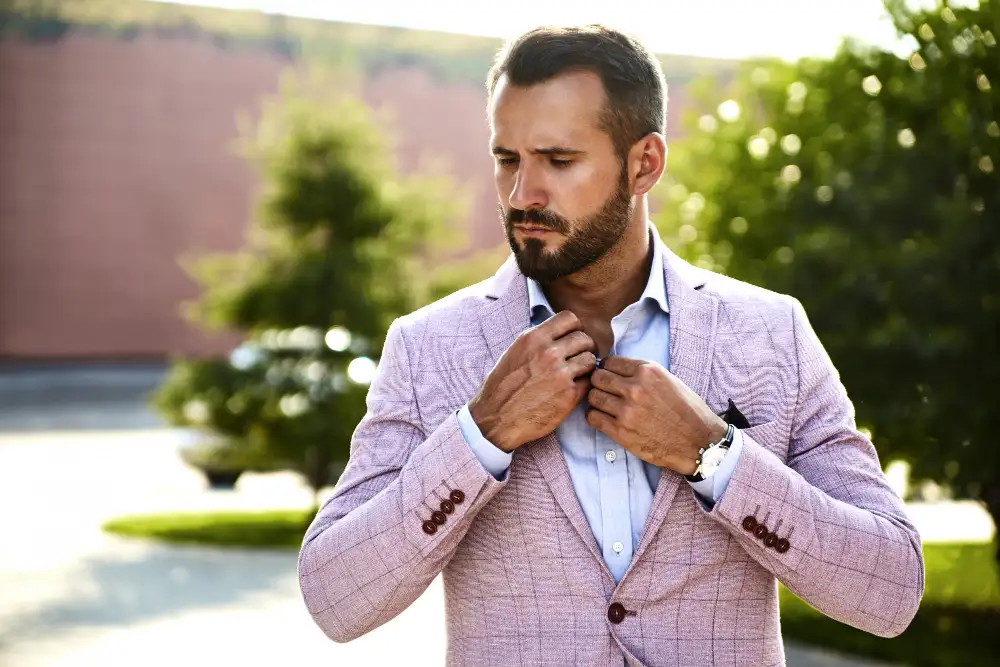
Standing in front of a mirror tells you almost nothing. A shirt that looks fine standing up can pull open across the chest and belly the moment you sit, and that’s right where the camera points.
Button the shirt to the top and sit in the chair you’ll use for the interview. Slide two fingers between the collar and your neck. They should fit snugly with no extra room.
Then look down at the buttons. Gaps or X-shaped pull lines across the front mean the shirt is too small.
If the shirt fits everywhere except the neck, buy a collar extender. It adds about ½ inch and hides under the collar. For a small gap at one chest button, a strip of double-sided fashion tape holds it flat for the whole call.
Choose a Fabric With Some Structure
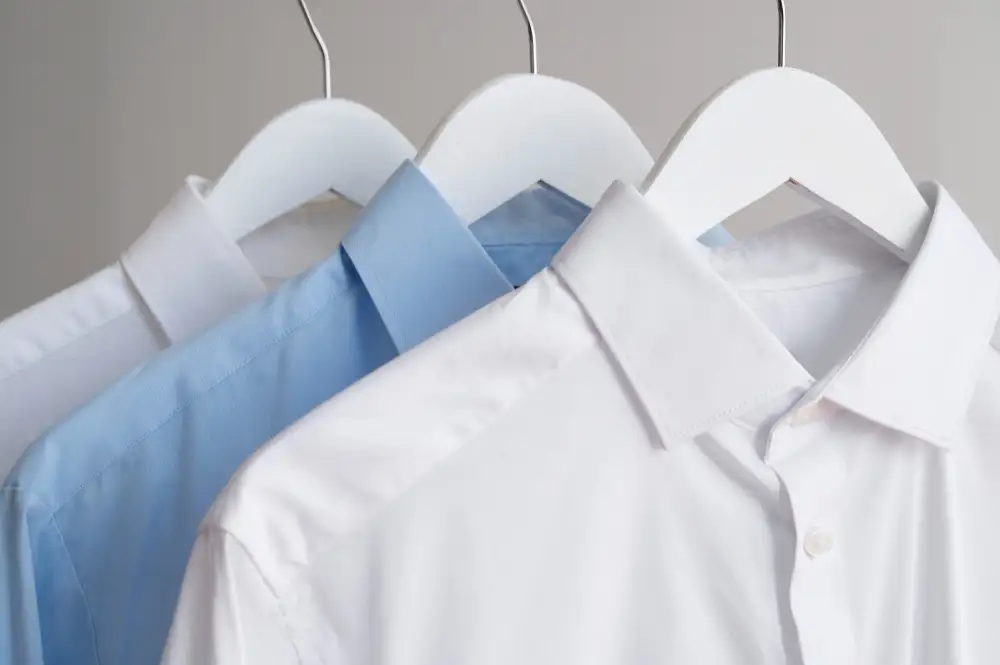
Two fabrics do most of the work here: oxford cloth and poplin. Both are cotton weaves tight enough to hang in a straight line from your shoulders instead of tracing every curve.
Skip thin stretch blends and anything with a sheen, because they cling to your stomach and bounce light back at the camera.
To test a shirt, squeeze a fistful of the fabric for 5 seconds. If it stays crumpled, it will look rumpled on screen too.
Add a Plus Size Blazer That Fits at the Shoulders

If the role calls for a jacket, the shoulders are the one part you can’t fake. They also take up most of the frame. Put the blazer on over your interview shirt and check four things:
- The shoulder seam lands right at the edge of your shoulder bone
- There’s no dent or ripple in the sleeve below the seam
- You can reach toward your keyboard without the back pulling tight
- The lapels lie flat instead of bowing out
Leave it unbuttoned while you sit. A buttoned blazer pulls into an X shape across a seated stomach. No blazer? A dark, unstructured cardigan or chore jacket works for business-casual roles.
Buy for the shoulders and tailor the rest. A tailor can take in the waist or shorten the sleeves for around $20–$30, but almost nobody can fix shoulders that are too narrow.
Wear a Moisture-Wicking Undershirt
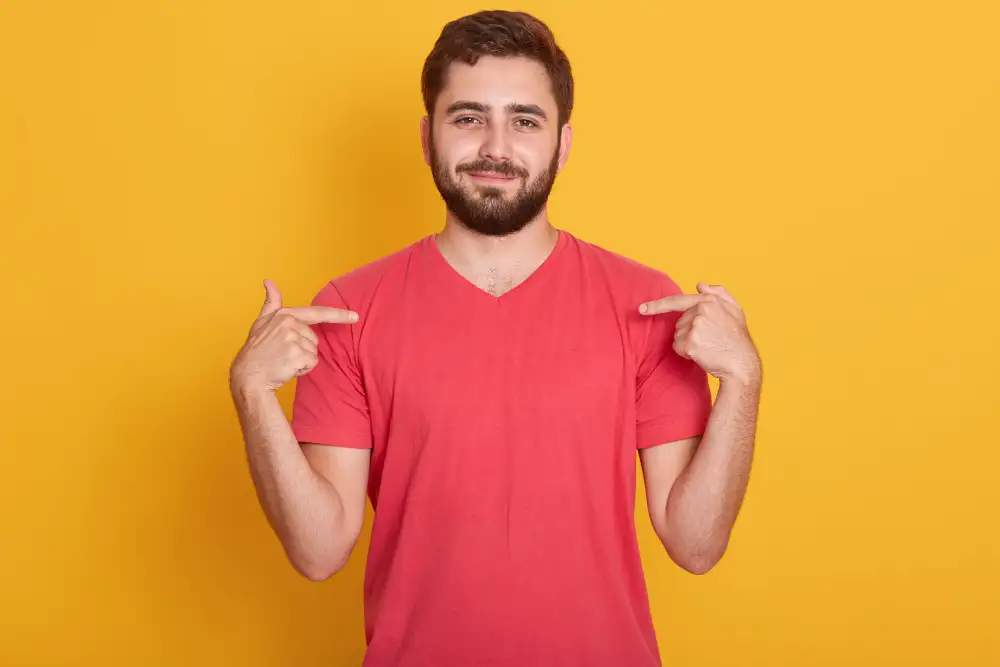
Interview nerves plus a bright lamp means sweat. A moisture-wicking undershirt pulls it off your skin before it soaks into your dress shirt, so no dark patches show up under your arms or across your chest.
Pick a V-neck so it stays hidden under an open collar. Go with a shade close to your skin tone instead of white, because white undershirts show through light-colored shirts on camera.
Put On Real Pants and Shoes Anyway
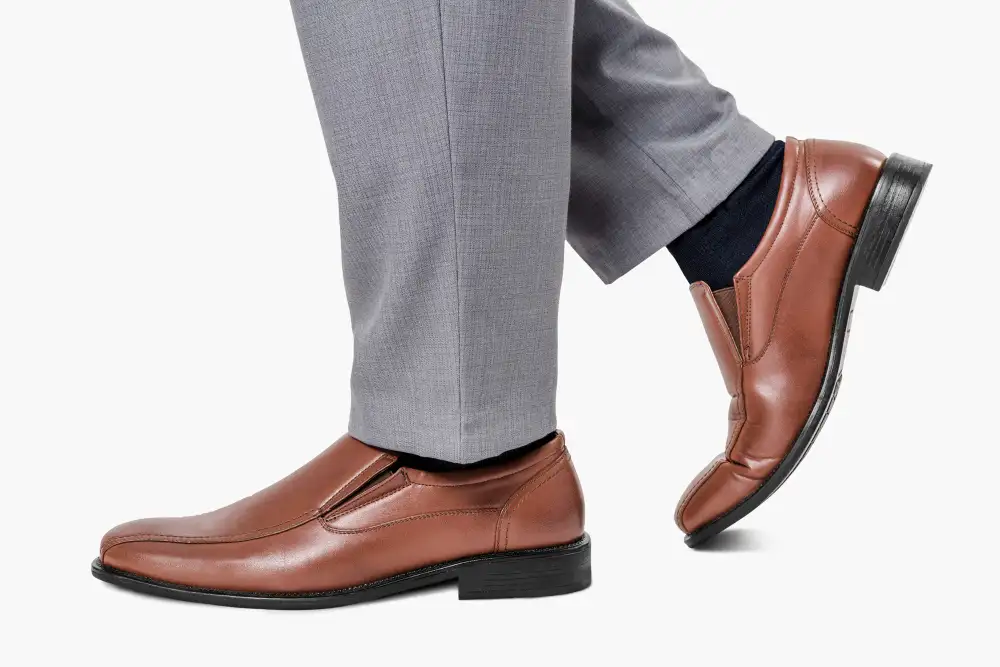
Picture the interviewer asking you to grab a document from another room. Or your dog knocks over a glass and you jump up without thinking.
Gym shorts and slides ruin the whole look in one second. There’s a quieter reason too: people sit taller and talk with more energy when they’re fully dressed.
Dark chinos or dress pants plus the shoes you’d wear to the office are enough.
Steam or Iron Your Shirt the Night Before
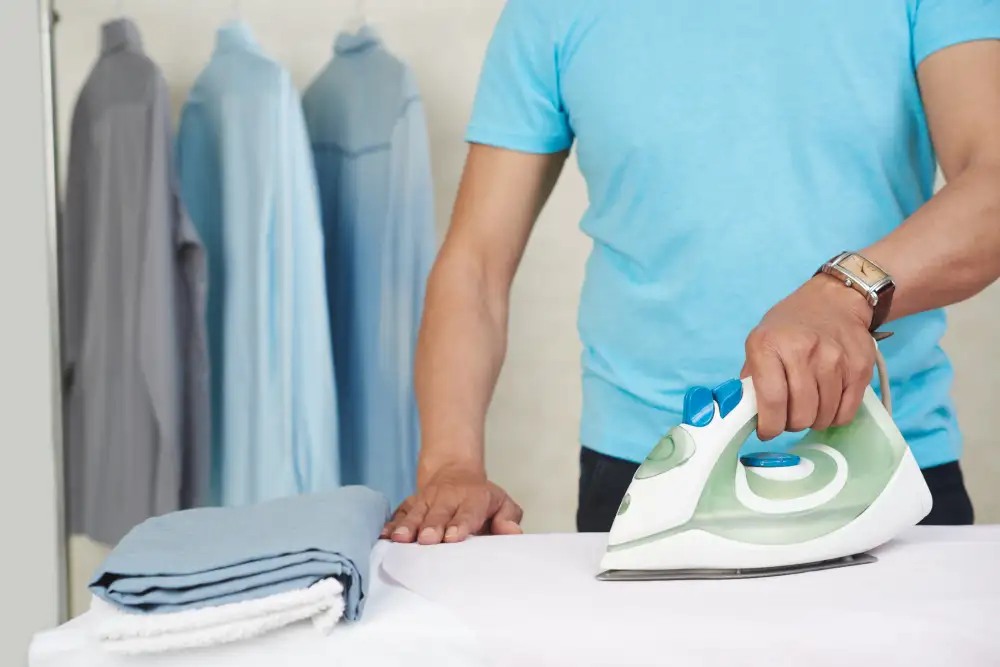
Morning ironing leads to rushing, scorch marks, and sweat before the call even starts.
The camera only sees the top half of the shirt, so set the iron to the cotton setting (about 400°F) with steam on, and press these three areas:
- The collar, both sides, working from the points toward the middle
- The button placket down the front
- Both front panels, from the shoulders down to mid-chest
Hang the shirt with the top button done so the collar keeps its shape overnight. While the blazer is out, run a lint roller over the shoulders and lapels.
Trim Your Beard and Neckline the Day Before
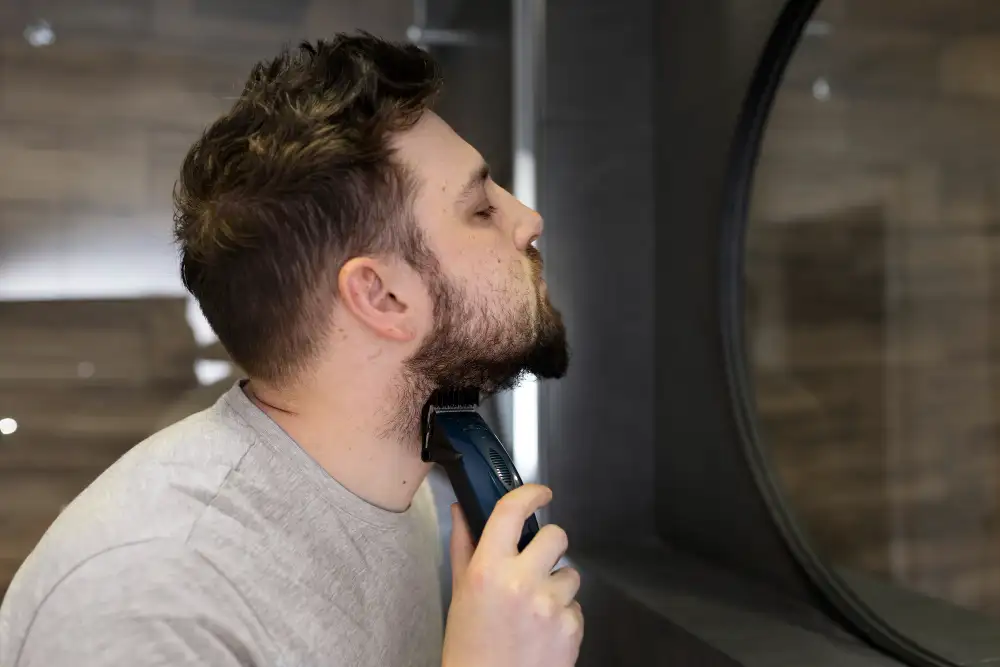
On camera, a clean line under your jaw does more for your face than any shirt. It separates your chin from your neck, so the webcam shows a jawline instead of one soft shape.
Picture a curve running from behind one ear to the other, about 1 inch above your Adam’s apple, or roughly two fingers’ width. Shave everything below that line.
Then tidy the cheek line and any strays near the collar. Clean-shaven guys should shave the evening before too.
Skip the razor on interview morning. Fresh razor burn shows up as red blotches on a webcam, and irritated skin gets shiny faster. Giving it 24 hours lets the redness calm down.
Raise Your Camera to Eye Level or Slightly Above

Most laptops sit too low. From down there, the camera looks up at your chin, adds a second one, and makes your shoulders look narrow next to your body.
Stack 3–4 thick books under the laptop until the lens lines up with your eyes or sits about 1 inch higher.
Then sit about an arm’s length back. The frame should cut off around mid-chest, with a little space above your head.
Light from the front beats light from above. Face a window, or set a lamp behind your laptop at about eye height. An overhead ceiling light alone casts shadows under your eyes and chin.
Run a Test Call in Your Full Outfit

Two minutes of recording will catch problems a mirror never shows. Get fully dressed, sit in your interview spot, and record yourself on Zoom or your phone’s front camera.
Do it at the same time of day as the interview, because daylight changes how colors look. Talk the whole time, as if you’re answering a question. Then play it back and check:
- Does the shirt color look natural next to your skin?
- Do any buttons gap when you lean forward?
- Is your forehead or nose shiny?
- Can you spot wrinkles, lint, or a crooked collar?
Fix what you find, then record once more to confirm.
Frequently Asked Questions
Do I need to wear a tie for a video interview?
Only if the company wears ties in person, like most banks and law firms. For everyone else, an open collar with a blazer looks sharp and keeps your neck comfortable.
Is a polo shirt okay for a virtual interview?
For very casual roles, yes, but a button-up almost always looks better on camera. Polo collars tend to curl and flatten, and the knit fabric clings more than woven cotton.
What if I don’t own a blazer that fits?
A well-fitting shirt alone beats a blazer that’s tight in the shoulders. For business-casual jobs, a dark cardigan or unstructured jacket fills the same role.
Should I tuck in my shirt if they can’t see my waist?
Yes. An untucked shirt bunches up around your stomach when you sit, and that bulk shows at the bottom of the frame.
Can I wear a sweater over my shirt instead?
A thin merino or cotton crewneck over a collared shirt works for casual and tech roles. Avoid chunky knits, since they add bulk to your chest and shoulders on screen.