
You tried on a suit for a friend’s wedding once, then saw the photos and winced. The jacket looked boxy. The color washed you out, or somehow made you look wider than you are.
Now it’s your own wedding, and those photos will hang on a wall for the next 40 years. Learning how to pick the right suit color as a bigger groom is the fix, and it has less to do with hiding your size than you think.
The right color comes down to three things: your skin, your venue, and the camera. Get those right and the suit works with your body, not against it.
By the end of this guide, you’ll have one tested suit color, a shirt and tie pairing that goes with it, and a plan for your groomsmen.
You won’t be guessing under harsh store lights. You’ll hold real fabric up to your own face in daylight, then check it on camera with and without flash.
The hands-on part takes about 3 to 4 hours. Most of the wait is for fabric swatches to arrive in the mail, so plan on 1 to 2 weeks total.
Grab a notebook, find one friend who will tell you the truth, and let’s get going.
Write Down Your Wedding Date, Time of Day, and Venue Type

Your venue shrinks the color list before you ever touch a fabric. Open a notebook and jot down four things:
- The month and season
- The ceremony start time
- Indoor, outdoor, or both
- Any dress code printed on the invite
Daytime and summer weddings suit mid-tones like medium blue or mid-gray. Evening and winter weddings can carry deeper shades like dark navy or charcoal. Keep this page close, because you’ll need it again in Step 6.
Find Your Skin Undertone with the Vein and Jewelry Test
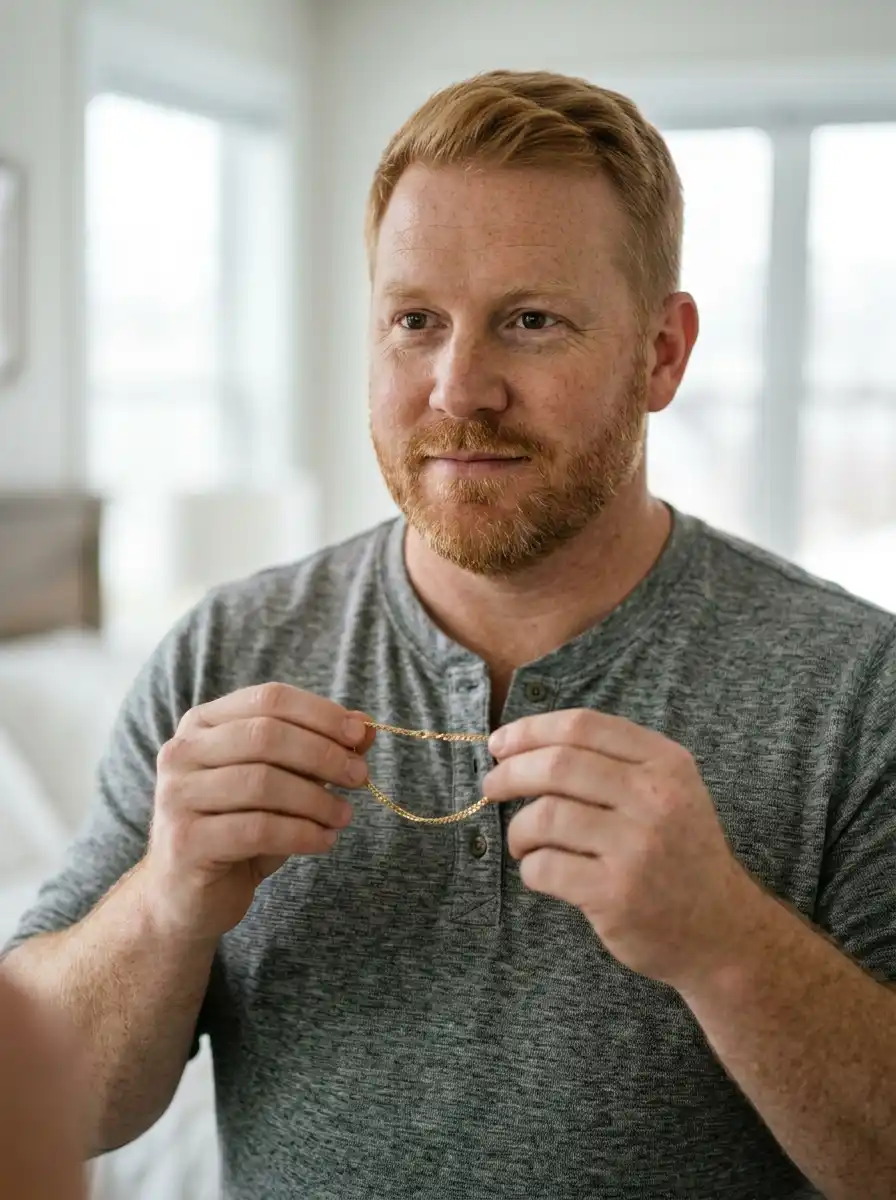
Two grooms can wear the exact same navy suit and look totally different in it. The reason is undertone, the color sitting under the surface of your skin.
Stand by a window in daylight and look at the veins on your inner wrist for about 30 seconds.
Green veins usually mean a warm undertone. Blue or purple veins point to cool. A mix of both means neutral.
On deeper skin tones, veins can be hard to see. Hold a gold piece, then a silver piece, about 2 inches below your chin.
Whichever metal makes your face look brighter and healthier tells you the answer: gold means warm, silver means cool.
Can’t tell after both tests? You’re most likely neutral, and that’s good news. Neutral undertones can wear almost any suit color, and navy flatters nearly every skin tone.
Pick the Right Suit Color as a Bigger Groom by Starting with Navy or Charcoal

Dark shades soak up light and soften the edges of your shape, so the eye reads one clean line from shoulder to shoe.
Navy and charcoal do this without the harshness of pure black. In photos, black often flattens into a dark block where you can’t see the lapels, buttons, or tailoring.
Write both shades at the top of your list. Every other color has to beat them.
Skip Shiny Fabrics and Look for a Matte Finish

If a fabric glints when you tilt it under a lamp, put it back. Shine bounces light off every curve, and that adds bulk where you don’t want it.
A matte wool drapes and lets the color do the work. Look for wool labeled Super 100s to 130s.
Higher numbers like 150s often carry more sheen and wear out faster. For summer, a wool and linen blend breathes well and stays flat-looking.
Sateen finishes, cheap polyester blends, and sharkskin all look fine in the store. Under reception lights and camera flash, they shimmer and outline your shape. Hold the fabric at an angle under a bright light before you buy.
Choose a Solid or a Very Quiet Pattern

Three patterns cause most of the trouble for bigger grooms: bold windowpane checks, wide chalk stripes, and loud plaids. Big squares work like a grid that measures your width for everyone in the room.
A solid color is the safest bet. If you want some texture, try birdseye or nailhead weaves, which read as solid from 3 feet away.
Thin pinstripes spaced about ¼ to ½ inch apart can help too, since they pull the eye up and down.
Line Up Your Shortlist Next to Your Wedding Color Palette
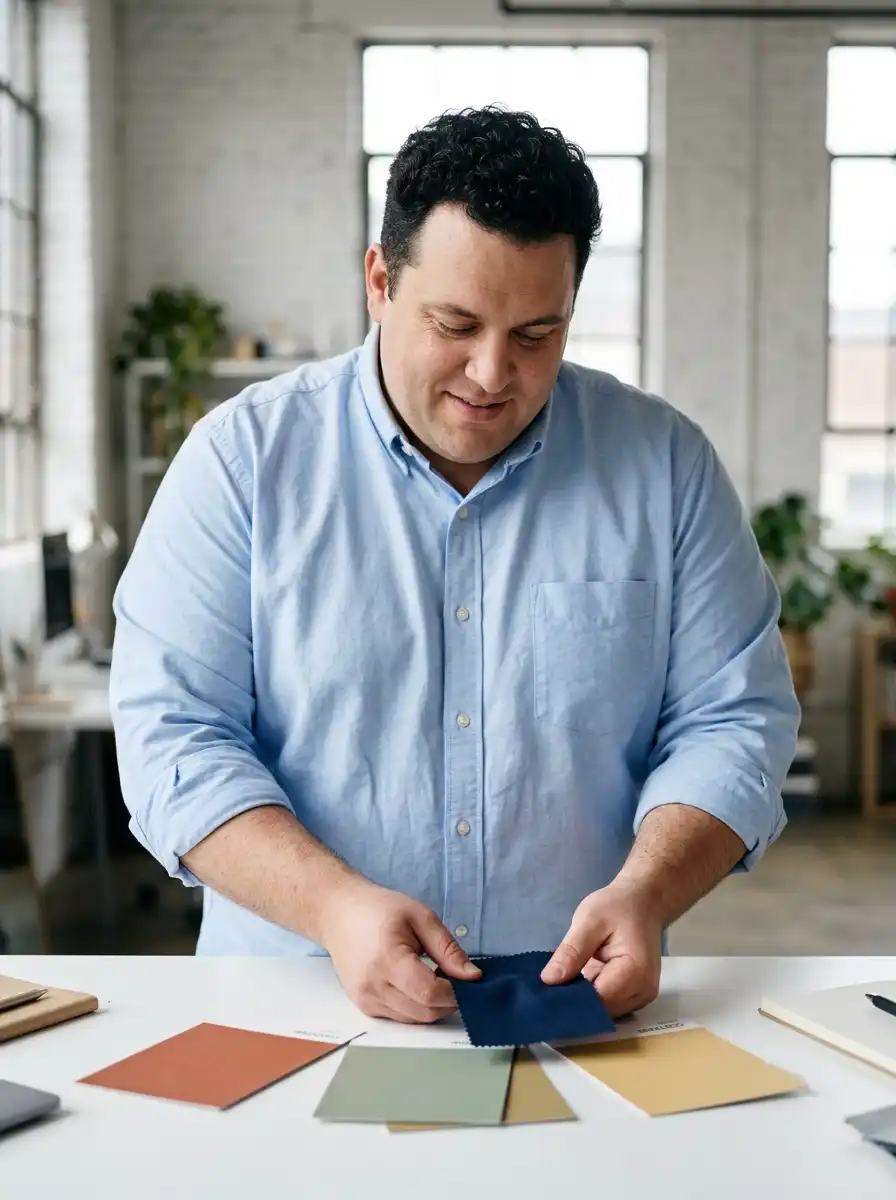
Pull out your notes from Step 1 and the wedding colors your partner or planner picked. Lay the palette on a table and put your top suit colors beside it, either as printed photos or screenshots on your phone.
Your suit is the backdrop. The wedding colors go into your tie, pocket square, and flower.
Some pairings that tend to work:
- Warm palettes (rust, terracotta, sage, gold) work with warm navy, mid-gray, or brown
- Cool palettes (dusty blue, lavender, blush, silver) work with charcoal or true navy
- Bold or jewel-tone palettes (emerald, burgundy) work with dark navy or charcoal
Skip a suit that matches the bridesmaid dresses exactly. You’ll blend into the background of your own wedding.
Decide Whether Your Groomsmen Will Match You or Set You Apart
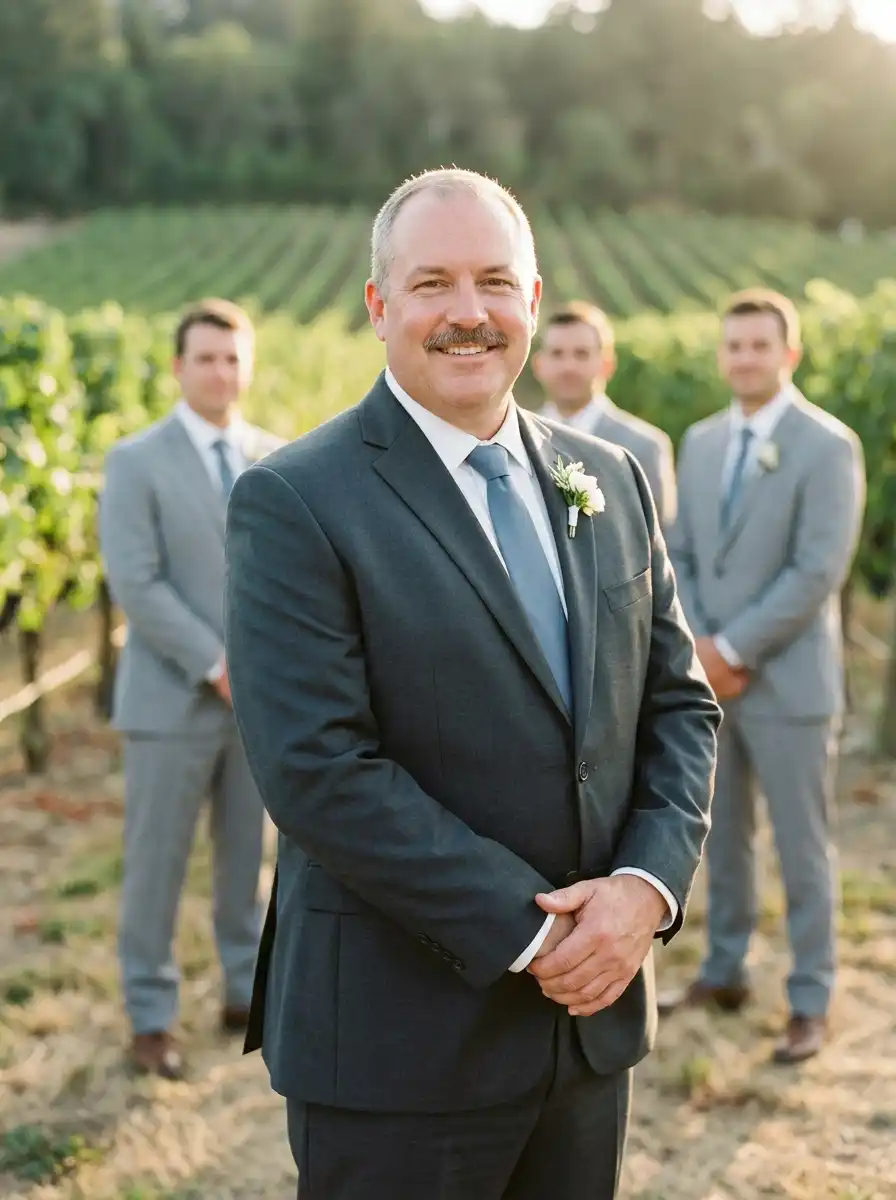
Picture the lineup photo: you, plus four to eight guys standing shoulder to shoulder. That shot shows up in every album.
If everyone wears the same suit, you stand out through a different tie, a vest, or your flower. If you’d rather wear a different suit, go one shade darker than the groomsmen.
A charcoal groom with mid-gray groomsmen looks planned and puts you in focus. The reverse doesn’t work as well.
A light suit on you next to dark suits on them makes you the widest shape in the frame.
Order Fabric Swatches in Your Top Two or Three Shades

Many online suit shops and tailors mail swatches for free or for a few dollars, and they usually arrive in 3 to 7 days.
Order them from the shop you plan to buy from, because one brand’s “navy” can look nothing like another’s.
Ask for swatches at least 4 x 4 inches, since tiny squares are hard to judge. If you’re shopping in person, ask whether you can carry a sample to the front window.
Hold Each Swatch Under Your Chin in Daylight
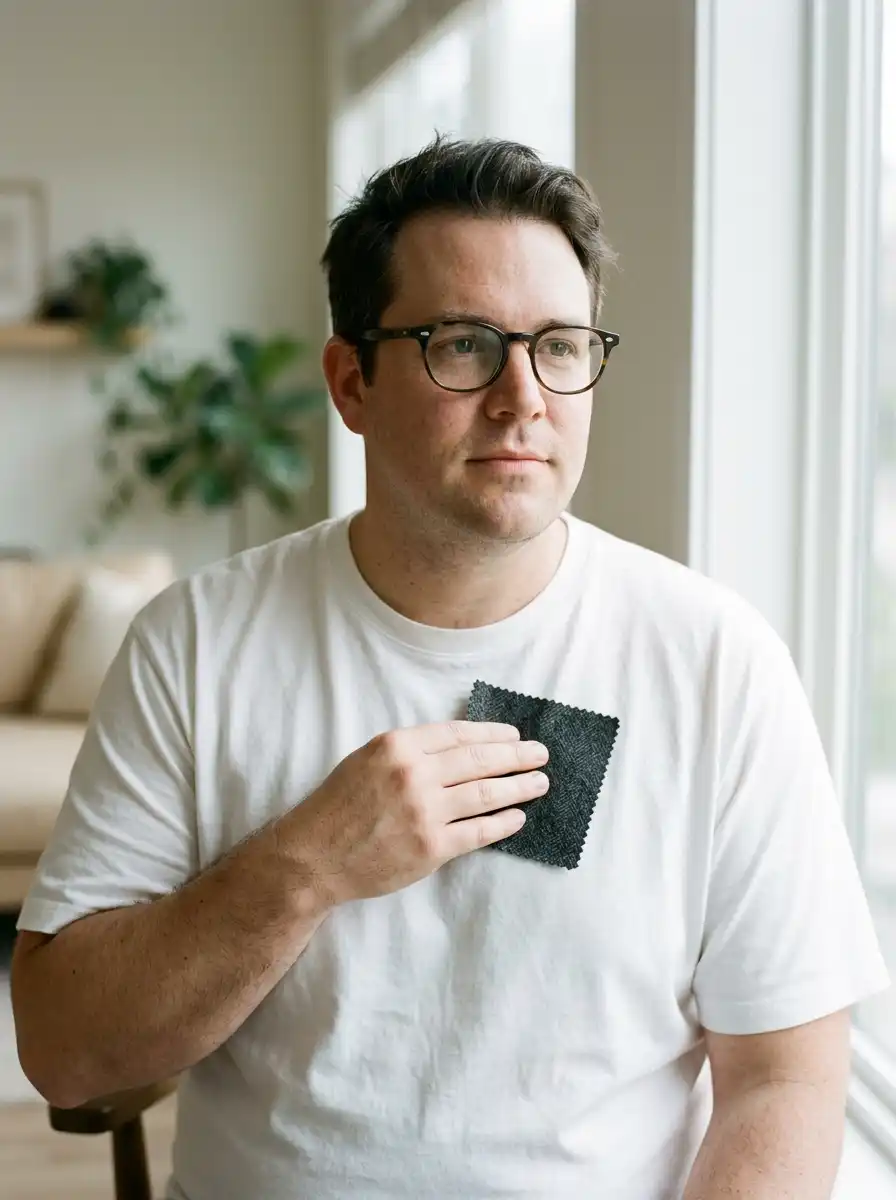
Store lighting is warm and flattering on purpose, so it can’t be trusted. Pick a spot near a window between 10 a.m. and 2 p.m., out of direct sun.
Press one swatch flat against your chest right below your collarbone, face the mirror, and look for about 10 seconds. Have your friend watch too. For each color, check three things:
- Does your face look brighter, or gray and tired?
- Do red patches or shadows under your eyes show up more?
- Does the color look the same as it did online?
Write one word next to each swatch: yes, maybe, or no.
Stare at your white sheet of paper for 5 seconds between swatches. It resets your eyes so the last color doesn’t tint how you see the next one.
Pair a Shirt and Tie with Each Swatch to Check Contrast
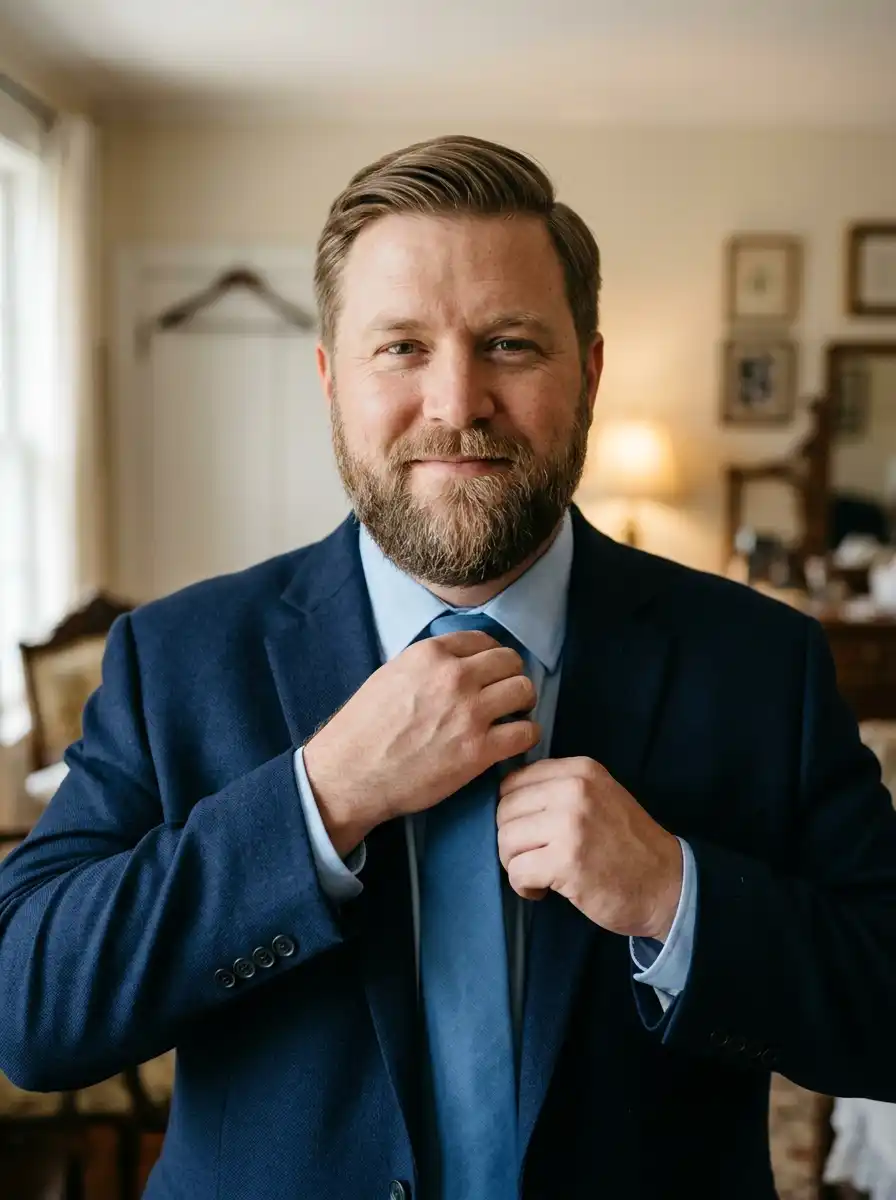
If you only kept one swatch, run this step anyway. Stark contrast, like a bright white shirt under a black suit, creates a hard block across your chest.
It pulls the eye sideways. Softer contrast builds one long line from collar to shoe. Try a light blue or soft white shirt with navy, and crisp white with charcoal.
Choose a tie darker than the shirt but lighter than the suit. Keep the tie at least 3 inches wide. Skinny ties make a broad chest look broader.
Take Flash and No-Flash Photos of Your Top Pick

Two photos per outfit. Have your friend stand about 6 feet away and shoot from the chest up: one indoors with the flash on, one by the window with it off.
Look at them side by side on your phone at full brightness. The color you saw in the mirror should still look like itself in both shots.
Flash often turns dark navy almost black and makes charcoal look flat and dull. If your pick loses its color under flash, try one shade lighter. Your photographer will use flash at the reception.
Lock In Your Color at Least 12 Weeks Before the Wedding
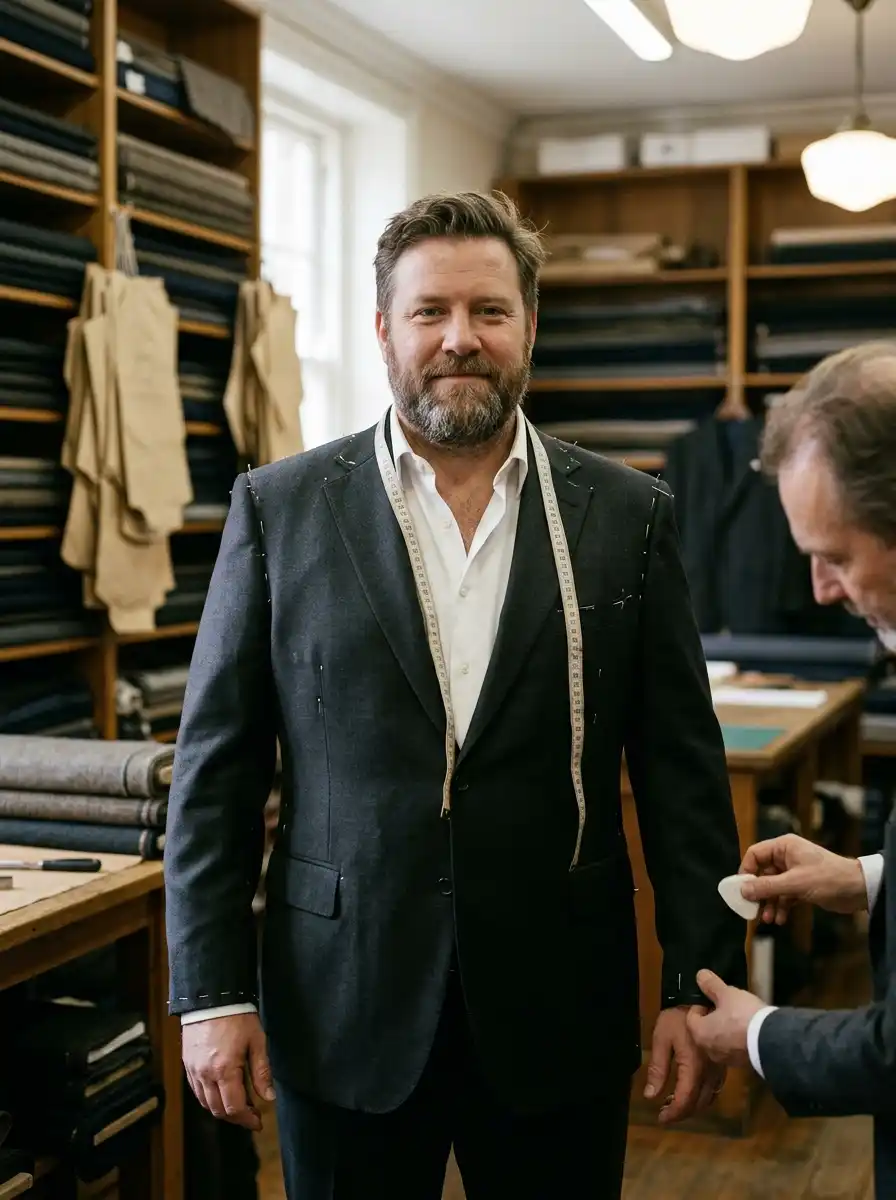
Made-to-measure suits often take 4 to 8 weeks to arrive. Alterations add another 2 to 3 weeks, plus a final fitting.
Twelve weeks gives you room if something comes back wrong. Place your order and your groomsmen’s orders on the same day if you can.
Fabric made in different batches can come out a shade apart, and side by side in photos, that difference shows.
Book your final fitting 1 to 2 weeks before the wedding. If you expect your weight to change before then, tell your tailor at the first fitting so they can leave extra fabric in the seams.
You’ve Got Your Color
You’ve tested your suit color on your skin, next to your wedding palette, and on camera, which is more than most grooms ever do.
Now you know how to pick the right suit color as a bigger groom, and the choice didn’t come down to luck or a salesperson’s opinion.
Your next step is fit. Book your first tailor appointment for the week your suit arrives.
Save this pin to your wedding board so your groomsmen can find it when it’s their turn to order.
Suit Color FAQs for Bigger Grooms
Is black the most slimming suit color?
No. All dark shades slim about the same, and navy or charcoal keep more detail in photos. Black works best for formal evening weddings in a matte wool.
Can I wear a light suit to a summer or beach wedding?
Yes. Choose a mid-tone like medium gray, medium blue, or soft tan rather than near-white. A matte wool and linen blend keeps you cool and holds its shape better than pure linen.
Do brown or tan suits work for bigger guys?
They do, especially if you have a warm undertone. Brown suits fall and rustic venues. For tan, go with a medium shade, since pale beige can wash you out.
Should my groomsmen wear the same color as me?
It’s your call. Matching looks classic. If you go different, wear the darker shade yourself so you anchor the lineup photo.
Does the vest color matter?
Yes. A vest that matches your suit keeps one long, clean line down your middle. A contrasting vest cuts your torso into sections and draws the eye to your width.