The chair was one of those woven plastic loungers that sags in the middle. I sat down with a plate of brisket, and three things happened at once.
My shorts climbed halfway up my thighs. The second button on my shirt opened a gap you could see daylight through.
And a drop of barbecue sauce landed on my heather-gray tee, right next to a sweat patch that had been growing since I walked past the grill.
None of that was about my size. It was about clothes that were never tested for a cookout.
This guide shows you how to dress for a backyard barbecue as a bigger guy, one step at a time. You’ll pick shorts that stay put when you sit low, a shirt that breathes near a hot grill, colors that hide sweat and sauce, and shoes that can handle damp grass.
You’ll also run two quick tests at home, a lawn-chair sit and a grill reach, so problems show up in your bedroom mirror instead of in front of the neighbors.
Why does this work? Most outfits get checked while you stand still. A barbecue means sitting low, reaching across tables, bending to the cooler and eating with your hands. Test for that, and the outfit holds up all afternoon.
Plan on about 30 minutes at home if you already own the pieces, longer if you need to shop. No sewing skills needed.
Your Cookout Kit
Pull These Before You Get Dressed
On Your Body
- Boxer briefs with a 6-inch inseam (moisture-wicking)
- Anti-chafe balm (or an unscented antiperspirant stick)
- Flat-front shorts, 7–9 inch inseam, 2–4% stretch (or cotton-linen chinos)
- Linen-blend camp-collar shirt or piqué polo in a mid-tone or small print
- Leather or canvas low-top sneakers
- No-show socks
For the Tests and the Car
- Your lowest seat (camp chair, ottoman or bottom stair)
- Soft tape measure (or a piece of string and a ruler)
- Stain remover pen
- Spare shirt folded in a zip bag
- Light overshirt for after sunset
- Cap or straw hat, plus SPF 30+ sunscreen
The Old Cookout Fit vs. the Lawn-Chair-Proof Fit
Before
- Heather-gray cotton tee that shows sweat within 20 minutes
- 5-inch shorts that ride up, or 11-inch cargos that bunch at the knee
- Shirt hanging past the seat, making the torso look longer
- Buttons gapping when you lean over the grill
- Suede shoes soaking up grass stains and grease
- One sauce drip ends the afternoon
After
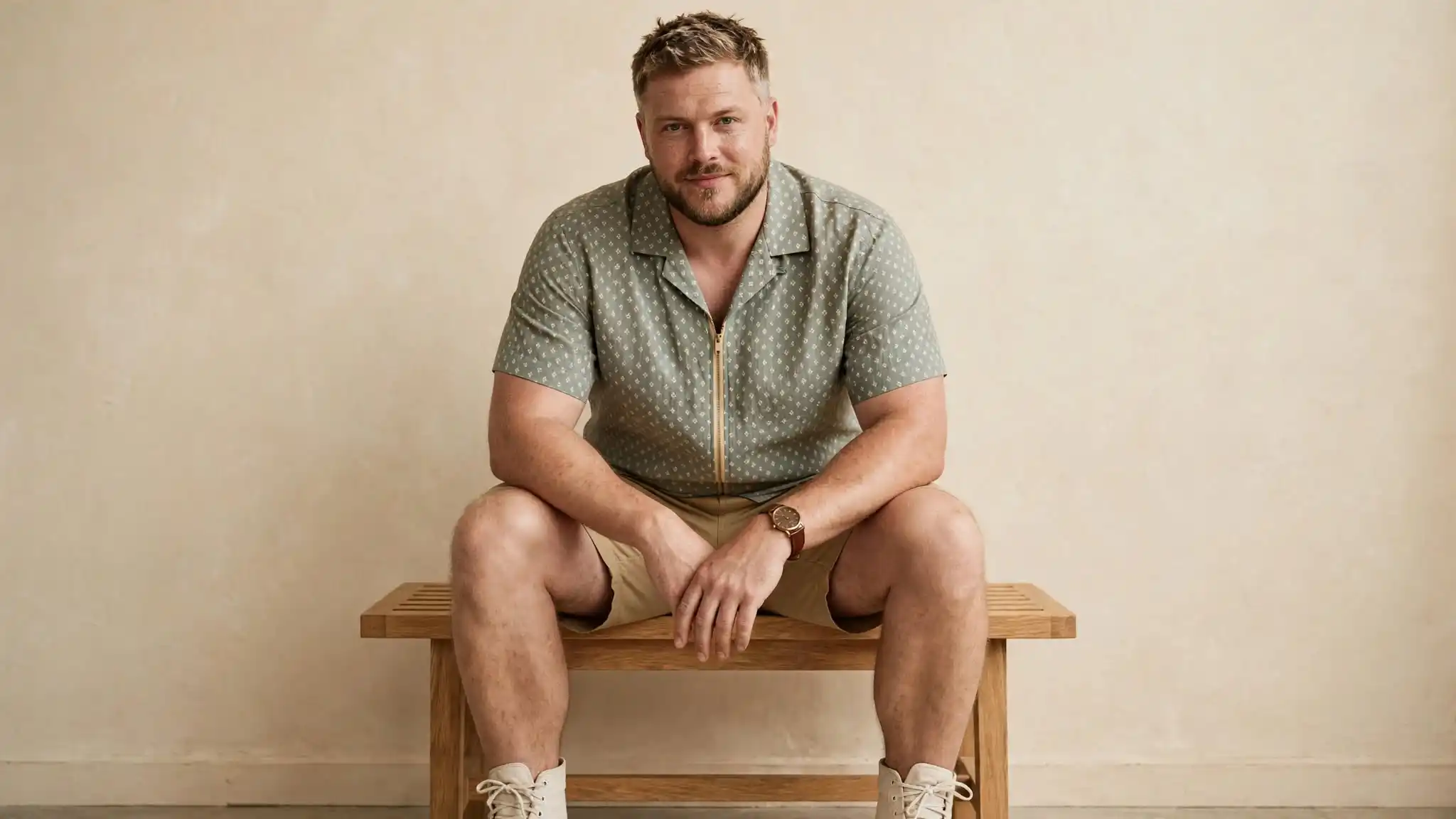
- Mid-tone linen-blend shirt that breathes and hides damp spots
- 8-inch flat-front shorts that stay put in a low chair
- Hem landing at mid-zipper, worn untucked
- Buttons lying flat through a full arm reach
- Leather or canvas sneakers that wipe clean
- Stain pen and spare shirt waiting in the car
Block inner-thigh chafe before the shorts go on
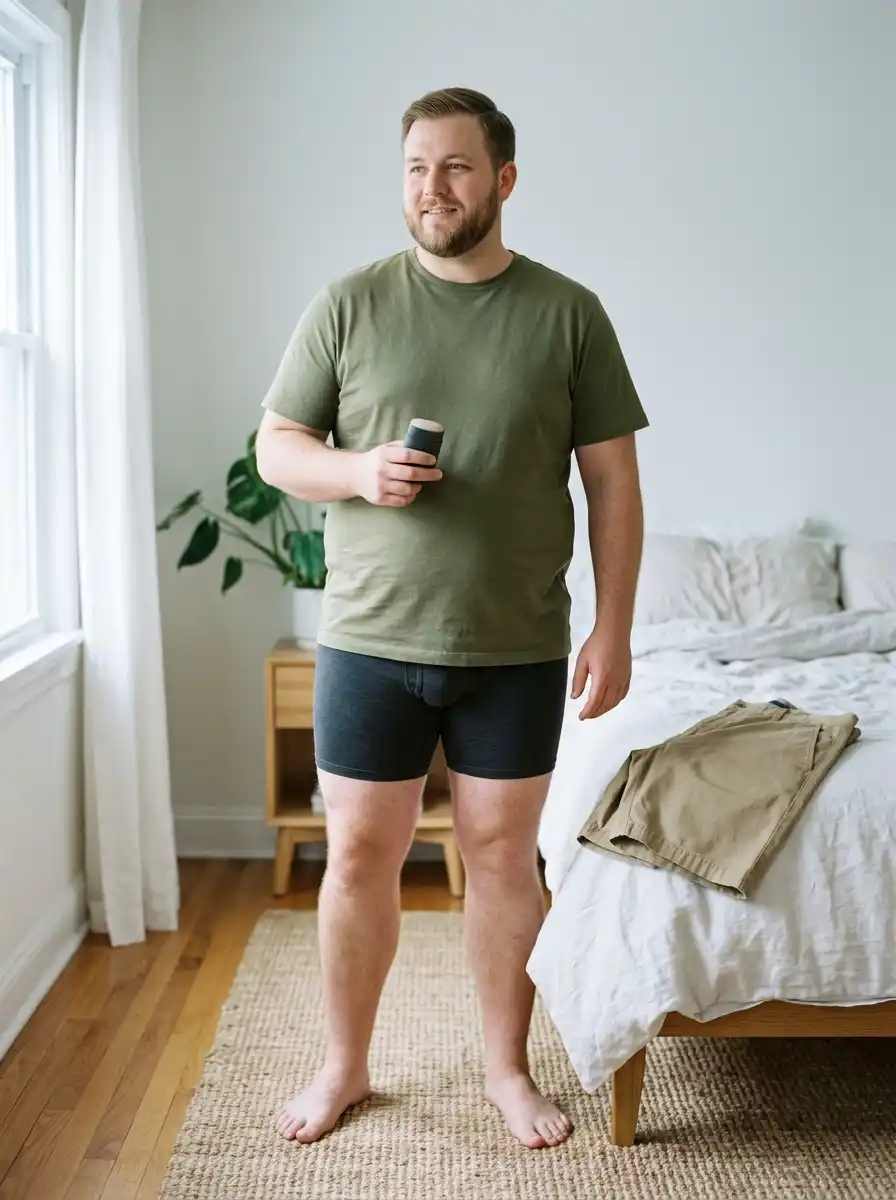
Heat, sweat and a lot of walking between the grill, the cooler and the food table add up. By mid-afternoon, thighs that rub turn red and raw.
Start with boxer briefs that have a 6-inch inseam in a moisture-wicking fabric like polyester-spandex or modal.
Regular cotton boxers soak up sweat and bunch into your groin. Short-leg briefs leave the exact spot that rubs uncovered.
Rub a thin layer of anti-chafe balm on both inner thighs. Cover a strip about 3 inches wide where your legs touch when you stand. No balm? An unscented antiperspirant stick works in a pinch.
Walk around the room for 30 seconds. If the leg bands roll up, try a size up or a brand with a grippy hem.
Choose shorts with a 7- to 9-inch inseam, or lightweight chinos if the party runs past sunset
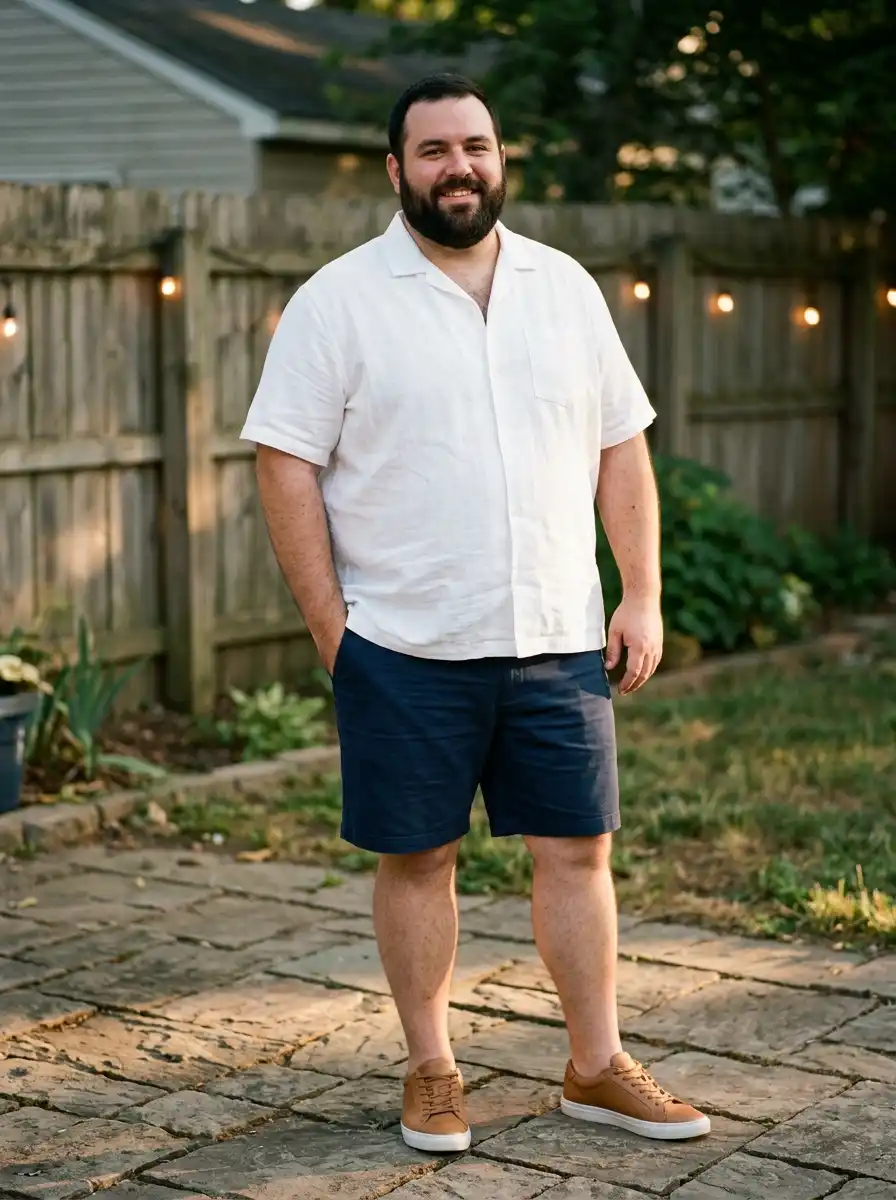
Inseam length decides how your shorts behave the moment you sit down.
Go too short, like a 5-inch inseam, and the hem climbs toward your hips in a low chair.
Go too long, like an 11-inch cargo short, and the fabric bunches at the knee and makes your legs look stumpy. For most bigger guys, the sweet spot is:
- 7 inches if you’re under 5’9″
- 8 inches if you’re 5’9″ to 6′
- 9 inches if you’re over 6′
Pick a flat front in cotton with 2–4% stretch. Skip cargo pockets. They add bulk right at the widest part of the thigh.
If the barbecue runs past sunset, or mosquitoes are bad where you live, choose lightweight chinos in a cotton-linen blend instead.
They breathe almost as well as shorts and keep bugs off your ankles. Olive, navy and mid-khaki all work.
Room for the Second Plate
Buy your true waist size, not one up. Look for side-tab adjusters or a stretch waistband, or wear a woven elastic belt. Each one gives you about 1 inch of give after the ribs come off the grill.
Sit in your lowest chair for 2 full minutes to test the shorts
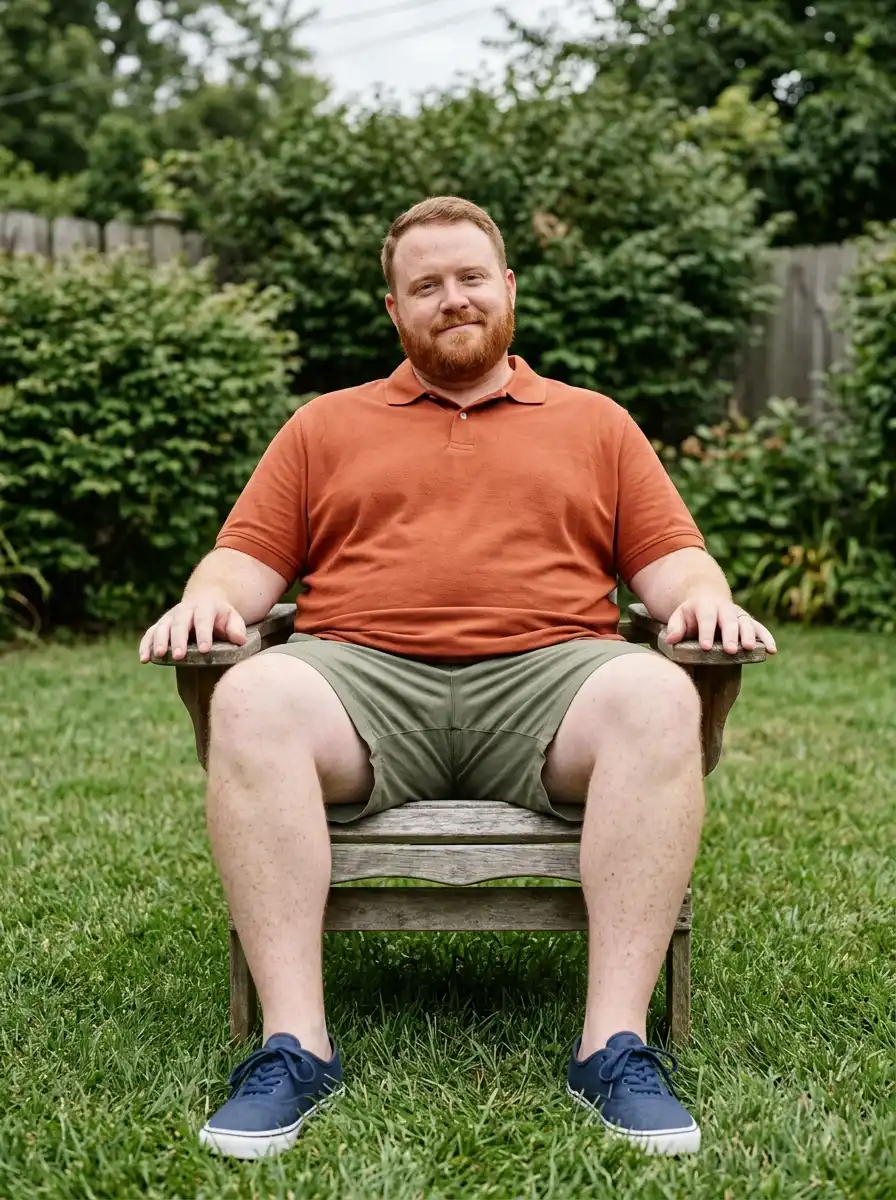
12 to 15 inches. That’s how far off the ground a plastic Adirondack or camp chair puts you, compared to 18 inches for a kitchen chair.
Your knees end up higher than your hips, which pulls the shorts up and shoves the waistband into your belly.
Grab the lowest seat you have. A camp chair, an ottoman or the bottom stair all work. Sit for 2 full minutes and lean back. Fabric needs that long to shift and settle.
Look down and check three spots. The hem should stay within 2 to 3 inches of where it sat when you stood. The front pockets should lie flat, not flare open like wings. The waistband should not dig in when you lean forward.
Hem climbing past mid-thigh? Go 1 inch longer in the inseam. Flaring pockets mean the hips are too tight, so try a relaxed fit.
A digging waistband usually means the rise is too low. Look for a mid-rise that sits near your navel.
Dress for barbecue heat in a linen-blend camp shirt or piqué polo
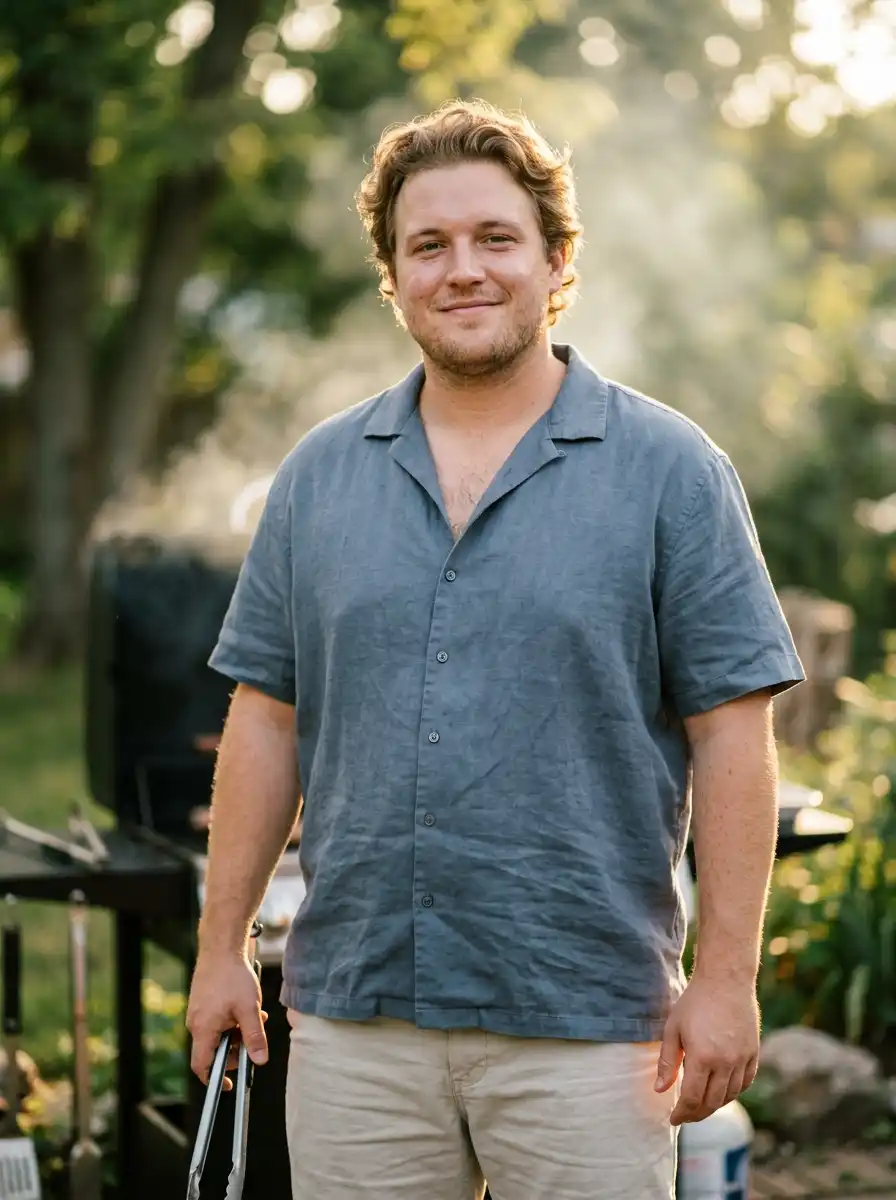
If the forecast says 85°F or warmer, the fabric of your shirt matters more than the brand or the price tag.
Two fabrics handle backyard heat best. A linen-cotton blend, around 55% linen, lets air pass straight through and wrinkles less than pure linen.
Piqué, the bumpy knit used on classic polos, has tiny gaps in the weave that pull sweat away from your skin. Thin cotton jersey, the stuff most T-shirts are made of, clings to your stomach and shows every damp spot.
Your build decides which shirt to reach for:
- Weight in your belly? Go with a camp-collar button-up in a boxy cut. It falls straight down from your chest instead of wrapping around your stomach.
- Weight in your chest and shoulders? Go with a piqué polo. The knit stretches across your chest without buttons pulling, and the open 3-button placket breaks up the width.
Both styles keep an open neckline, which lets heat escape at the collar.
⚠ Keep Polyester Away From the Flames
Shiny performance polos feel cool in the sun, but polyester can melt if a spark or flare-up catches it. If you’re the one working the grill, wear cotton, linen or a mostly natural blend, and keep loose sleeves clear of the grate.
Hide sweat and sauce drips with a mid-tone shirt or small all-over print
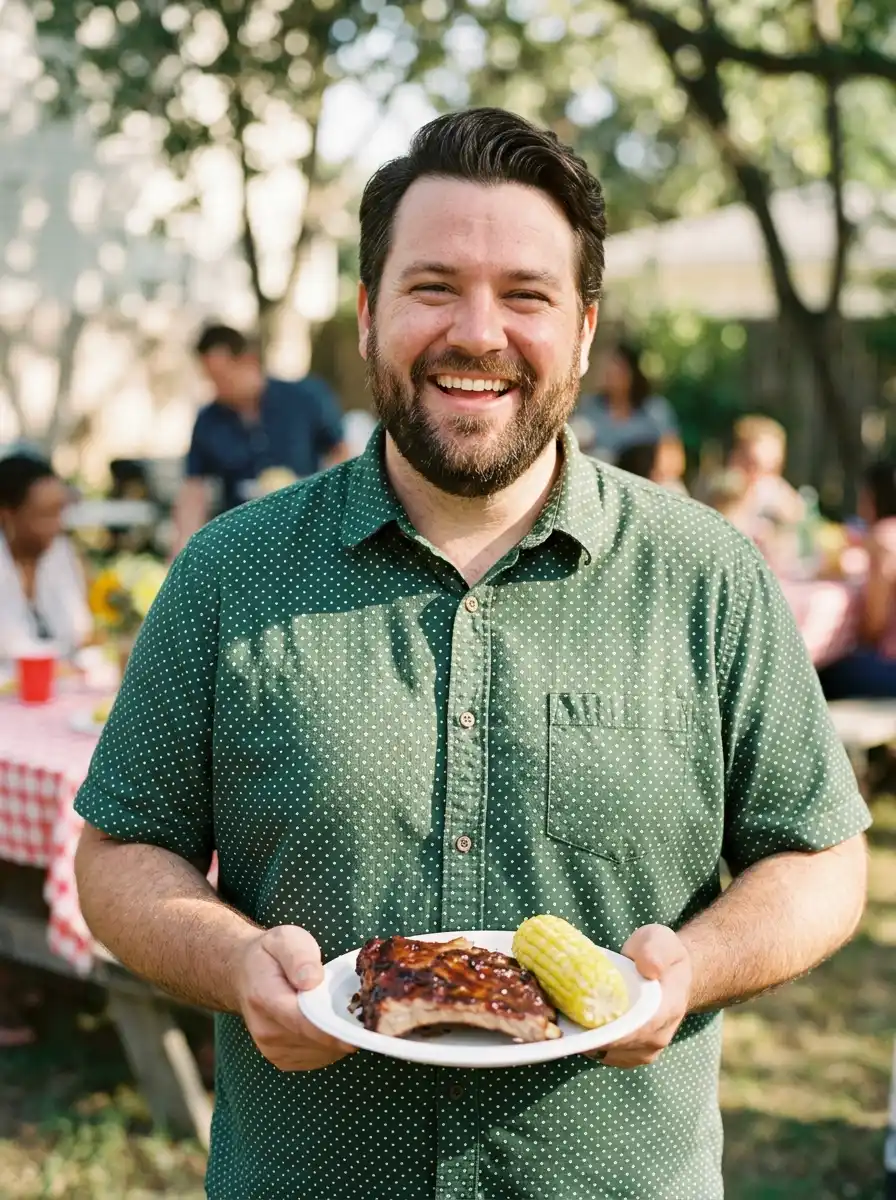
Light colors feel cooler, so a lot of guys grab a pale gray tee. That’s the shirt that shows sweat first.
Heather gray turns a shade darker anywhere it gets wet, leaving clear outlines under your arms and down your back.
Mid-tones hide damp spots far better. Navy, olive, slate blue, rust and forest green all work. White hides sweat too, but one drip of sauce shows from across the yard.
A small all-over print helps even more. Look for a pattern where each shape is under 1 inch across, like tiny dots, a micro-check or small leaves.
The print breaks up a stain, so the eye slides right past it. Large, loud prints do the opposite and make a bigger frame look wider.
Measure where the shirt hem lands, aiming for mid-zipper untucked
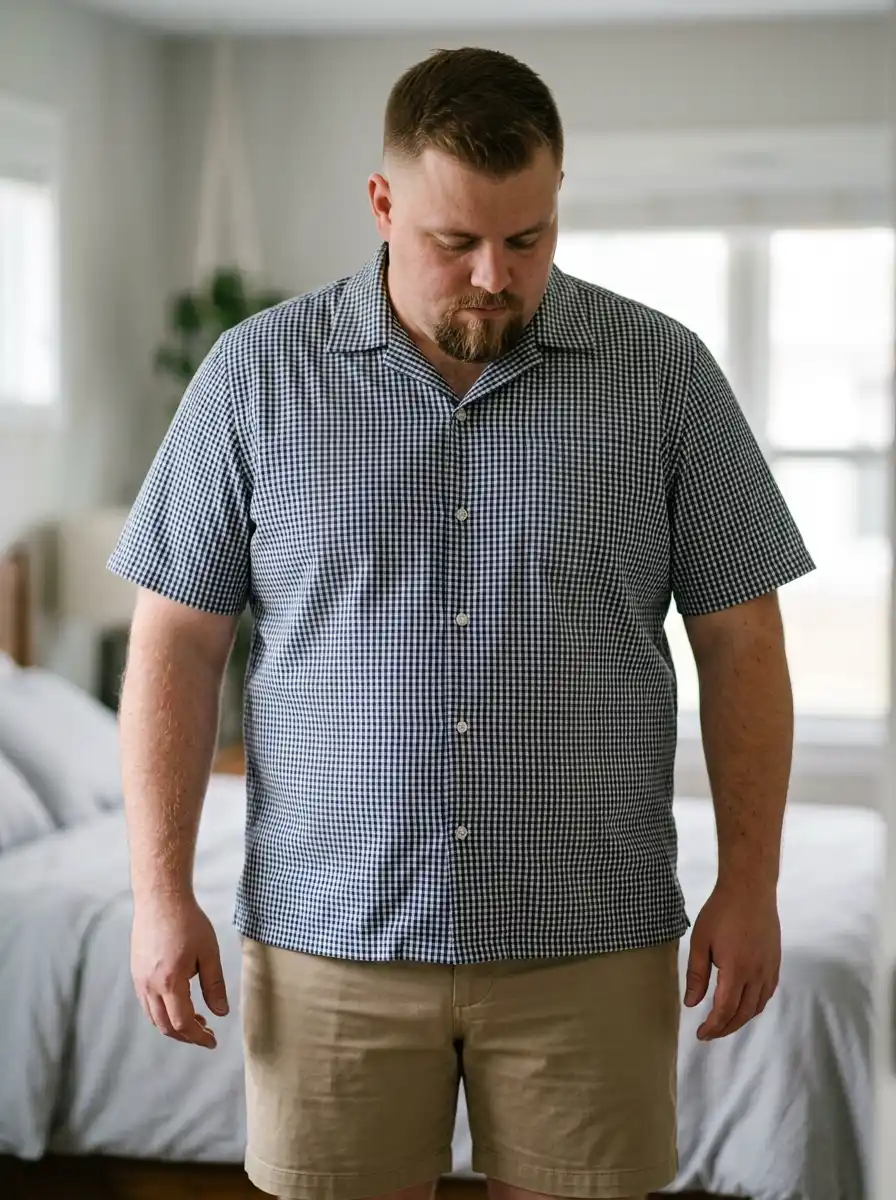
Too long is the more common problem, and it costs you more than you’d think.
A hem that hangs past the bottom of your zipper covers part of your seat, makes your torso look longer and cuts your legs short.
At a barbecue the shirt stays untucked, so the target is mid-zipper. That covers the waistband all the way around without swallowing your hips. Here’s how to check it:
- Put on the shorts you picked in Step 2 and the shirt.
- Stand relaxed in front of a mirror. Don’t hold your stomach in.
- Note where the front hem lands against your zipper.
- Turn sideways and check that the back covers your waistband by about 2 inches.
Landing more than 2 inches below mid-zipper? A tailor can shorten it. Landing above the waistband once you lift your arms? It’s too short, and no tailor can add length back.
Look for tall sizing, marked LT or XLT, which usually adds about 2 inches of body length.
The $12 Tailor Fix
Most tailors shorten a shirt hem for $12 to $20. Wear the shorts to the appointment and mark mid-zipper with a safety pin, so the tailor measures from the right spot. Ask them to keep the original hem shape: straight stays straight.
Reach toward an imaginary grill to catch button pull across the belly
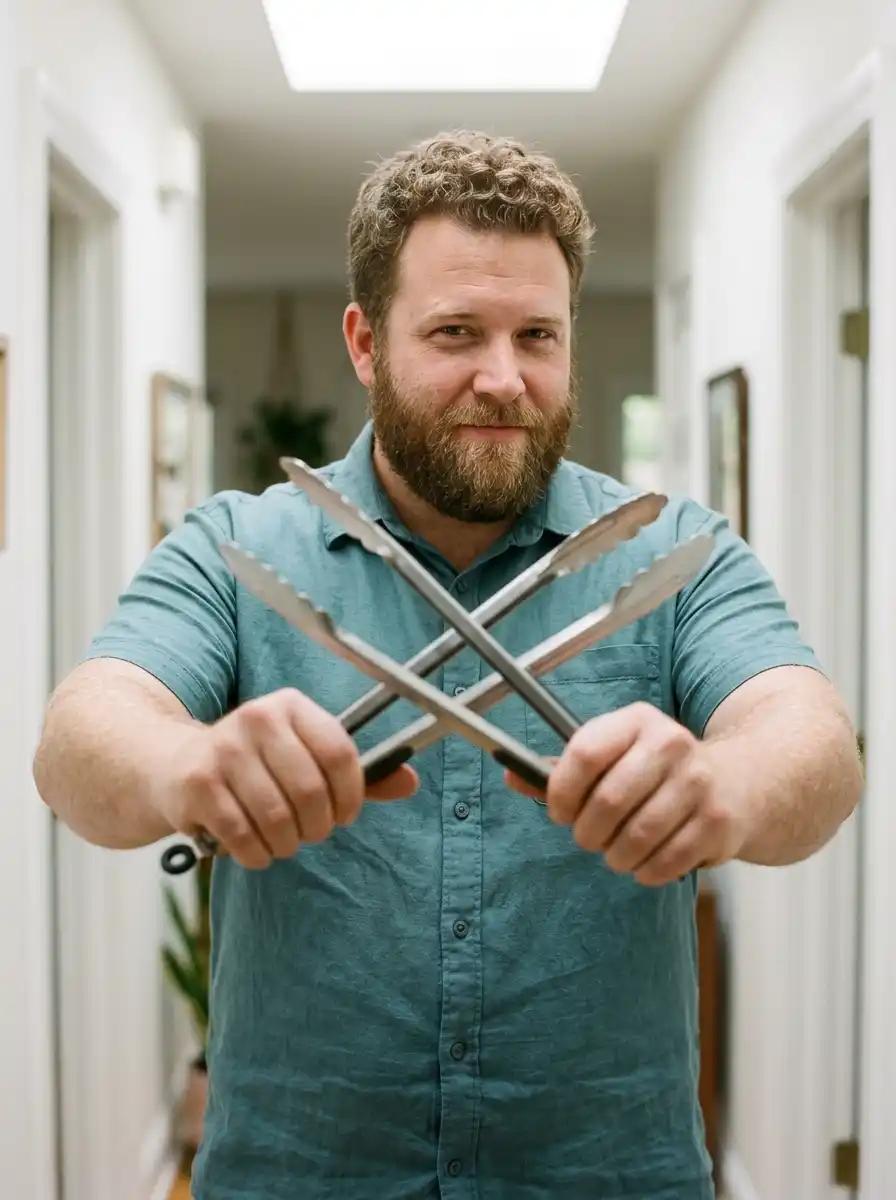
Mirrors lie when you stand still. At the barbecue you’ll be flipping burgers, passing plates and reaching across a picnic table, and each of those moves pulls the shirt tight across your front.
Stand facing the mirror and stretch both arms straight out at chest height, like you’re holding tongs over a grate. Hold it for 10 seconds. Then raise one arm overhead as if you’re waving someone over.
Watch the spaces between the buttons. A gap that shows skin or undershirt means the shirt is too tight at that spot, so go up a size or switch to a piqué polo.
If a shirt you love gaps at one button, a small piece of double-sided clothing tape between the buttons holds it closed.
Check the sleeves too. They should end around mid-bicep and lie close to your arm, not stick out like wings.
Lace up leather or canvas sneakers that handle damp grass

Sprinklers, morning dew and ice tipped out of the cooler mean the lawn is rarely dry. Hard leather dress soles slide on wet grass, and any shoe with a heel sinks into soft ground.
Leather low-top sneakers are the safest pick. A white or off-white pair wipes clean with a damp cloth in about 10 seconds. Canvas sneakers in navy, olive or tan are the cheaper route, and most survive a cold wash.
Give the shoe a little substance. A sole around 1 inch thick balances a bigger frame, while a skinny, low-profile sneaker can make your body look wider by comparison.
Cushioning matters too, since you’ll likely be standing for 2 to 3 hours near the grill. If your pair feels flat, slide in a padded insole.
Flip-flops and slides look tempting in the heat. They give a heavier frame little support over a long afternoon, and they leave your toes open to dropped skewers and hot charcoal.
Add no-show socks with a silicone heel grip so they stay put.
⚠ Grease Ruins Suede for Good
Suede and nubuck soak up grease drips and grass stains, and neither comes fully out. Save suede shoes for indoor parties. A suede protector spray helps against water, but it won’t stop a drop of burger fat.
Stash a stain pen, spare shirt and light overshirt in the car
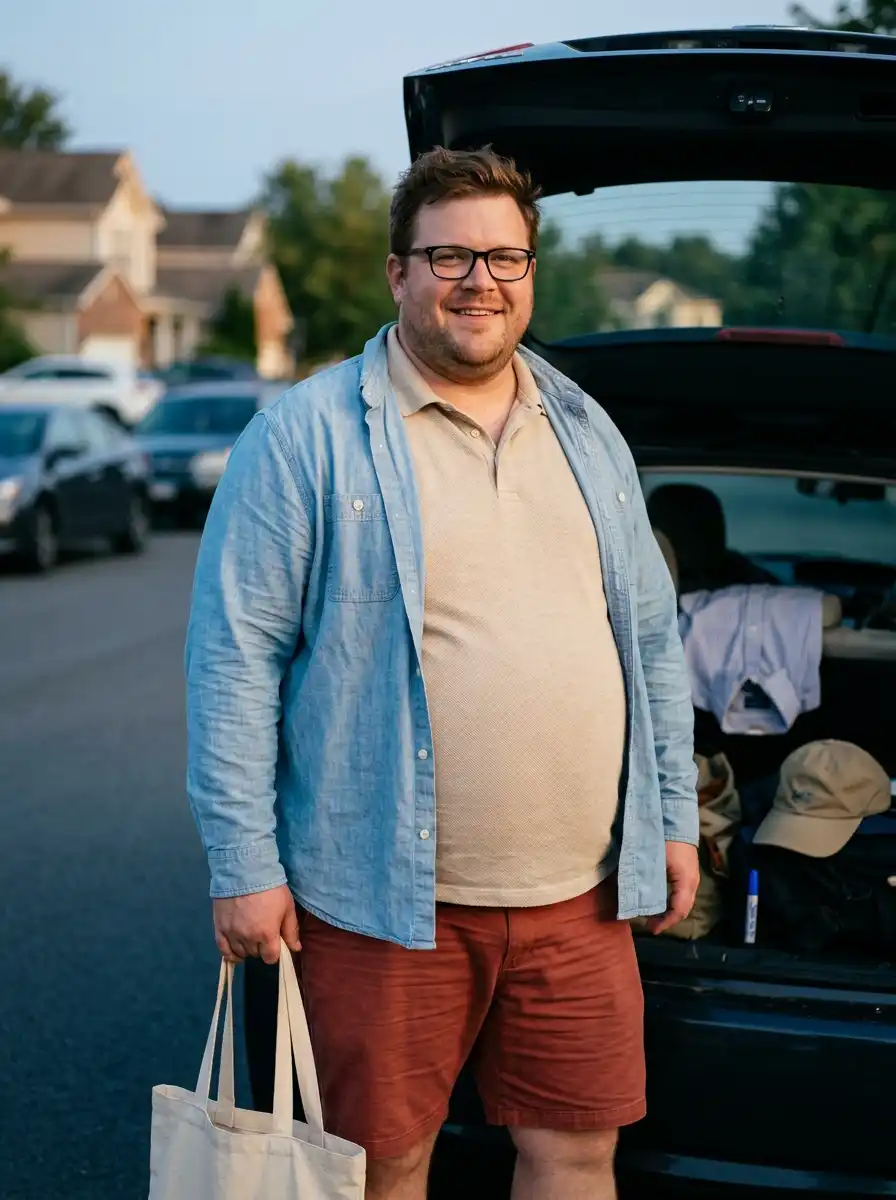
Ever had a paper plate fold in half on your lap? Even a well-planned outfit can’t stop that, so the backup plan lives in your car, a short walk away. Pack these in a tote or zip bag:
- Stain remover pen. Blot the sauce with a napkin first, then dab the pen. Rubbing pushes the oil deeper.
- Spare shirt in the same color family, so the swap isn’t obvious.
- Light overshirt in chambray or cotton. Evenings can drop 10 to 15°F after sunset, and an overshirt worn open draws a long vertical line down your front.
- Cap or straw hat, plus SPF 30 sunscreen for your neck and ears.
- Wet wipes to clean sticky fingers before they touch your shirt.
Conclusion
You now know how to dress for a backyard barbecue as a bigger guy: shorts that stay put, a shirt that breathes, colors that hide the mess, and a backup kit waiting in the car.
If you only remember one thing, make it the lawn-chair test. Two minutes in your lowest seat tells you more than twenty minutes in front of a mirror.
Once the weather cools, the same shirt with cotton-linen chinos and the open overshirt makes a ready-to-go tailgate outfit.
Questions Guys Ask Before the Cookout
Are cargo shorts okay at a backyard barbecue?
They fit the casual mood, but bulky side pockets add width right at your thighs. If you want the pockets, pick a cargo with flat, flush pockets and keep them empty.
Should I tuck my shirt in at a work barbecue?
Untucked is fine at most work cookouts as long as the hem lands at mid-zipper. If the invite says “business casual,” swap the shorts for cotton-linen chinos instead. That one change dresses you up more than a tuck does.
Can I wear joggers instead of shorts?
Yes, for an evening barbecue, as long as they’re lightweight cotton or a cotton-linen blend, not fleece. Choose a cuff that sits at your ankle bone so the hem stays out of wet grass.
Is a tank top ever a good idea?
At a pool party with close friends, sure. At a regular backyard cookout, a tank leaves your shoulders open to sunburn and grease spatter and sticks to your back once you sweat.
What should I wear if I’m the one running the grill?
Stick to cotton or linen, never polyester near the flames, and roll your sleeves above the elbow. Add a cotton or canvas apron. It catches the grease that would otherwise end up on your shirt.