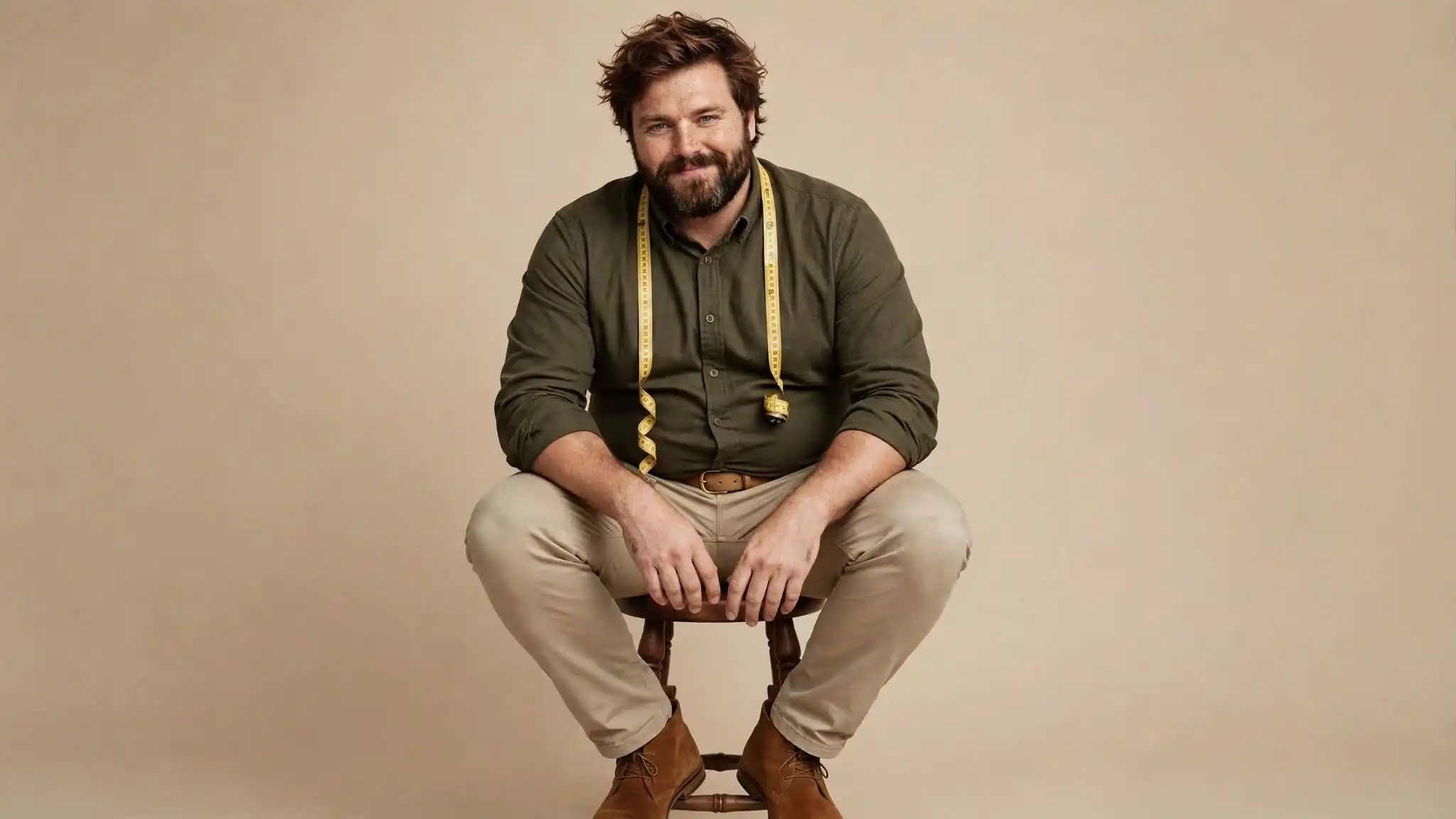
You order a 3XL shirt because your last 3XL fit. It shows up, and the chest feels fine. But the buttons pull across your belly, and the sleeves stop two inches short of your wrists.
Back in the bag it goes. If that sounds familiar, the problem isn’t your body. A label like “3XL” means something different at every store. This guide shows you how to find your size in big and tall clothing using your own numbers instead of guesses.
You’ll take eight body measurements with a soft tape. Then you’ll check them against a shirt and pants you already love. After that, you’ll learn how to read any brand’s size chart in under a minute.
By the end, you’ll have a short list of numbers saved on your phone, and they work at any big and tall store, online or in person.
Here’s why this works. Brands build their size charts from body measurements, not from labels. When you shop by inches, you’re speaking their language, and the guessing stops.
The whole thing takes about 45 minutes, and most of that is measuring. You don’t need any special skills.
A helper makes the tape part faster, but you can do it alone. Grab a tape measure, and let’s get your real numbers.
- Soft tailor’s tape (60-inch, the bendy kind)
- Phone notes app or a notebook
- A pen
- A thin, snug T-shirt
- Underwear or thin athletic shorts
- Your best-fitting shirt
- Your best-fitting pants or jeans
- A flat table or made bed
- A full-length mirror
- A helper (optional, but faster)
- Change into thin clothes
- Measure your chest
- Measure your belly
- Find your true pants waist
- Measure your seat
- Measure your neck
- Measure your sleeve
- Take your inseam
- Write down your height and weight
- Measure your best-fitting shirt
- Choose Big, Tall, or Big & Tall
- Match your numbers to the size chart
- Read the fit notes
- Order two sizes
- Test the fit before cutting tags
Strip Down to a Thin T-Shirt and Underwear Before You Measure

A hoodie can add 2 to 4 inches to your chest number. Jeans with a belt do the same thing to your waist.
Change into a thin, snug T-shirt and underwear so the tape reads your body, not your clothes.
Empty your pockets too. Then stand barefoot on a flat floor in front of the mirror, feet about hip-width apart.
Measure Your Chest at the Widest Point Under Your Arms

If you have a helper, this is the step where they’re most useful. The tape has to stay flat across your back, and that’s hard to see on your own.
- Lift your arms out a little.
- Wrap the tape under your armpits and across your shoulder blades.
- Drop your arms and breathe out normally.
- Read the number where the tape overlaps its own end.
Pull it snug, but not tight. You should be able to slide one finger under the tape.
Measure Your Belly at Its Fullest Point, Not Where You Wish It Was

For a lot of big guys, the belly is bigger than the chest. This is the number that decides how a shirt fits, yet most size guides skip it.
Shop by chest size alone, and the buttons will pull and gap across your stomach. Look in the mirror from the side and find the widest part of your belly.
It’s often at your belly button or 1 to 2 inches below it. Wrap the tape there, keep it level, and stand relaxed. Label it “belly” in your notes, apart from your waist.
Find Your True Pants Waist Where Your Pants Actually Sit
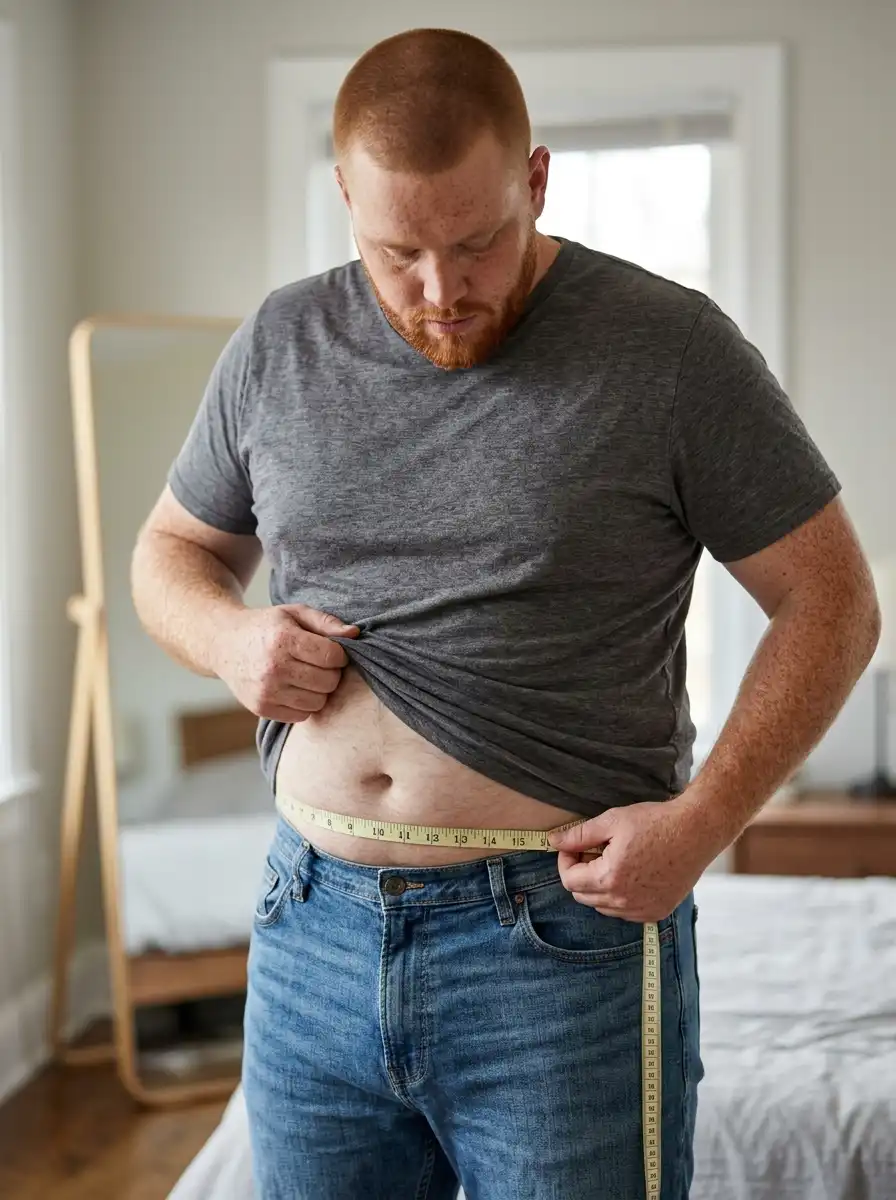
Where does your waistband rest right now? For most big guys, it’s below the belly, near the hip bones, not at the belly button.
That’s why a tape around your middle tells you almost nothing about pants. Put on your best-fitting jeans and note exactly where the waistband sits. Take them off.
Wrap the tape around your body along that same line, level from front to back. Label it “pants waist.” It may be 4 to 8 inches smaller than your belly number.
That gap is normal, and it explains why a shirt size and a pants size rarely match.
Measure Around Your Seat at the Fullest Part
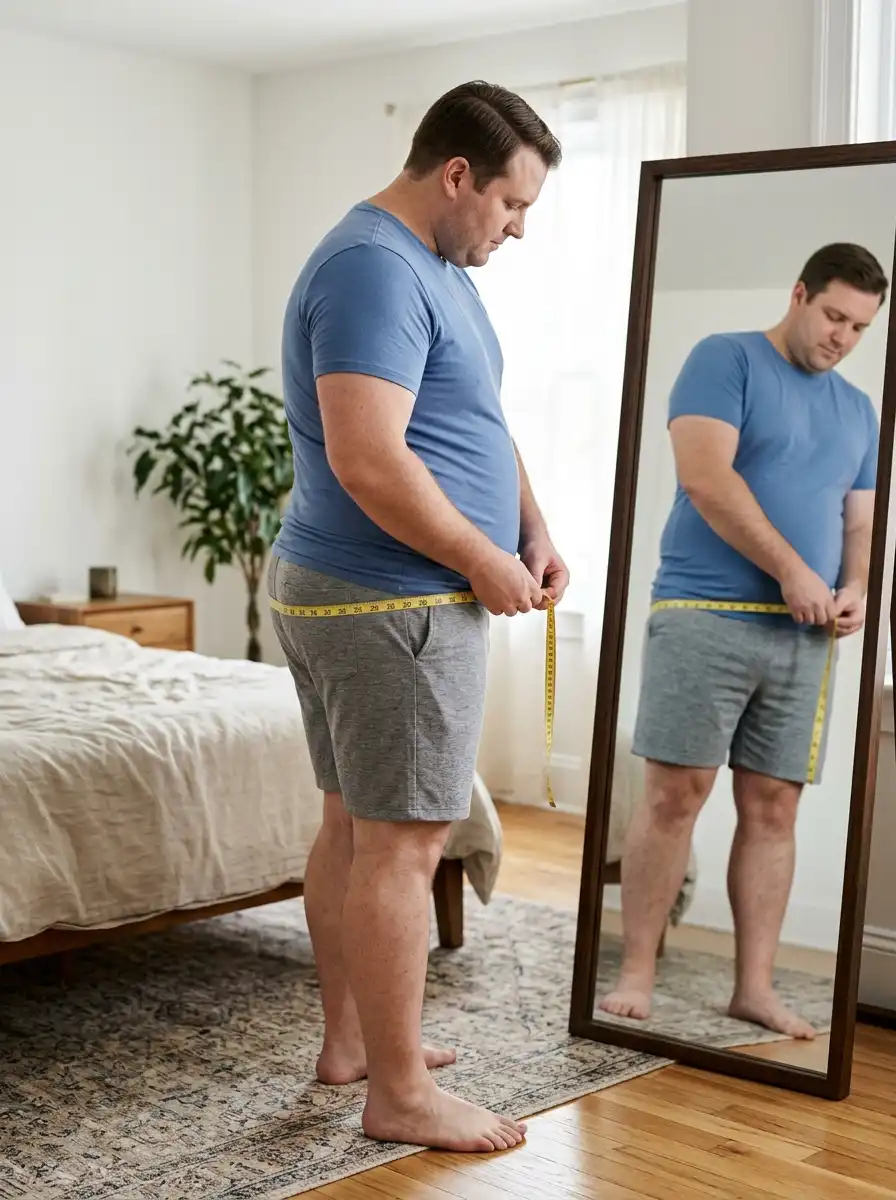
Keep your feet together for this one, because a wide stance stretches the number. Wrap the tape around the fullest part of your backside, across the widest point of your hips.
Turn sideways and check the mirror to make sure it’s level. This number explains why pants can fit your waist but still feel tight through the seat and thighs.
Measure Your Neck with One Finger Under the Tape

If you live in T-shirts and polos, you can skip this step. Dress shirts are sized by neck, though, so take it if you ever wear a collar and tie.
Wrap the tape around the base of your neck, right where a collar sits, just over your Adam’s apple. Slide one finger between the tape and your skin, then read the number.
Round up to the nearest half inch, since collar sizes come in half-inch steps. An 18¼-inch neck becomes an 18½.
Measure Your Sleeve from the Center of Your Neck to Your Wrist

Your arm bends when you drive, reach, or shake hands, so measure it slightly bent. A straight-arm number leaves sleeves riding up your forearm.
- Rest your hand on your hip so your elbow bends a little.
- Start the tape at the knobby bone at the center back of your neck.
- Run it over the top of your shoulder and down to your elbow.
- Continue down to your wrist bone, where a cuff should land.
Round up to the nearest whole inch. Dress shirts list sleeves as a pair, like 34/35, so your number should fall inside that range.
Take Your Inseam from a Pair of Pants That Fit

Measuring your own inseam on your body is awkward, and it’s usually off by an inch or more. Use your best-fitting pants instead. Lay them flat on a table and fold one leg back so you can see the inner seam.
Measure from the crotch seam straight down to the bottom of the hem. If those pants bunch up at your ankles, subtract the extra. If they flash your socks when you sit, add 1 inch.
Write Down Your Height and Weight Next to Every Number

These two numbers won’t pick your size on their own. Many brands still use them to sort you into Big, Tall, or both, and some size charts list height ranges right beside the inches.
Tall sizing usually starts around 6’2″, though some brands begin at 6’1″.
Lay Your Best-Fitting Shirt Flat and Measure It Across

Twenty-four inches across a shirt’s chest means 48 inches all the way around. That simple math is the whole idea here.
Button up your favorite shirt and lay it face-up on a table or bed. Smooth out the wrinkles with your hands. Measure straight across from armpit seam to armpit seam, then double it.
Next, measure the length from the back collar seam down to the bottom hem. Save both as “shirt chest” and “shirt length.”
Many online stores list these same garment numbers, so this gives you a shirt you already trust to compare against.
Decide Whether You Need Big, Tall, or Big & Tall Sizing
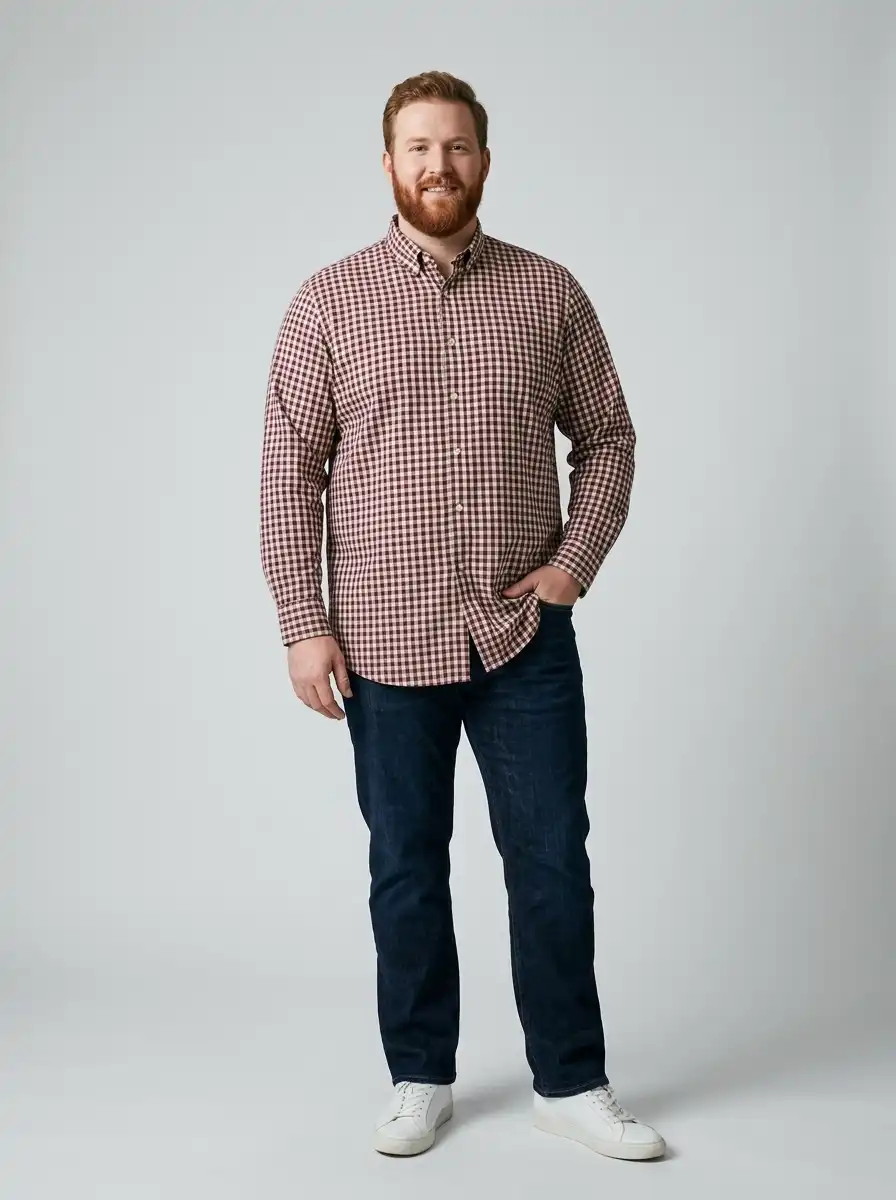
If your height is under about 6’2″ and regular shirts feel tight but long enough, you’re Big. Use your height and your notes to pick a lane:
- Big (2XB, 3XB, 4XB): more room through the chest and belly, normal length.
- Tall (LT, XLT, 2XLT): extra length in the body and sleeves, normal width.
- Big & Tall (3XLT, 4XLT): both at once.
Tall sizes usually add about 2 to 3 inches of body length and 1 to 2 inches of sleeve.
Match Your Numbers to Find Your Size in Big and Tall Clothing

Every brand writes its own chart, and a 3XB at one store can be a 2XB at another. Open the size chart on the product page itself, not the store’s general sizing page, because different lines often run differently.
For shirts, check chest first, then belly. Some charts call the belly measurement “waist.”
When the two land in different sizes, go with the bigger one, since a tight belly ruins a button-up faster than a roomy chest does. For pants, go by your pants waist and inseam, not your belly.
Read the Fit Notes Before You Add Anything to Your Cart
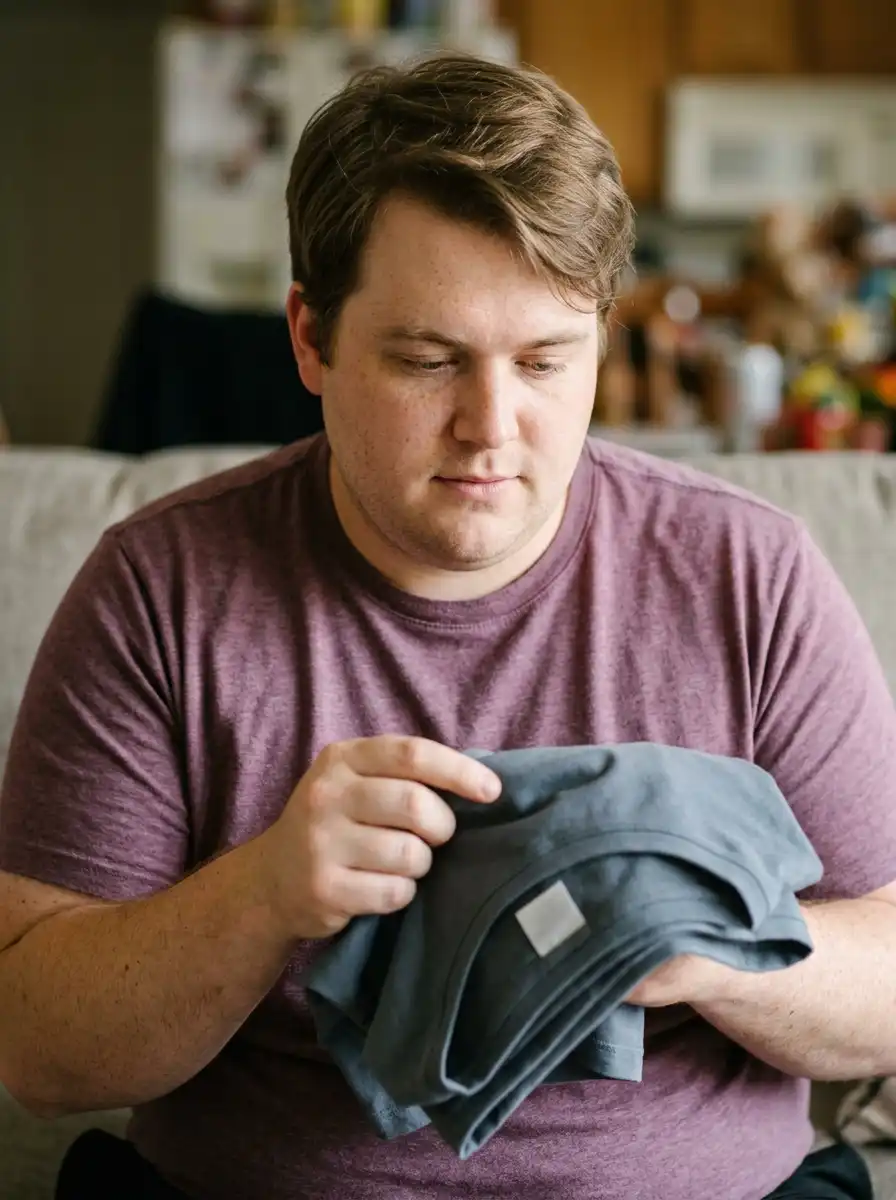
“Slim,” “classic,” and “relaxed” can make the same size fit 2 inches differently through the chest. Find the fit name in the product description, then check the fabric.
100% cotton can shrink in a hot dryer, while a blend with 2–5% spandex gives a little stretch. Skim the reviews too, and pay most attention to people who list a height and weight close to yours.
Order Two Sizes of the Same Item and Return the Miss
Free returns are the best sizing tool you have. The first time you buy from a new brand, order the size the chart gives you plus the next size up. Get the same item in the same color, so the only thing you’re testing is the fit.
Test the Fit at Home Before You Cut Any Tags
Before a single tag comes off, wear the item and move the way you would on a normal day. Standing still in front of a mirror hides most fit problems.
- Button the shirt fully and look for gaps between the buttons.
- Reach both arms forward. The cuffs should stay near your wrist bones.
- Raise your arms overhead. The hem shouldn’t rise past your belt.
- Sit down for 2 minutes in pants. The waistband shouldn’t dig in.
Keep the winner. Then add the brand name and the size that fit to your “My Sizes” note, so next time you can skip straight to ordering one.
FAQs
Is a 3XB the same as a 3XL?
Not quite. A 3XL is a regular size made bigger all over. A 3XB is cut for a bigger build, with extra room through the belly. Always compare both charts side by side.
How tall do I need to be for Tall sizes?
Most brands start Tall at about 6’2″, and some at 6’1″. If your shirts are always short in the body or sleeves, try Tall even if you’re a little under that.
Why am I a different size at every store?
There’s no shared sizing standard, so every brand builds its own chart. Your inches stay the same everywhere, which is why shopping by numbers works better than shopping by labels.
Can I measure myself without a helper?
Yes. Use a mirror to keep the tape level. Sleeve length is the hardest one alone, so measure a shirt that fits well, from the center back of the collar to the end of the cuff.
What if I’m between two sizes?
For shirts and jackets, size up so the belly isn’t tight. For pants, pick the size closest to your pants waist, and look for a stretch waistband. When in doubt, order both and return one.